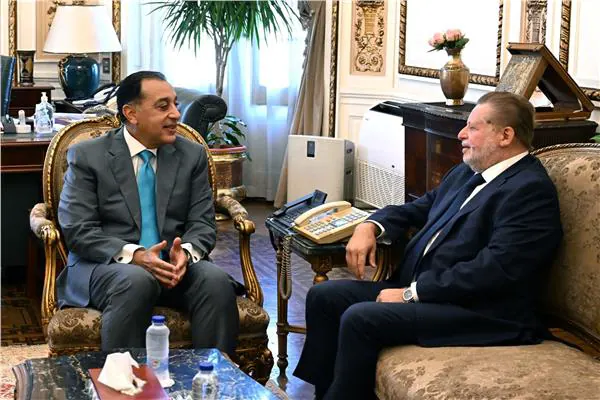
Egyptian Prime Minister Dr. Mostafa Madbouly met with Central Bank Governor Hassan Abdullah to discuss the country's economic situation and efforts to reduce inflation. The meeting was part of regular coordination between the government and the central bank to monitor priority economic issues. They reviewed joint work, including preparations for a national economic transformation program and measures to decrease inflation and increase foreign currency inflows.
The meeting covered several key areas of cooperation, including strategies to lower inflation rates and boost dollar inflows to ensure a safe level of foreign currency reserves. These reserves are crucial for financing essential imports and maintaining a strategic stockpile of vital goods. The government and central bank are working together to strengthen the country's economic stability and manage its external finances effectively.
During the meeting, Madbouly and Abdullah reviewed recent economic indicators, including data on remittances from Egyptians working abroad. According to the central bank, these remittances increased by 28.1% between January and July 2026, reaching $29.7 billion compared to $23.2 billion in the same period last year. This growth is a positive sign for the Egyptian economy, which relies heavily on these inflows.
Remittances from Egyptians abroad continued to rise in July 2026, increasing by 20% to $4.5 billion compared to $3.8 billion in July 2025. This upward trend is expected to contribute to the country's foreign exchange reserves and help stabilize the economy. The government and central bank are likely to continue monitoring these inflows closely.
The Egyptian government has been implementing various measures to reduce inflation and promote economic growth. These efforts include monetary policy adjustments and initiatives to increase domestic production and attract foreign investment. The central bank has been working to maintain price stability and ensure that the economy has a stable and secure financial foundation.
In addition to discussing economic policies, Madbouly and Abdullah likely reviewed the overall performance of the Egyptian economy and the challenges it faces. They may have also explored ways to enhance cooperation between the government and the central bank to achieve sustainable economic growth and stability. The meeting reflects the ongoing collaboration between the two institutions.
The Egyptian economy has faced several challenges in recent years, including high inflation and a large trade deficit. However, the government's efforts to implement economic reforms and attract investment have shown positive results. The increase in remittances and the government's commitment to economic stability are key factors in maintaining confidence in the economy.
Key points
- The Egyptian Prime Minister and Central Bank Governor discussed efforts to reduce inflation and increase foreign currency inflows.
- Remittances from Egyptians working abroad increased by 28.1% between January and July 2026.
- The government and central bank are working together to promote economic stability and growth.