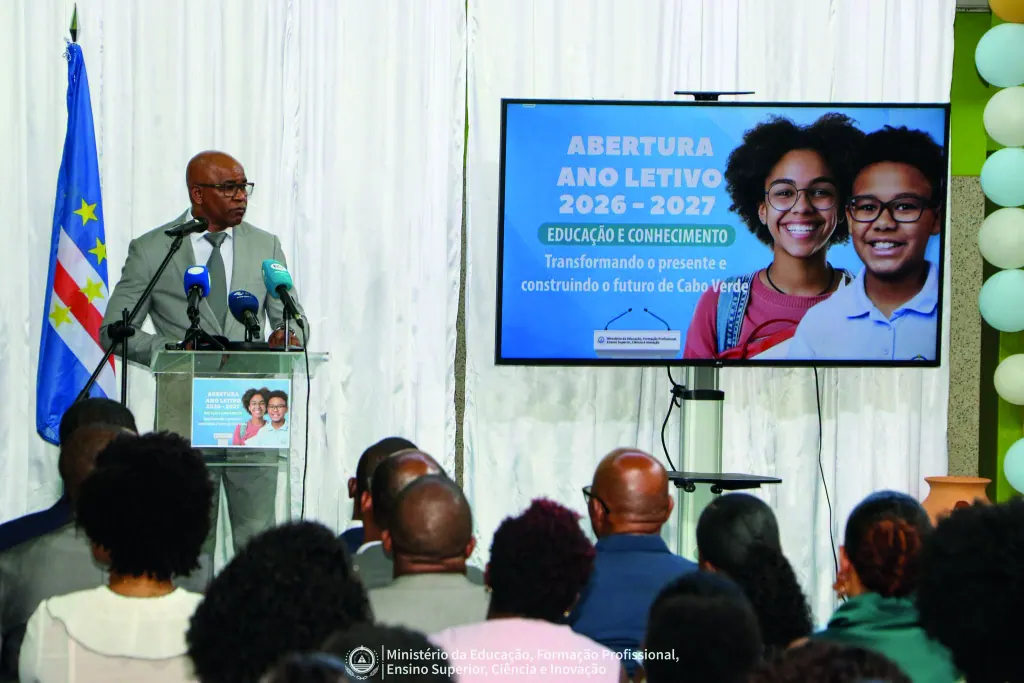
The 2026/2027 academic year has begun in Cabo Verde with a series of changes announced by the Government to improve the education system. The Ministry of Education, led by Minister Arnaldo Brito, aims to transform the education sector with a new approach. The academic year started under the theme "Education and Knowledge: transforming the present and building the future of Cabo Verde." Minister Brito emphasized the need for change, citing progress made in expanding access to education but also highlighting existing weaknesses.
Minister Brito acknowledged that the current education system has limitations and needs to be rethought. He stated that the system has focused too much on teaching and instruction, neglecting a broader conception of education. The Minister aims to shift the focus from teaching to education, allowing schools to define their own priorities and organization. This change involves redefining the role of schools and giving them more autonomy.
One of the proposed changes is to give schools more autonomy, enabling them to decide their organization and priorities based on their specific realities. The Ministry of Education wants schools to be independent institutions that can think about the education of their students. This approach contrasts with the current system, where the Ministry dictates details to schools. The goal is to have schools send their orientations to the Ministry, rather than the other way around.
The Ministry of Education has identified several key areas for change, including the evaluation system, which is considered overly bureaucratic. A team is working on revising the evaluation model, with the aim of reducing the workload for teachers and students. The Ministry also plans to introduce changes to the secondary education system, with a focus on strengthening technical training and aligning education with the needs of the labor market.
Another innovation for the new academic year is the pilot project to extend the school day, which will be implemented in schools in Praia, Sal, and Boa Vista. The project aims to provide supervised activities for students after regular classes, addressing the needs of working parents. The program will include activities such as reading, sports, music, and art, and will be implemented in partnership with community organizations.
The extension of the school day has been met with some skepticism from teacher unions, which accept the principle but emphasize the need for adequate conditions and no increase in teachers' workload. The Ministry of Education plans to hire additional staff, including sports coaches, music teachers, and art instructors, to support the extended school day.
The Ministry of Education has also announced plans to reform the secondary education system, with a focus on strengthening technical training and aligning education with the needs of the labor market. The goal is to increase the number of students in technical programs, which currently account for only 4% of secondary education students. The Ministry also aims to integrate preschool education into the basic education system.
Key points
- The Ministry of Education aims to give schools more autonomy and redefine the role of education in Cabo Verde.
- A new evaluation system will be introduced to reduce the workload for teachers and students.
- The Ministry plans to extend the school day in some schools, providing supervised activities for students after regular classes.