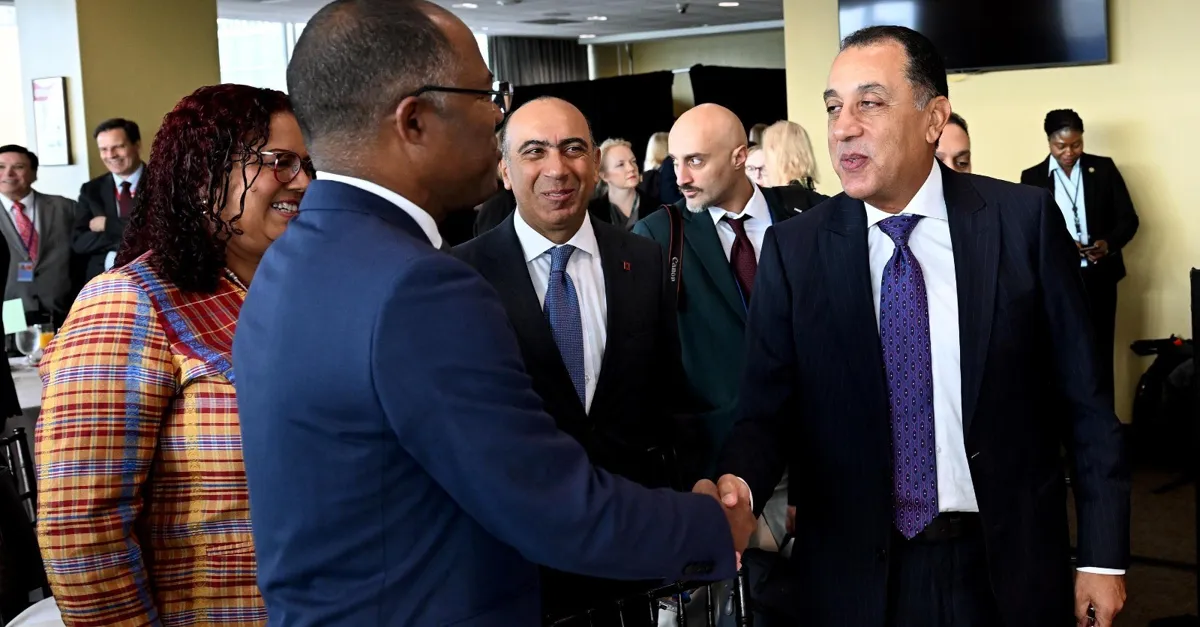
Egyptian Prime Minister Mustafa Madbouly has highlighted the need for reforming the UN Security Council, reactivating preventive diplomacy, and promoting partnerships between the UN and regional organizations. He made these remarks during a high-level iftar on peace, convened by Finnish President Alexander Stubb, on the sidelines of the 81st session of the UN General Assembly in New York. Madbouly emphasized that the current discussions are taking place at a critical time, given the numerous challenges facing the multilateral international system.
Madbouly expressed agreement with the notion that growing conflicts worldwide affect global stability and peace. He stressed the importance of finding a fair and comprehensive solution to the Palestinian issue and stopping the application of double standards when dealing with this pivotal issue. The Egyptian Prime Minister noted that his focus will be on Egypt's vision for a joint response to these challenges, which revolves around investing in available multilateral tools and using them effectively.
Madbouly underlined the importance of investing in reforming the UN Security Council, the primary organ responsible for maintaining international peace and security. He pointed out that the Council's composition no longer reflects current political realities and that there is an urgent need to expand both permanent and non-permanent membership categories. He specifically emphasized the need to increase African representation on the Council, not only to correct historical injustices but also to provide the continent with fair representation in decision-making.
The Egyptian Prime Minister also stressed the need to reactivate preventive diplomacy, noting that Global South countries often bear the brunt of conflict costs, even when they are not directly involved. He emphasized that investing in preventive diplomacy, designed to address the root causes of conflicts before they occur, is essential to preventing potential widespread suffering. Madbouly suggested that rediscovering diplomacy, particularly mediation efforts, is a crucial step in this direction.
Madbouly highlighted Egypt's consistent policy of helping to resolve various regional crises through mediation. He emphasized that mediation, like preventive diplomacy, should be based on a deep understanding of conflict causes and enjoy sufficient international support. Additionally, he stressed the importance of ensuring adequate funding for UN peace operations and providing realistic and achievable mandates for peacekeeping forces.
The Egyptian Prime Minister also called for increased investment in partnerships between the UN and regional organizations, particularly the African Union. He noted that the African Union can provide African solutions to the continent's problems if given the necessary capabilities. Madbouly renewed Egypt's commitment to working constructively with all international community members to strengthen the multilateral system and make the most of available tools.
Madbouly concluded by emphasizing that the tools needed to restore peace, prevent conflicts, and maintain peace are already available. He stressed that fulfilling the promise of peace, enshrined in the UN Charter, requires collective political will to use these tools. Egypt remains committed to working with the international community to translate this commitment into concrete actions.
Key points
- The Egyptian Prime Minister emphasized the need for UN Security Council reform to reflect current global realities.
- He also highlighted the importance of preventive diplomacy and partnerships between the UN and regional organizations.
- Madbouly called for increased African representation on the UN Security Council to correct historical injustices and ensure fair representation.