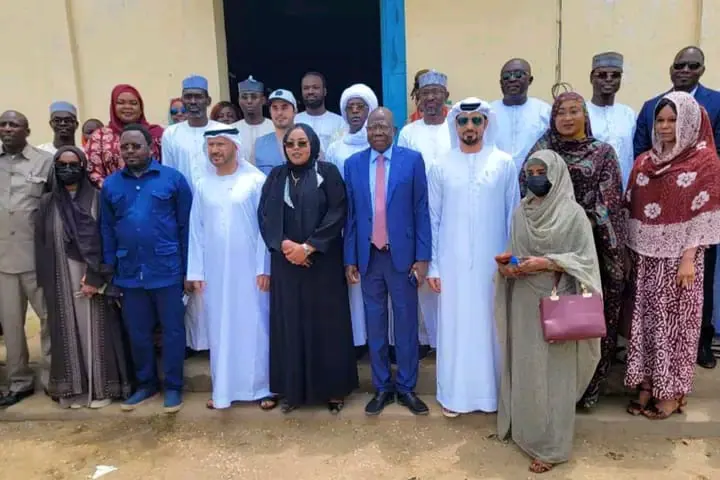
The United Arab Emirates has donated emergency food aid to Chad to support populations affected by weak rainfall in several areas of the country. The donation, comprising 250 tonnes of rice, 250 tonnes of beans, 250 tonnes of maize, 250 tonnes of sugar, and 50 tonnes of oil, was received at the National Food Security Office (ONASA) warehouse. The handover ceremony took place on Wednesday, 23 September 2026.
The ceremony was attended by Minister of Social Action, Zara Mahamat Issa, and the United Arab Emirates Ambassador to Chad, Rashid Saeed Al-Shamsi. The Minister expressed gratitude for the donation, describing it as a testament to the sincere friendship and solidarity between the two nations. She highlighted the concerning context that motivated the assistance, citing weak rainfall and the cumulative effects of climate change.
The Minister noted that the poor rainfall and climate change have weakened crops in several provinces, potentially leading to a cereal deficit that could expose hundreds of thousands of Chadians to severe food insecurity. She emphasized that the donation aligns with the government's vision, as outlined in the National Development Plan "Tchad Connexion 2030" and its third pillar, which focuses on a solidary state.
The Minister assured that the donation would be managed with rigor and transparency, prioritizing areas most exposed to food insecurity. She also called on bilateral and multilateral partners, as well as humanitarian organizations, to mobilize and support efforts to strengthen the resilience of populations and anticipate future crises.
The donation comprises a significant quantity of food items, including 250 tonnes of rice, 250 tonnes of beans, 250 tonnes of maize, 250 tonnes of sugar, and 50 tonnes of oil. This aid is expected to provide relief to populations struggling with food insecurity due to the weak rainfall.
The ceremony concluded with renewed vows of cooperation between N'Djamena and Abu Dhabi, emphasizing the importance of international partnerships in responding to humanitarian crises in Chad. The country's reliance on international support highlights the need for continued collaboration to address pressing humanitarian challenges.
The United Arab Emirates' donation is a significant gesture of solidarity, demonstrating the country's commitment to supporting Chad during a critical period. Chad's efforts to address food insecurity and climate change require sustained support from international partners to ensure the well-being of its citizens.
Key points
- The United Arab Emirates donates 250 tonnes of rice, 250 tonnes of beans, 250 tonnes of maize, 250 tonnes of sugar, and 50 tonnes of oil to support populations affected by weak rainfall in Chad.
- The donation aligns with Chad's National Development Plan "Tchad Connexion 2030" and its focus on a solidary state.
- The country's food insecurity is exacerbated by weak rainfall and climate change, affecting hundreds of thousands of Chadians.