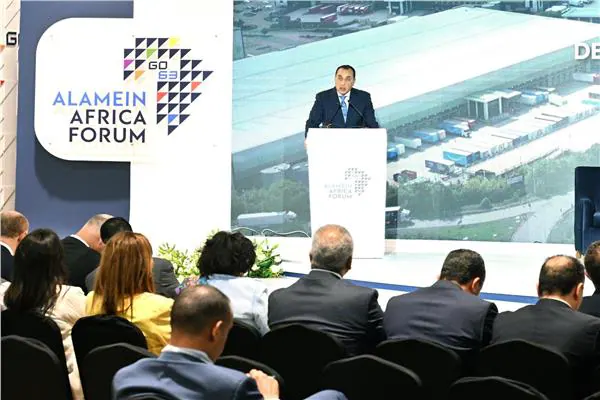
Egyptian Prime Minister Dr. Mostafa Madbouli recently participated in a session on "Development Corridors and Logistics Paths" on the sidelines of a series of high-level African events in Egypt. He stressed that efficient transport and logistics systems are no longer just a supporting element for economic activity, but have become an integral part of economic security and the ability to withstand crises. This comes as the global economy has faced significant challenges in recent years, including disruptions to supply chains and their impact on international trade routes.
Dr. Madbouli emphasized that Africa is currently presented with a historic opportunity to re-examine the concept of development corridors. He noted that corridors should not be viewed solely as routes connecting one point to another or as mere paths for transporting goods to ports. Instead, they should be considered as integrated systems for economic and social development, linking production areas to consumption centers and markets, and combining transportation, energy, communications, logistics services, industrial, and urban areas.
The Egyptian Prime Minister's vision aligns with the African Union's 2063 Agenda and the Program for Infrastructure Development in Africa (PIDA), as well as the African Continental Free Trade Area. He stressed that these initiatives will not achieve their full potential without being accompanied by the free movement of goods, reduced trade costs, facilitated movement of persons, and improved connectivity between African economies.
Dr. Madbouli highlighted the current challenge, which is not only about building roads, railways, and ports but also about how to connect these assets within an integrated system capable of creating economic value along the corridor. A successful corridor, he explained, is one that connects an agricultural or mining area to an industrial center, then to a port or market, while providing the necessary energy, supporting trade logistics, and enabling the tracking of shipments and data exchange.
To achieve this, Dr. Madbouli emphasized the need to transition from the concept of "transport corridors" to "integrated development corridors," and from investing in individual assets to synchronized planning for transportation, energy, industrial, logistics, and urban areas. This planning should be proactive, with basic infrastructure preceding or coinciding with urban and industrial growth, rather than following it to address bottlenecks.
Dr. Madbouli cited Egypt's experience in developing the New El Alamein City as an example of creating a comprehensive urban center that combines economic, service, and tourism activities. He noted that Egypt has been working on developing an integrated network, including roads, railways, sea and dry ports, logistics areas, and river transport, while expanding green and sustainable transportation.
The Egyptian Prime Minister also discussed several key projects, including the development of seven integrated logistics corridors to connect industrial, agricultural, and mining production areas to seaports. He emphasized that Egypt's geographical location allows it to serve as a hub between Africa, the Mediterranean, the Red Sea, and global markets, utilizing its ports and logistics services to support trade with and within Africa.
Key points
- Efficient transport and logistics systems are crucial for Egypt's economic security and development.
- African countries should work together to ensure the security of development corridors and logistics paths.
- Egypt is committed to developing its transport and logistics infrastructure to support economic growth and regional integration.