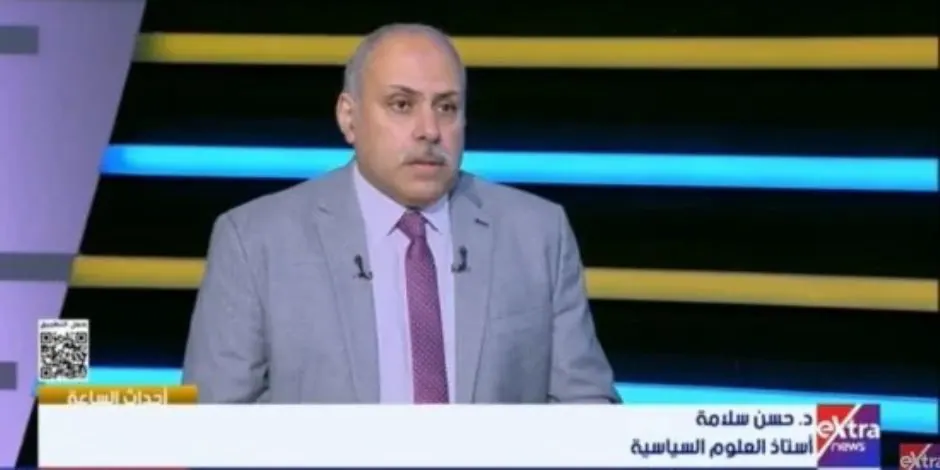
Egyptian President Abdel Fattah El-Sisi recently delivered a significant address during a meeting of the Supreme Council of the Armed Forces, coinciding with the anniversary celebrations of Egypt's October victory. The speech conveyed crucial messages reflecting the state's and armed forces' readiness to protect national security. This comes at a critical juncture, both regionally and internationally. According to Dr. Hassan Salama, a political science professor, the president's address underscored Egypt's commitment to safeguarding its national interests.
Dr. Salama highlighted that the president's speech had two main levels of messaging. The first level emphasized the Egyptian Armed Forces' constant readiness to protect national security in all its aspects, supported by the full backing of the Egyptian people. This comes as the region faces complex challenges that require unwavering national unity and defense strategies. The professor's analysis was shared during a phone interview on a popular television program.
The second level of messaging in the president's address concerned Egypt's water security, specifically regarding the Nile River. Dr. Salama noted that President El-Sisi sent a clear message that the Nile's waters are a vital lifeline and a historical, legal, and existential right that cannot be compromised or diminished. This statement serves as a firm warning to any parties that might seek to impose unilateral actions affecting Egypt's rights as a downstream country.
Dr. Salama cautioned that any entities attempting to undermine Egypt's water rights would face significant and unpredictable consequences. He emphasized that Egypt does not oppose development in Nile Basin countries or the African continent but stressed that such development should not come at the expense of the Egyptian people's water rights. The professor cited Egypt's support for the Julius Nyerere Dam project in Tanzania as an example of its commitment to fostering development in the region.
The issue of Nile water security has gained prominence due to regional dynamics and the need for sustainable management of the river's resources. Egypt, Sudan, and Ethiopia have been engaged in prolonged negotiations over the Grand Ethiopian Renaissance Dam (GERD), seeking to reach a tripartite agreement on the dam's operation and filling. The Egyptian government has consistently maintained that its water security is a red line that cannot be crossed.
Dr. Salama concluded his remarks by addressing parties that might consider challenging Egypt's stance on Nile water security. He stated that Egypt has the experience, capability, leadership, military, and popular support, as well as the determination to protect its rights. This firm stance aims to deter potential aggressors and reassure the Egyptian public of their government's commitment to safeguarding national interests.
The Supreme Council of the Armed Forces meeting, chaired by President El-Sisi, reflected Egypt's overall strategy to ensure national security and stability. The council's discussions likely touched on various defense and security issues, including the situation in the region and Egypt's role in promoting peace and stability. Egypt's historical experience and current capabilities position it to play a significant role in addressing regional challenges.
Key points
- Egypt's President Sisi has emphasized that Nile water security is a matter of national existence.
- The Egyptian government has reiterated its commitment to protecting its water rights in the Nile River.
- Regional tensions surrounding Nile water security continue to escalate amid ongoing negotiations between Egypt, Sudan, and Ethiopia.