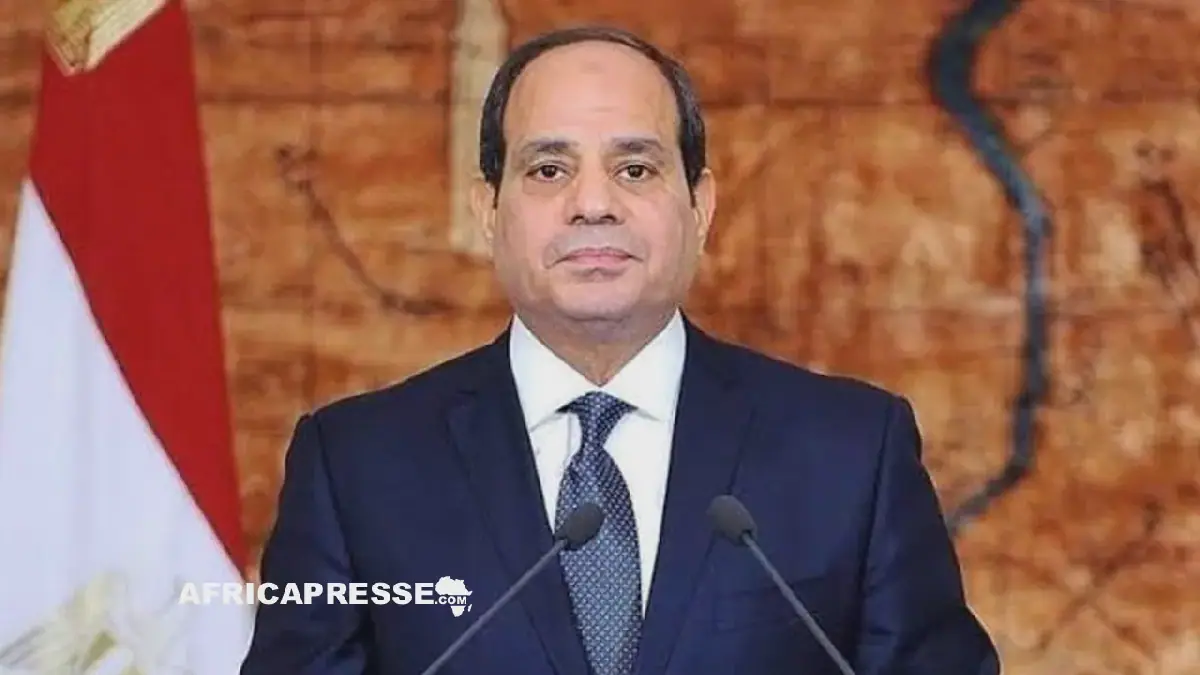
Egyptian President Abdel Fattah al-Sissi has announced that he will step down from office by 2030, marking the end of his current term. The declaration was made on October 17 during a ceremony at the Egyptian Military Academy. Al-Sissi, 71, stated that he would not seek to remain in power beyond 2030, provided he is still alive. This pledge comes as a surprise given his past actions and the ongoing concerns about the country's democratic transition.
Al-Sissi outlined a process for selecting his successor, which involves identifying candidates between 40 and 50 years old who have completed doctoral studies in Egypt or abroad. These candidates would then undergo a 30-month training program at the military academy to prepare them for state affairs and protecting institutions. Up to 1,000 candidates may participate in this program. However, al-Sissi emphasized that he will only relinquish power when he deems his successors ready, effectively maintaining control over the transition process.
Critics argue that al-Sissi's promise does not signal a genuine shift towards democracy. The Egyptian military, which controls approximately 40% of the country's economy, has historically played a dominant role in politics. Since 1952, the military has provided four out of five Egyptian presidents. Analysts suggest that al-Sissi's announcement may be an attempt to consolidate his legacy and ensure a controlled transfer of power within the military apparatus.
Al-Sissi's past actions have raised concerns about his commitment to democratic principles. In 2013, he overthrew elected President Mohamed Morsi, and in 2014, he pledged not to alter the constitution, only to revise it in 2019, allowing him to run for additional terms. His electoral victories, with reported majorities of 89-97%, have not been recognized as free and fair by international observers.
The announcement has been met with skepticism by various observers. Some speculate that al-Sissi may be attempting to preempt potential unrest, similar to what led to the ousting of Hosni Moubarak in 2011. Others point to the possibility that he may be seeking to secure a spot for his son or another preferred candidate. The Qatari media outlet Al-Araby Al-Jadid reported that al-Sissi may be feeling the weight of governing a population of over 100 million.
Egypt is currently facing significant economic and social challenges. The country has not published official poverty figures for five consecutive years, with estimates suggesting that over a third of the population lives below the poverty line. Large-scale infrastructure projects, including the Octagon complex hosting the military academy, have contributed to a substantial increase in external debt. The government also faces criticism for its handling of human rights and press freedom, with 26 Egyptian journalists currently detained.
In response to international pressure, al-Sissi's government has made some concessions, including the establishment of a national human rights strategy. This move reportedly secured €4 billion in European aid. However, analysts argue that such gestures may be tactical, aimed at appeasing critics rather than enacting meaningful reforms. As Egypt approaches 2030, the international community will be watching closely to see if al-Sissi's pledge marks a genuine turning point in the country's politics.
Key points
- Al-Sissi's pledge to step down by 2030 may be an attempt to consolidate his legacy and ensure a controlled transfer of power within the military apparatus.
- Critics question the sincerity of al-Sissi's promise, citing his past actions and the ongoing concerns about Egypt's democratic transition prospects.
- Egypt faces significant economic and social challenges, including high poverty rates, a substantial external debt, and concerns about human rights and press freedom.