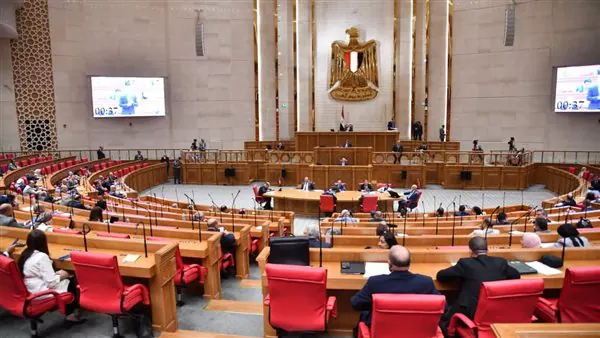
Egyptian parliamentarians are calling on the government to urgently resolve issues with the building violations settlement law and provide new facilitations. According to Abd al-Rahman Bashari, a member of the House of Representatives, the file on settling building violations needs a final legislative and executive resolution. He emphasized the need for the government to move quickly to complete the draft amendment to the settlement law and address all problems that have arisen during the application of the current law.
Bashari stated that the goal of any new amendments should not be just to modify some legal texts, but to provide real solutions to the problems faced by citizens on the ground. He noted that many citizens are willing to settle and regularize their situations, but have encountered complex procedures, delays in examination and decision-making on applications, or inconsistent treatment of some cases. Bashari stressed that the new legislation should learn from the practical experience of applying the law and address the shortcomings that have emerged.
The practical experience of applying the settlement law has revealed several points that need careful review, including procedures for submitting applications, examination, estimating the settlement fee, required documents, and time limits for completing procedures. Bashari emphasized the importance of unifying and simplifying procedures for citizens, accelerating the work of specialized committees, and setting clear time limits for completing applications. This would prevent citizens from waiting for long periods for a final legal decision.
Bashari requested that the government include a comprehensive package of facilitations in the expected amendments, taking into account the economic and social conditions of citizens and alleviating the financial and administrative burdens on those wishing to settle. He also called for reviewing cases that have proven difficult to handle under the current law and exploring the possibility of adding new cases for settlement under clear legal and technical controls.
Bashari pointed out that the required facilitations should also extend to the period specified for submitting settlement applications, providing citizens with a reasonable time to complete their papers and procedures. He stressed that the goal is to encourage citizens to regularize their situations, not to create more obstacles. Bashari emphasized that continuing to keep the settlement file open for long periods does not serve the interests of the state or citizens.
Bashari added that closing the settlement file does not mean being lenient with new building violations, but rather that resolving old violations and regularizing eligible ones will help the state transition to a more decisive phase in facing illegal and random construction and preventing future violations. He stressed that the coming phase requires full cooperation between the government, the House of Representatives, and executive bodies.
Bashari concluded by emphasizing that citizens who wish to regularize their situations and meet legal requirements should find clear, easy, and rapid procedures, as well as suitable fees and swift mechanisms for completing their files. He urged the government to quickly finalize the legislative amendments and present them to the House of Representatives, as resolving this file represents an important step towards stabilizing citizens' situations, organizing urban planning, and preserving state rights.
Key points
- Egyptian lawmakers are pushing for swift resolution of building violations settlement law issues.