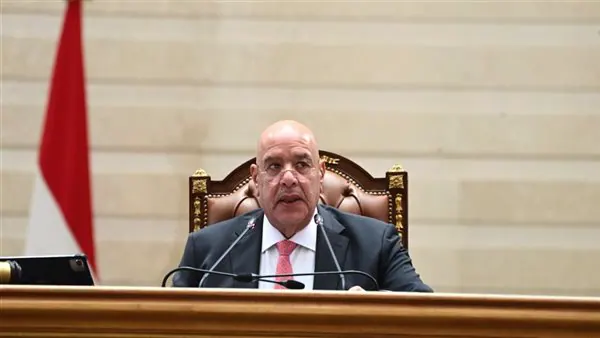
Egyptian House of Representatives Speaker, Counselor Hesham Badawi, has called for the General Committee to convene following the adjournment of the plenary session. According to sources, the committee is expected to discuss the President's objections to Article 25 of the Kayan University law, which pertains to the military division within the university. The President's objections were submitted to the House of Representatives last week.
The Kayan University law, proposed by the government, aims to establish a new university under the Egyptian Armed Forces. The law's Article 25, which sparked the President's objections, stipulates that students in the military division of the university's colleges and institutes shall receive a monthly stipend equivalent to the first salary of a second lieutenant, along with legally stipulated compensations. This stipend is to be granted from the date the students are awarded their military rank.
The General Committee's discussion of the President's objections comes after Prime Minister Mostafa Madbouly addressed the House of Representatives, explaining the government's stance on the matter. Following Madbouly's address, the House of Representatives referred the President's objections and related statements to the General Committee for further review. According to the House of Representatives' internal regulations, the General Committee plays a crucial role in addressing such objections.
The House of Representatives now faces two possible courses of action regarding the President's objections. Firstly, the House can reject the President's objections, in which case the law will come into effect without requiring further presidential approval. Alternatively, if the House decides to accept the President's objections and amend the law, a special committee will be formed to discuss the proposed changes.
The General Committee, as per the House of Representatives' internal regulations, consists of the Speaker, the two deputies, heads of specialized committees, representatives of parliamentary bodies of political parties with ten or more seats, and five members chosen by the House Bureau. The Committee's meetings are convened and presided over by the Speaker, and its decisions are made by a simple majority of those present.
The internal regulations of the House of Representatives outline the Committee's responsibilities, including discussing general matters, examining periodic reports from various committees, and reviewing reports from independent bodies and oversight agencies. The Committee can also invite ministers, heads of independent bodies, or other officials to attend its meetings and provide insights on specific issues.
The convening of the General Committee to discuss the President's objections to the Kayan University law highlights the complexities of the Egyptian legislative process. The Committee's deliberations will likely have significant implications for the future of the proposed university and its military division. Ultimately, the House of Representatives' decision will determine the fate of the law and its potential impact on Egypt's education sector.
Key points
- The Egyptian House of Representatives' General Committee will discuss President's objections to Article 25 of the Kayan University law.
- The law proposes establishing a new university under the Egyptian Armed Forces with a military division.
- The General Committee's decision will determine the fate of the law and its potential impact on Egypt's education sector.