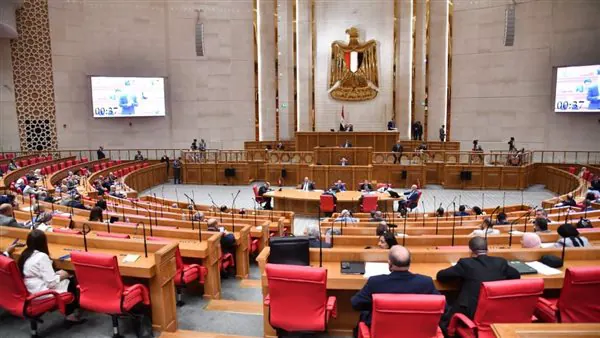
The special committee of the Egyptian House of Representatives, tasked with studying President Abdel Fattah el-Sisi's objection to Article 25 of the Kayan University law, is set to hold its first meeting today, Wednesday, October 7, 2026. The committee, led by Dr. Assem El-Gazzar, Deputy Speaker of the House, will examine the President's objection to the article, which pertains to financial benefits for students at the university's military branch.
The meeting comes after the House of Representatives approved the report of the General Committee on the President's objection to Article 25 of the Kayan University law. The committee was formed with members including MPs Ashraf El-Sheikhy, Alaa Fouad, Ibrahim El-Masry, Magda Bakry, Salah Fawzi, Ali Ayoub, Tarek El-Tawil, Ahmed Fayed, Hanan Amin, and Ali Khalifa. The committee's task is to study the objection and provide recommendations.
The President's objection to Article 25 concerns the financial benefits granted to students at the university's military branch. The article provides for a monthly stipend equivalent to the first salary of a second lieutenant, as well as an annual bonus for outstanding students. The General Committee recommended approving the President's objection and abolishing Article 25, citing the need for equality between students in the military and civilian branches.
The General Committee's report, which was presented to the House of Representatives, highlighted the need to achieve parity between students in both branches and avoid disparities in financial benefits. The committee also recommended that the government and relevant authorities address the implications of abolishing the article and complete the necessary legislative procedures.
The House of Representatives is expected to continue its discussion of the President's objection and the committee's recommendations. The parliamentary procedures will follow the constitutional and regulatory frameworks governing the consideration of presidential objections. Article 123 of the Constitution outlines the procedures for presidential objections to laws, while the House of Representatives' internal regulations govern the process.
If the House of Representatives accepts the President's objection, it will proceed with re-drafting the Kayan University law in accordance with the committee's recommendations. The revised law will then be submitted for final approval. The parliamentary process aims to ensure that the law is consistent with the Constitution and relevant legislation.
The discussion of the President's objection to the Kayan University law is part of the ongoing parliamentary procedures for the proposed law. The House of Representatives will consider the committee's report and the government's statement before making a final decision. The outcome will determine the future of the Kayan University project and its implications for Egypt's education sector.
Key points
- The Egyptian Parliament's committee will discuss President Abdel Fattah el-Sisi's objection to Article 25 of the Kayan University law.