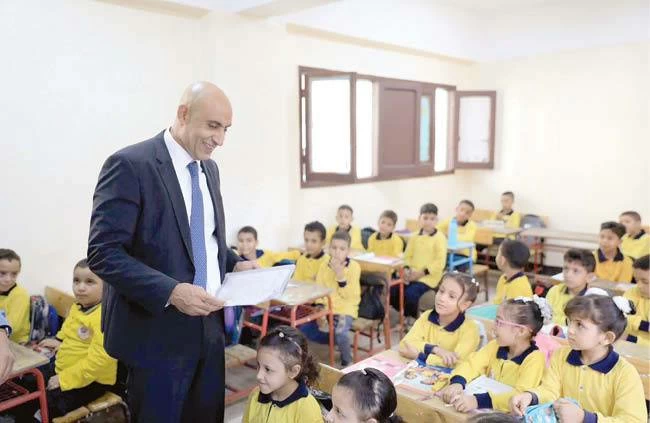
Egyptian lawmaker Snai Al-Saeed of the Egyptian Social Democratic Party has submitted a parliamentary question to the House of Representatives, directed at the Minister of Education and Technical Education. The query addresses complaints from parents about the difficulty and density of primary school curricula, as well as the high academic burdens and evaluations imposed on children. Al-Saeed's inquiry highlights concerns that these pressures may lead to children becoming disenchanted with education.
Al-Saeed pointed out that numerous parents have expressed fears that the continuous pressures may cause children to develop a negative attitude toward learning, rather than fostering their personalities, developing their abilities, and instilling a love for knowledge. The lawmaker questioned the basis for determining the volume and difficulty of primary school curricula, inquiring whether studies have been conducted to assess the suitability of the curricula and evaluations for the age group and psychological and mental abilities of children.
The parliamentary question also sought clarification on the controls in place to prevent excessive homework and evaluations from becoming a daily burden on children and families. Al-Saeed asked if there is a periodic mechanism for measuring the opinions of parents, teachers, and students regarding the new curricula and if the ministry plans to review the content and volume of curricula to achieve a balance between academic achievement and the child's right to rest, play, and activities.
Furthermore, Al-Saeed inquired about the measures taken by the ministry to ensure that the evaluation system serves as a means to improve the educational process, rather than being an additional source of pressure on children and their families. The lawmaker emphasized that education reform does not solely involve increasing academic content but rather providing education tailored to the age group, considering the child's abilities and psychological and social needs, and fostering a love for learning.
The concerns raised by Al-Saeed reflect a broader issue affecting many Egyptian families. Parents have expressed worries about the impact of heavy curricula on their children's well-being and academic performance. The Egyptian Ministry of Education has faced criticism for the rigidity and complexity of its curricula, which some argue do not account for the diverse needs and abilities of students.
In response to growing concerns, the Ministry of Education has initiated efforts to reform and modernize the education system. These efforts aim to provide a more balanced and inclusive learning environment that prioritizes the development of students' skills and well-being alongside academic achievement. However, the effectiveness of these initiatives remains to be seen.
The parliamentary inquiry by Al-Saeed underscores the need for a comprehensive review of primary school curricula and evaluation systems in Egypt. By addressing the concerns of parents, teachers, and students, the government can work toward creating a more supportive and effective educational environment that promotes academic success and the overall well-being of young students.
Key points
- Egyptian lawmaker Snai Al-Saeed submits parliamentary question addressing concerns over primary school curriculum pressures
- Parents express fears that heavy curricula may lead to children becoming disenchanted with education
- Ministry of Education faces criticism for rigidity and complexity of curricula