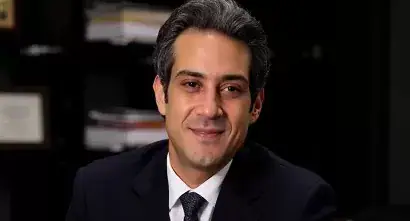
Ayman Hamdi Sharif, deputy head of the Culture and Media Committee in Egypt's Senate and managing director of Obour Land, has commended President Abdel Fattah El-Sisi's call for the United States and regional countries to de-escalate tensions and seek a political solution to the crisis with Iran. Sharif stated that El-Sisi's invitation reflects a deep strategic understanding of the current situation's sensitivity and the risks of continued confrontation to the Middle East's security and stability.
Sharif emphasized that the Egyptian message is based on the fact that continued escalation will not remain confined to the two parties involved and may lead to a broader regional confrontation with unpredictable consequences. The ongoing turmoil and interconnected conflicts in the region further complicate the situation. He noted that the Suez Canal, a vital waterway for international trade, and global energy markets could be affected by any new military disturbances.
The importance of Egypt's diplomatic initiative lies in its direct engagement with the US and regional countries, emphasizing that containing the crisis is a shared responsibility. Sharif stressed that achieving a political settlement requires a genuine willingness from all parties to move away from escalatory calculations that could push the region into uncontrollable paths. Egypt's initiative seeks to promote dialogue and avoid exacerbating tensions.
According to Sharif, Egypt recognizes that the costs of war extend beyond military losses to the economy, citizens' lives, and development opportunities. He also highlighted the potential for increased instability and emerging threats to regional security. Therefore, early diplomatic engagement is essential for both political and security reasons. Egypt's proactive approach aims to prevent the crisis from spiraling out of control.
The current situation demands prioritizing dialogue, restraint, and establishing serious communication channels to address differences and reach balanced understandings. Sharif emphasized that the international community must play an active role in preventing the crisis from escalating into an open confrontation. Respect for national sovereignty and consideration of security and stability factors are crucial in this process.
Sharif drew attention to El-Sisi's phrase "before it's too late," which conveys a significant political message about the limited time available to contain escalation. He warned that delaying action could make a settlement more complicated and costly. Egypt remains committed to the option of peace and political solutions as the means to protect the region's people, preserve its resources, and prevent the Middle East from descending into a new phase of conflict.
Egypt's call for de-escalation and dialogue reflects the country's proactive approach to addressing regional challenges. By promoting a peaceful resolution to the US-Iran conflict, Egypt aims to contribute to maintaining regional stability and security. The international community will be watching closely to see how this situation unfolds and whether El-Sisi's call for de-escalation will be heeded.
Key points
- Egypt's President Abdel Fattah El-Sisi has called for de-escalation in the US-Iran conflict.
- Egyptian officials have praised El-Sisi's initiative, citing the risks of continued confrontation.
- The crisis has significant implications for regional stability, global trade, and energy markets.