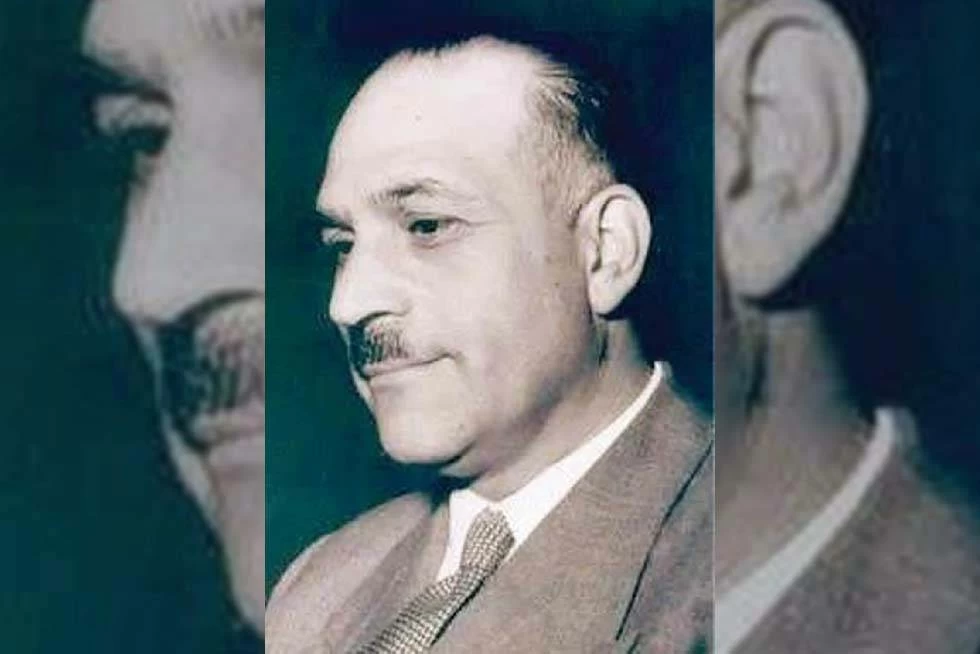
Fathi Radwan was a renowned Egyptian nationalist, politician, and writer who left an indelible mark on the country's history. Born on May 14, 1911, in the city of Minya, Radwan's family later moved to Cairo, where he attended the Alhlya School and then Mohamed Ali School, obtaining his primary education in 1924 and secondary education from one of Asyut's schools. His father worked in Asyut at the time. Radwan's educational journey continued as he joined the Faculty of Law in 1929 and graduated in 1933 to pursue a career in law.
Radwan's involvement in politics began early in his life. In 1933, he co-founded the "Egypt Al-Fatat" (Young Egypt) party with his friend Ahmed Hussein. He remained with the party until 1937, after which he joined the National Party. In 1944, Radwan established the New National Party based on the principles of the National Party founded by Mustafa Kamil. The party remained active until all parties were dissolved in 1953. Throughout his life, Radwan was known for his unwavering commitment to nationalist causes and his advocacy for human rights.
Radwan's activism often came at a personal cost. He was arrested multiple times for his political activities, including after the Cairo fire on January 26, 1952. However, with the advent of the July 23, 1952 revolution, Radwan's fortunes changed. He became the Minister of National Guidance (Information) but left the ministry in 1958 due to disagreements with President Abdel Nasser over certain policies. Despite these challenges, Radwan continued to be involved in Egyptian politics and served as a member of parliament for the Cairo district.
In addition to his political career, Radwan was a prolific writer with a wide range of works in theater, literature, biography, and politics. His contributions to Egyptian literature and politics have been widely recognized. Radwan's commitment to human rights was evident in his efforts to establish a committee for Egyptian human rights, a cause he passionately advocated for throughout his life.
Radwan's relationship with the Egyptian judiciary was also noteworthy. He was known in judicial circles as a lawyer and defender of national issues and freedoms. His dedication to these causes led to him being imprisoned multiple times, demonstrating the high price he paid for his activism. Despite these challenges, Radwan remained a respected figure in Egyptian society.
Throughout his life, Radwan was associated with several key political figures and movements. His partnership with Ahmed Hussein in founding "Egypt Al-Fatat" was a significant early collaboration. Later, his interactions with President Abdel Nasser, including their disagreements, highlighted the complexities of Egyptian politics during that period. Radwan's legacy as a nationalist and advocate for human rights continues to be remembered.
Fathi Radwan passed away on October 2, 1988, leaving behind a legacy of nationalist activism, literary works, and a commitment to human rights. His life story serves as a testament to his unwavering dedication to the causes he believed in, even in the face of adversity. Radwan's contributions to Egyptian politics, literature, and society remain significant.
Key points
- Fathi Radwan was a founding member of the "Egypt Al-Fatat" party and played a significant role in Egyptian nationalist movements.
- He served as Minister of National Guidance and was a member of parliament, advocating for human rights throughout his life.
- Radwan was a prolific writer, contributing works in theater, literature, biography, and politics that reflected his commitment to Egyptian society and politics.