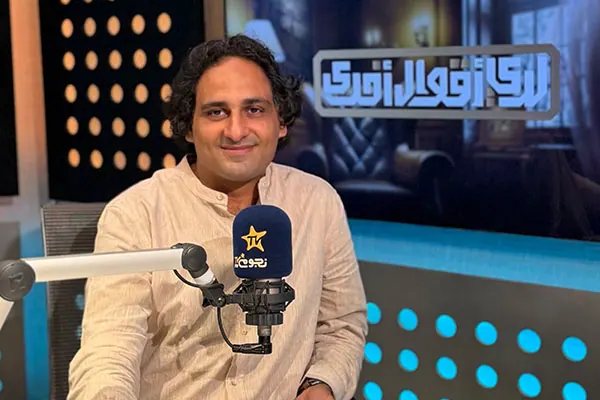
Dr. Osama Ali, a prominent Egyptian musician, recently appeared on the "Lidi Aqal Aukhar" program on Nogoum FM, where he discussed his journey and notable initiatives. He shared his early passion for music, which began when he participated in a musical competition during his school days, singing Abdel Halim Hafez's "Jabbar" and securing first place. This experience sparked his interest in music, leading him to pursue a career in the field.
Dr. Ali's academic background in music education played a significant role in shaping his career. He graduated from the College of Musical Education, ranking first in both his college and across all Egyptian universities. His thesis project involved teaching music and singing to street children, which eventually grew into a chorus of 25 children, including some with promising voices. This initiative demonstrated his commitment to using music as a tool for social impact.
In addition to his work with street children, Dr. Ali has also been involved in other initiatives aimed at promoting music and intergenerational connections. He organized events at elderly care homes, where he would perform and encourage seniors to share their favorite songs and stories. This experience not only brought joy to the elderly but also highlighted the power of music in bridging age gaps and fostering a sense of community.
Dr. Ali has also made significant contributions to music education in Egypt. He served as the head of a committee tasked with developing music curricula for Egyptian international schools under the Ministry of Education. As part of this role, he helped create new songs and materials to replace outdated ones, ensuring that music education remains a vibrant and engaging part of the school curriculum.
One of Dr. Ali's most notable initiatives is his work with prison inmates. He began by introducing music and singing to inmates, with the goal of rehabilitation and reintegration into society. With the support of the Ministry of Interior, Dr. Ali and his team identified talented inmates and provided them with musical training, using innovative methods such as numerical notation. The initiative culminated in a successful event featuring performances by inmates, which was well-received by both the prisoners and the attending artists.
Dr. Ali's work with prison inmates has been widely recognized as a groundbreaking effort in rehabilitation through music. By empowering inmates with musical skills, he aims to help them rebuild their lives and reintegrate into society upon release. His dedication to this cause has inspired many, and his initiative serves as a model for similar programs in the future.
Reflecting on his achievements, Dr. Ali emphasized the significance of his work in the context of Egyptian society. He expressed gratitude to those who supported his initiatives, particularly the Ministry of Interior, and highlighted the positive impact of his work on both the inmates and the broader community. Through his efforts, Dr. Ali continues to demonstrate the transformative power of music in promoting social change and rehabilitation.
Key points
- Dr. Osama Ali's initiative to teach music to prison inmates aims to facilitate rehabilitation and reintegration into society.
- The musician's work with street children and elderly care homes showcases the versatility of music in fostering intergenerational connections and community engagement.
- Dr. Ali's contributions to music education in Egypt, including his role in developing curricula for international schools, underscore his commitment to promoting the arts in the country.