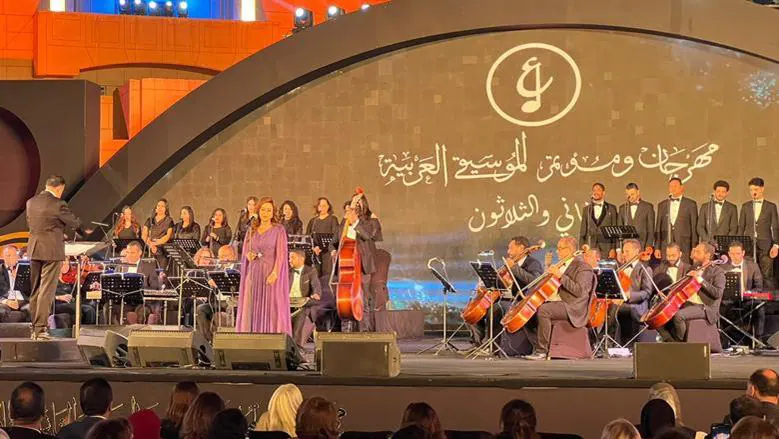
The 34th Arab Music Festival, set to take place from October 20 to 30, 2026, has become a focal point of contention in the Egyptian music scene. The festival, dedicated to the late Egyptian singer Hani Shaker, features 22 concerts with around 70 artists and musicians participating. However, the event has been marred by controversy after several artists withdrew and made public statements about their decisions. The festival's organizers had hoped to showcase a diverse range of talents, but the withdrawals have raised questions about the festival's management.
The controversy began during a press conference for the festival, where Dr. Reda El-Wakil, head of the Egyptian Opera House, discussed the absence of renowned singer Ali El-Haggar. El-Wakil explained that the festival organizers had considered including El-Haggar in the lineup but ultimately decided against it. He cited El-Haggar's previous participation in various events at the Opera House, including the Citadel Festival and the Summer Festival, as well as his project "100 Years of Song." El-Wakil's comments sparked a heated debate about the festival's programming and funding.
Ali El-Haggar subsequently revealed that he had withdrawn from the festival due to what he described as a "weak and humiliating" budget allocated to his musical group. El-Haggar emphasized that this was the first time he had missed the Arab Music Festival since its inception. He argued that the budget was insufficient to support the participation of his group and that he could not accept such terms. El-Haggar's decision was seen as a significant blow to the festival, given his stature in Egyptian music.
The controversy escalated with the withdrawal of another prominent artist, Mohamed Tharwat. Tharwat announced his decision not to participate in the festival, citing his commitment to upholding the dignity of Egyptian art and artists. In a statement, Tharwat expressed his disappointment with the festival's organization and funding, emphasizing that he would not participate in any event that compromised the values of Egyptian art. Tharwat's withdrawal was seen as a show of solidarity with El-Haggar and a rebuke to the festival organizers.
Singer May Farouk expressed her support for Tharwat's decision, sharing his statement on social media and endorsing his stance. However, Farouk also clarified that she was not scheduled to perform at the festival, dismissing rumors about her participation. The public debate over the festival's merits and shortcomings continued to unfold, with many artists and music enthusiasts weighing in on the controversy.
The list of withdrawals continued to grow, with reports emerging that singer Genat had also declined to participate in the festival. The reasons for her withdrawal were not publicly disclosed, but it was seen as another blow to the festival's lineup. The controversy has raised questions about the management and funding of the Arab Music Festival, as well as the relationships between artists, organizers, and the Egyptian music industry as a whole.
The controversy surrounding the 34th Arab Music Festival highlights the challenges faced by arts organizations in Egypt and the importance of fair treatment and adequate funding for artists. The festival's organizers will need to address the concerns raised by the withdrawals and work to rebuild trust with the artistic community. The incident has sparked a wider conversation about the value and support of Egyptian art and culture.
Key points
- The 34th Arab Music Festival has been marred by controversy following the withdrawal of several prominent Egyptian artists, including Ali El-Haggar and Mohamed Tharwat.
- The withdrawals were prompted by disputes over funding and the treatment of artists, with some describing the allocated budgets as "weak and humiliating."
- The controversy has raised questions about the management and funding of the festival, as well as the relationships between artists, organizers, and the Egyptian music industry.