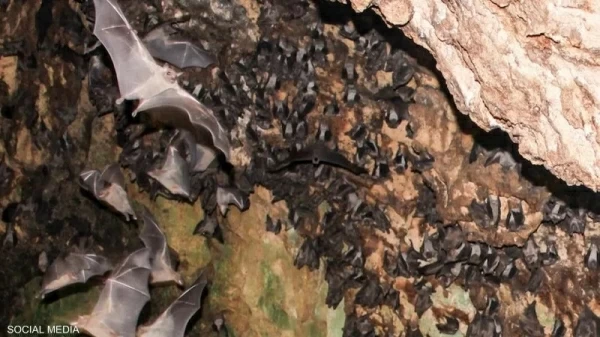
A recent surge in bat sightings at the ancient Abu Simbel temple in Aswan has prompted a response from the Egyptian Ministry of Tourism. Visitors to the site reported seeing large numbers of bats roosting in the temple's higher areas, particularly on the ceilings of internal halls. The bats have caused concern among tourists and raised fears about the potential impact on the temple's condition.
The issue was brought to the attention of the Ministry of Antiquities by inspectors from the Abu Simbel Antiquities Inspectorate, who submitted a memo requesting urgent action to address the problem. The memo noted that the temple's cave-like environment had allowed the bats to settle and breed, leading to an accumulation of droppings on the floors and walls. Previous attempts to scare the bats away using lighting and manual methods have been unsuccessful.
In response to the issue, a Ministry of Antiquities spokesperson confirmed that the problem had been identified and was being addressed. Specialists would be visiting the site to take necessary measures, including the potential use of ultrasonic repellent devices. These devices, which emit high-frequency sounds undetectable to humans, are designed to deter bats without causing harm to the temple or its visitors.
The Ministry of Antiquities has experience dealing with similar issues at other archaeological sites, including a rodent infestation at the Qaitbay site. The Ministry has ordered ultrasonic repellent devices and is working to deploy them at Abu Simbel and other affected sites. The devices are expected to provide a safe and effective solution to the bat infestation problem.
According to the Ministry, the ultrasonic devices will be used in a targeted and controlled manner to ensure that they do not damage the temple or disrupt the visitor experience. The Ministry is working to resolve the issue as quickly as possible, with the goal of protecting the temple and its visitors from the impacts of the bat infestation.
The Abu Simbel temple, a UNESCO World Heritage site, is one of Egypt's most famous tourist attractions. The site was relocated in the 1960s to save it from flooding caused by the construction of the Aswan Dam. The temple's preservation and protection are of utmost importance to the Egyptian government and the international community.
The Egyptian Ministry of Tourism and Antiquities is taking steps to address the bat infestation at Abu Simbel temple, ensuring the site's preservation for future generations. Key measures include the use of ultrasonic repellent devices and targeted interventions to minimize the impact on the temple and its visitors.
Key points
- The Egyptian Ministry of Tourism and Antiquities is addressing a bat infestation at the Abu Simbel temple using ultrasonic repellent devices.
- The issue was brought to the attention of the Ministry by inspectors who reported a large number of bats roosting in the temple's higher areas.
- The Ministry is working to resolve the issue as quickly as possible to protect the temple and its visitors.