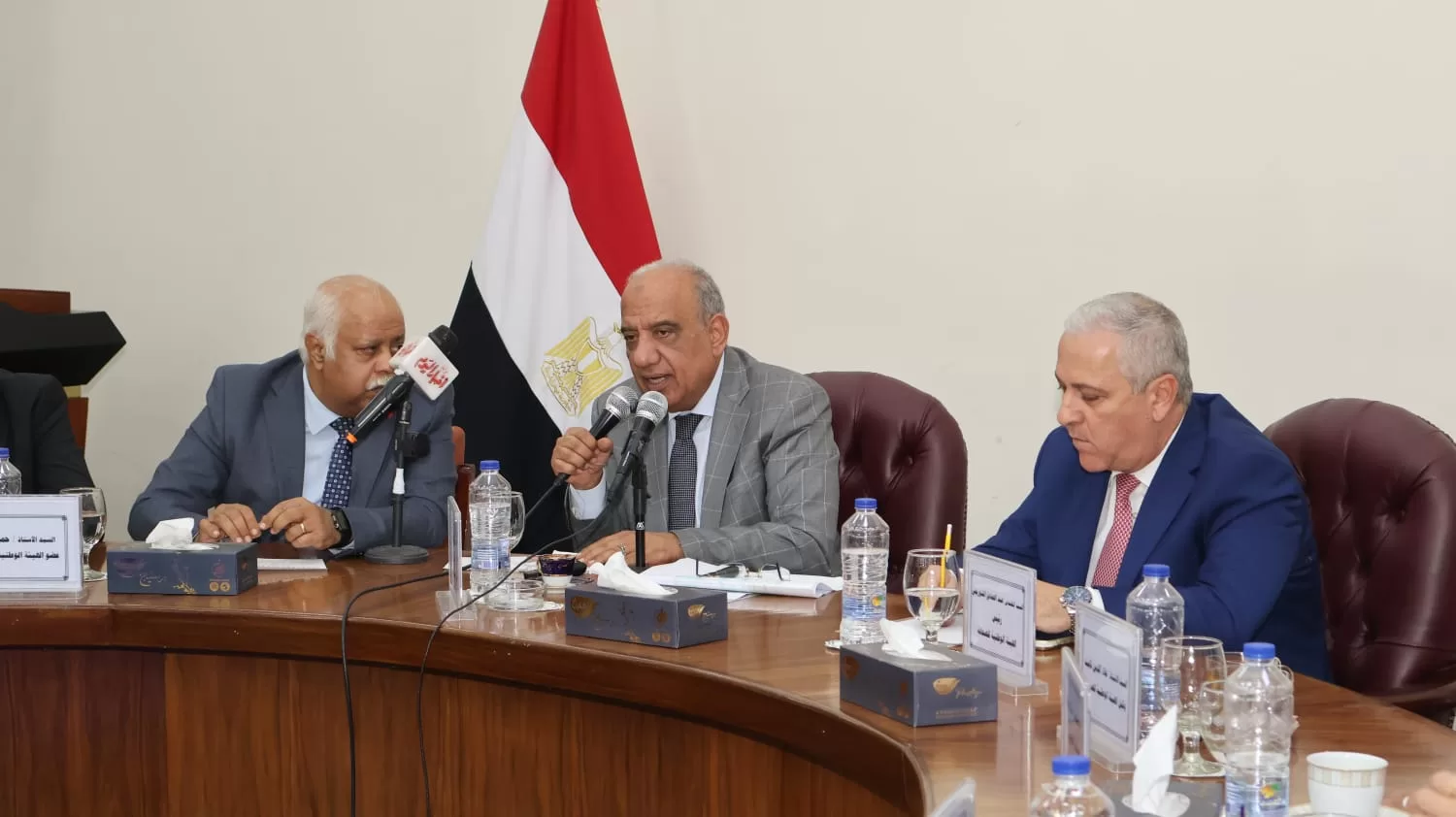
Egyptian Minister of Electricity and Renewable Energy, Dr. Mahmoud Esmat, emphasized that the state has given special attention to the energy sector over the past decade as part of a visionary plan to establish a new era of comprehensive and sustainable development. This vision aligns with the political leadership's view of energy as a national security issue. The country has witnessed an exceptional and radical transformation in electricity production, transmission, and distribution, with investments reaching nearly EGP 5 trillion.
Dr. Esmat highlighted that the ministry is working on restructuring and separating production, transmission, and distribution to improve governance and service quality. He made these statements during a meeting with the heads of administration and editors-in-chief of various newspapers, as well as journalists and writers, at the National Press Authority. The meeting was attended by Eng. Abd al-Sadq al-Shurbaji, head of the authority, and members of the board of directors.
The minister explained that the electricity sector is working on a comprehensive plan to increase the efficiency of the energy system. On the production side, over 35,000 megawatts of power have been added through a diverse mix of energy sources, including thermal plants and new and renewable energy projects. An emergency plan was also implemented to address challenges hindering stable electricity supply, including completing and upgrading existing plants by converting them to combined cycle systems.
Dr. Esmat pointed out that measures have been taken to increase operational efficiency, reduce fuel consumption, and minimize losses. This was achieved by changing operational patterns to increase returns on fuel units, applying economic operation standards, and reducing fuel consumption to produce a kilowatt-hour to less than 170 grams. These efforts aim to optimize resource utilization and improve overall sector performance.
The minister stated that the sector continues to work on increasing the contribution of renewable energy to the energy mix. Approximately 4,000 megawatts of solar and wind power have been added over the past two years, in addition to increasing the capacity of the High Dam by 150 megawatts. The national strategy aims to increase the share of renewable energy to 45% by 2028, up from 42% by 2030, to reduce reliance on traditional fuels and lower carbon emissions.
To utilize renewable energy during peak hours, the ministry has turned to energy storage systems using batteries. This involves establishing connected stations and separate projects that use advanced technology to integrate batteries into the grid, store excess energy, and re-inject it when needed. This approach ensures grid stability and provides a reliable supply of electricity around the clock, with 1,100 megawatt-hours of storage capacity added in 2025/2026.
Dr. Esmat emphasized that the electricity sector aims to build a smart and sustainable system, highlighting the pivotal role of the National Control Center for Electricity and its staff in maintaining grid stability. He also mentioned the completion of control centers in various regions, including Smalut, Najah Hamadi, and the National Center in the Administrative Capital, with three more centers currently under construction.
Key points
- Egypt has invested nearly EGP 5 trillion in its energy sector over the past decade.
- The country aims to increase the share of renewable energy to 45% by 2028.
- Egypt has added 1,100 megawatt-hours of energy storage capacity using batteries.