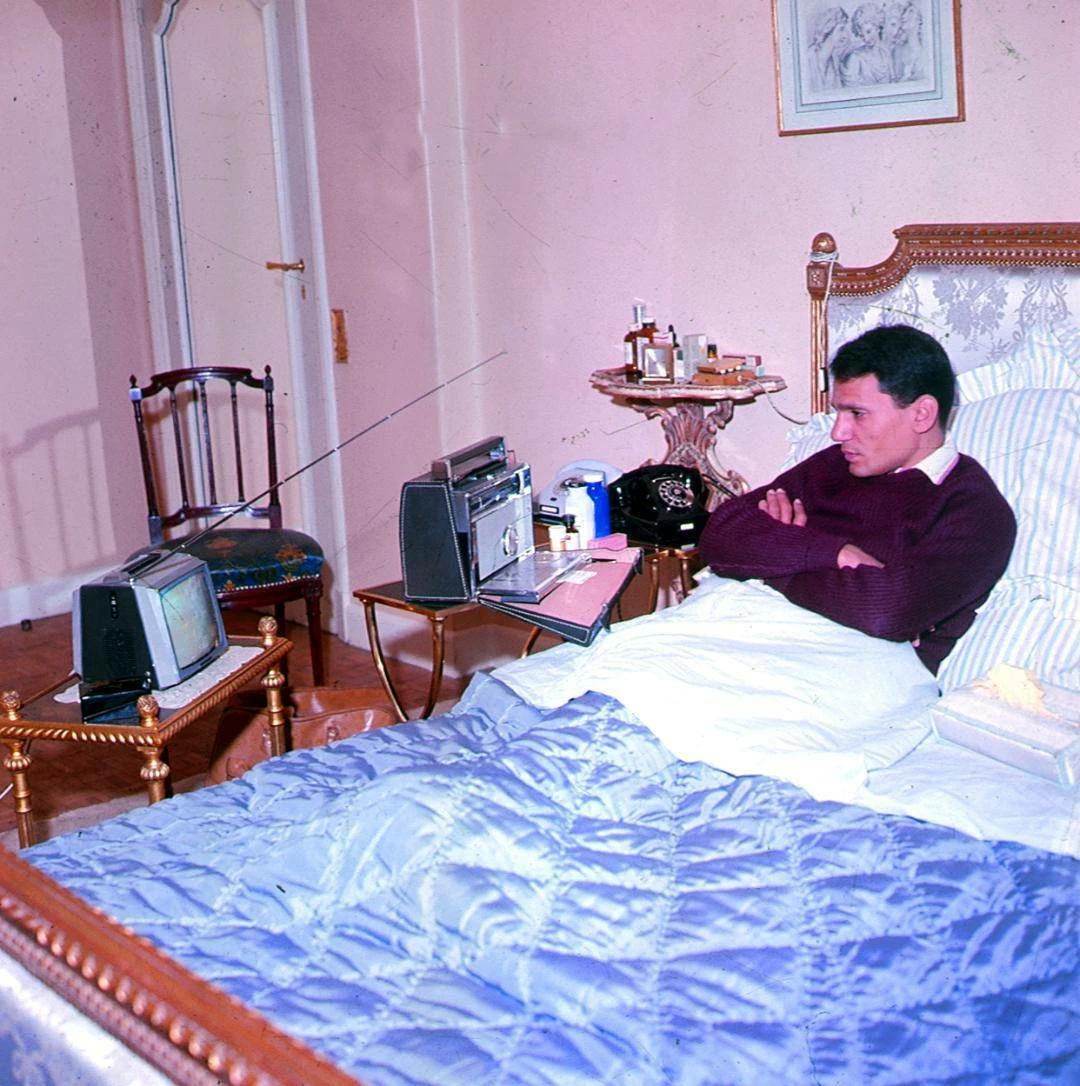
Egyptian media personality Mona El-Shazly recently showcased the personal belongings of the late singer Abdel Halim Hafez on her TV program "Maakum Mona El-Shazly" on ON TV. During the program, El-Shazly took her audience on a tour of Hafez's former home in Cairo's Zamalek district. The home, now a museum, houses several historical items that offer a glimpse into the life of Egypt's beloved singer.
One of the notable items in Hafez's home is a distinctive mark on his bed. According to Abdel Halim El-Shenawy, Hafez's nephew, the mark was left by a hairpiece the singer used during his illness. Hafez suffered from hair loss and had a hairpiece made by a doctor, which left a lasting mark on his head. His sister, Alia, refused to remove the mark after his death, choosing to preserve it as a physical memory of the singer.
El-Shenawy shared additional insights into Hafez's life, revealing that the singer had an intense fear of sleeping in the dark. Due to this phobia, Hafez would often keep the lights on at night. His family also took precautions in case of a potential hemorrhage, ensuring that someone would be available to assist him if needed. As a result, Hafez usually slept during the early morning hours.
The program also highlighted the story behind one of Hafez's famous songs, "Qar'aat Al-Fanjan" (The Tea Reader). According to El-Shazly, the song was composed on the balcony of Hafez's home. The song has become an iconic piece in Arabic music and continues to be celebrated by fans and music enthusiasts alike.
During the program, El-Shazly shared several other anecdotes and stories about Hafez's life, offering a deeper understanding of the singer's experiences and personality. The show provided a unique opportunity for audiences to learn more about Egypt's musical heritage and the life of one of its most celebrated artists.
The late Abdel Halim Hafez, often referred to as the "King of Egyptian Music," remains a highly influential figure in Arabic music. His legacy continues to inspire new generations of musicians and fans. The preservation of his personal belongings and home serves as a testament to his enduring impact on Egyptian culture.
The media's role in preserving and sharing the stories of cultural icons like Abdel Halim Hafez is crucial in ensuring their legacies endure. By sharing these stories and showcasing personal items, media personalities like Mona El-Shazly help keep the memories of such influential figures alive for future generations.
Key points
- The program "Maakum Mona El-Shazly" showcased personal belongings of late Egyptian singer Abdel Halim Hafez.
- Hafez had a fear of sleeping in the dark and kept lights on at night.
- The program highlighted several anecdotes and stories about Hafez's life, offering insights into his experiences and personality.