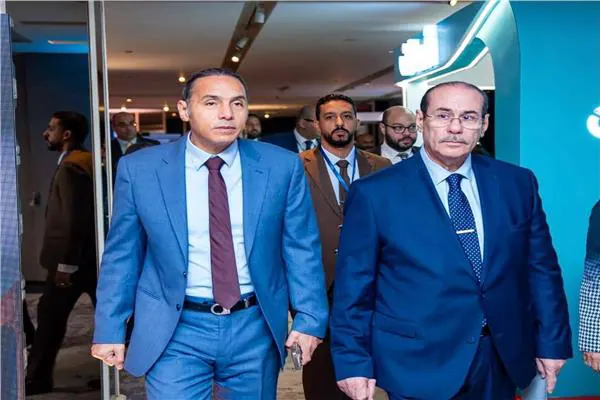
The Egyptian Financial Supervisory Authority is evaluating the development of the non-bank financing sector based on factors beyond just the growth of financing portfolios and customer numbers. According to Dr. Islam Azzam, the head of the authority, the quality of service, product suitability, customer repayment capacity, and protection are essential for the sector's prosperity and overall financial inclusion, particularly for small and medium-sized enterprises and microfinance.
Dr. Azzam made these remarks at the 2026 CERISE+SPTF Global Meeting, hosted by the Egyptian Union for Financing Small and Medium-Sized Enterprises. The meeting was attended by Prime Minister Dr. Mostafa Madbouli, Central Bank Deputy Governor Tariq El-Khouli, and other high-ranking officials. The authority's focus on customer protection and service quality is reflected in several recent decisions, including the development of responsible financing rules and the implementation of a one-time verification code for customer financing.
The authority is also preparing to apply Basel 3 standards to the non-bank financing sector starting in January, aiming to expand risk management beyond credit risks to include market and operational risks. Dr. Azzam revealed that the authority is working on a package of regulatory and technological measures to develop the non-bank financial services market, including the use of artificial intelligence, data analysis, and a centralized anti-fraud system.
The Egyptian Union for Financing Small and Medium-Sized Enterprises aims to extend customer protection services to over 90% of beneficiaries, according to Dr. Hala Abu El-Saad, the union's president. The sector currently employs over 55,000 staff to serve entrepreneurs, farmers, and women, necessitating continuous regulatory coordination to control the market and keep pace with digital transformation.
Dr. Mona Thou Farrar, founder of the Egyptian Union for Financing Small and Medium-Sized Enterprises, noted that the microfinance sector has experienced exceptional growth, with its financing portfolio multiplying 17 times since 2016. She emphasized the importance of adhering to regulatory frameworks set by the Financial Supervisory Authority and improving working conditions and financial incentives to enhance service quality.
Dr. Hossam Bashir, supervisor of the Central Department for Supervision of Project Finance at the Financial Supervisory Authority, stated that the authority prioritizes customer protection and responsible financing. The authority's strategy focuses on stability and sustainability in non-bank financing institutions, developing governance standards, and managing risks associated with rapid digital transformation.
Key statistics indicate that microfinance portfolios reached approximately 74.4 billion Egyptian pounds by the end of the second quarter of 2026, representing a 16% increase from the same period in 2025. Women account for around 52.8% of beneficiaries, with 1.8 million women receiving financing worth 33.7 billion pounds. The sector also saw growth in financing for small and medium-sized enterprises, with portfolios increasing to 26.8 billion pounds by the end of the second quarter of 2026.
Key points
- The Egyptian Financial Supervisory Authority is prioritizing customer protection and service quality in the non-bank financing sector.
- The authority is implementing Basel 3 standards and developing a centralized anti-fraud system to enhance regulatory oversight.
- The microfinance sector has experienced significant growth, with a 17-fold increase in financing portfolios since 2016.