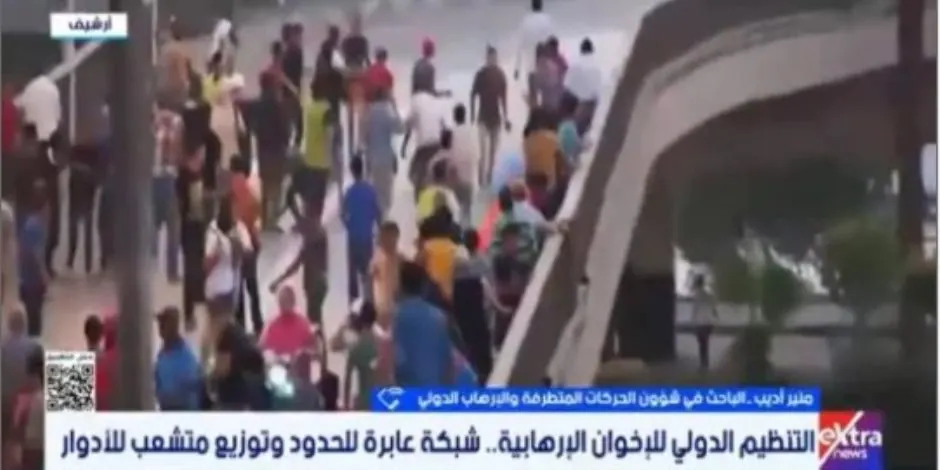
Egyptian researcher Munir Adib has stated that the country's confrontation with the Muslim Brotherhood has undergone multiple phases since 2013. This confrontation has involved not only security and legal measures but also challenging the group's ideology and associated networks. Adib emphasized that financial resources are crucial for any organization's ability to carry out its activities. Therefore, tracking the group's financing networks and related entities is a vital part of counter-terrorism efforts.
According to Adib, the US has previously classified some armed groups that broke away from the Muslim Brotherhood, including Hasm, as terrorist organizations. This classification was documented in previous decisions by the US State Department. Adib's comments came during an interview with Extra News, where he discussed the evolving nature of the Muslim Brotherhood's activities and the challenges this poses for counter-terrorism efforts.
The Muslim Brotherhood is currently facing transformations in its methods of operation, Adib noted. The group is attempting to reposition itself through networks and fronts that differ from its traditional image. In some cases, it may appear under civil or human rights titles. Understanding these changes, Adib argued, can help researchers and concerned authorities track the group's activities more effectively.
Adib stressed that analyzing the group's developments should not be limited to the security aspect. It also involves studying the ideas the group is based on, changes in its discourse, methods of communication, mobilization, and financing. He highlighted the importance of combining efforts to counter violent activities with efforts to challenge the ideological foundations of the group.
Adib pointed out that dealing with the Muslim Brotherhood requires a continuous reading of its transformations, especially as its tools and media presence change. This continuous assessment is crucial for developing effective counter-measures. The researcher also noted that there are international movements, particularly in Western countries, that reflect a changing security vision towards the Muslim Brotherhood.
The US has taken steps to classify groups linked to or splintered from the Muslim Brotherhood, such as Hasm and Liwa al-Thawra, as terrorist organizations. However, the Muslim Brotherhood itself has not been listed as a Foreign Terrorist Organization in the US records published earlier. Adib's insights underscore the complexities of addressing the Muslim Brotherhood's activities and ideology.
The Muslim Brotherhood's efforts to adapt and evolve pose significant challenges for Egyptian and international counter-terrorism efforts. Adib's analysis highlights the need for a comprehensive approach that includes understanding the group's financing, ideology, and evolving strategies. This approach is essential for developing effective measures to counter the group's activities and mitigate its impact.
Key points
- The Muslim Brotherhood is facing challenges in financing and repositioning.
- The group is attempting to adapt and evolve its strategies.
- Understanding these changes is crucial for effective counter-terrorism efforts.