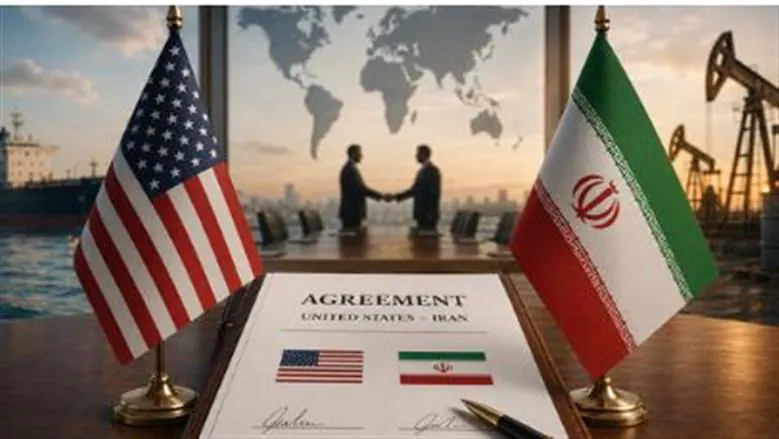
Dr. Hussam El-Bakyei, an Egyptian expert in international relations, has stated that indicators suggest US President Donald Trump remains open to dialogue and negotiation with Iran. According to El-Bakyei, several indicators over the past period point to this openness. The fact that nearly three weeks have passed without US strikes on Iran is one such indicator. Additionally, the Iranian delegation's successful acquisition of visas to attend the United Nations General Assembly meetings further supports this stance.
The Iranian delegation, led by President Masoud Pezeshkian and Foreign Minister Abbas Araghchi, includes technical experts on nuclear and other issues. El-Bakyei noted that Qatar played a mediating role in securing the visas. This development comes after the US had initially refused to grant a visa to Palestinian President Mahmoud Abbas. The Qatari mediation between the US, Iran, and Qatar facilitated the Iranian delegation's visa acquisition, paving the way for their meeting in New York.
El-Bakyei refuted the notion that the US decision to grant visas reflects "goodwill." Instead, he emphasized that Washington is compelled to re-engage in negotiations with Iran. Other indicators, such as growing internal opposition within the US public to war, further support this perspective. The rising cost of living and inflation in the US, largely attributed to the war, have contributed to this shift in public opinion.
The price of diesel has surged to approximately $6.5 per gallon, nearly double the pre-war price of $3.75. This increase has far-reaching implications for American citizens, affecting various aspects of their lives. Consequently, opposition to war within the US public has grown. El-Bakyei highlighted that these factors collectively contribute to the US's apparent openness to negotiations with Iran.
El-Bakyei's comments come amid rising tensions between the US and Iran. Despite these tensions, the expert remains optimistic about the prospects for dialogue. He emphasized that the current situation necessitates a return to negotiations, citing the economic and social implications of continued conflict.
The Iranian delegation's participation in the UN General Assembly meetings presents an opportunity for diplomatic engagement. El-Bakyei stressed that the presence of technical experts within the delegation underscores Iran's commitment to addressing key issues through negotiation. The mediating role of Qatar and other international actors may prove crucial in facilitating meaningful dialogue between the US and Iran.
As the international community watches the developments unfold, El-Bakyei's insights offer a nuanced perspective on the situation. His assertion that Trump remains open to negotiations with Iran provides a glimmer of hope for diplomatic resolution. The coming weeks and months will likely be critical in determining the trajectory of US-Iran relations.
Key points
- Dr. Hussam El-Bakyei cites indicators suggesting Trump remains open to dialogue and negotiation with Iran.
- The Iranian delegation's acquisition of US visas, facilitated by Qatar, is seen as a positive step toward negotiations.
- Growing opposition to war within the US public, driven by economic concerns, may be contributing to the US's apparent openness to negotiations with Iran.