Egyptian political expert Dr. Saeed Abu Rahma has weighed in on the recent developments in Gaza, stating that Israel's actions and statements are closely tied to its internal electoral landscape. According to Abu Rahma, Israel continues to target and expand its presence within Gaza, with ongoing airstrikes and assassinations. These actions coincide with statements from Israeli Prime Minister Benjamin Netanyahu, who has asserted that Israel will not withdraw from Gaza.
Abu Rahma noted that the current situation on the ground involves not only continued military actions but also proposals for displacement and refusal to withdraw beyond the so-called "yellow line." He emphasized that Israel's actions also include closing border crossings and weakening the humanitarian efforts of organizations operating within Gaza. These developments, according to the expert, are part of a broader strategy that impacts not only Gaza but also the West Bank.
The expert further explained that these actions and statements are largely driven by electoral considerations in Israel. With upcoming elections, both Netanyahu and the Israeli military leadership are seeking to garner support from right-wing voters. This approach, however, comes at the expense of the populations in Gaza and the West Bank. The statements regarding non-withdrawal, displacement, and settlement expansion are all seen as attempts to secure votes.
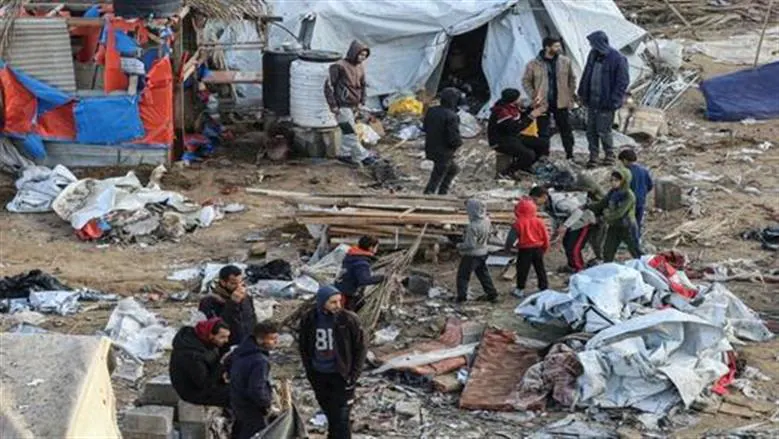
The situation remains tense, with continued military activities and no signs of de-escalation. The international community has been closely monitoring the developments, with many expressing concern over the humanitarian situation in Gaza. Egypt, being a key player in the region, has been involved in various efforts to mediate and address the crisis.
Dr. Abu Rahma's analysis was shared through a recent interview with the Cairo News Channel, where he provided insights into the complex dynamics at play. His comments highlight the intricate relationship between Israel's military actions, political statements, and domestic electoral politics. This connection underscores the challenges in finding a peaceful resolution to the ongoing conflict.
The conflict between Israel and Gaza has been a longstanding issue, with periods of relative calm punctuated by outbreaks of violence. The current situation, with its complex interplay of military, political, and electoral factors, presents significant challenges for all parties involved. International efforts to broker peace and address the humanitarian needs of the affected populations continue.
As the situation develops, it remains to be seen how the various factors at play will influence the future of Gaza and the broader Israeli-Palestinian conflict. The analysis by Dr. Abu Rahma provides valuable context for understanding the current dynamics and the potential trajectories of the conflict.
Key points
- Israel's actions in Gaza are driven by internal electoral calculations.
- Egyptian expert Dr. Saeed Abu Rahma provides analysis on the situation in Gaza.
- The conflict's resolution remains uncertain amid complex military, political, and electoral factors.