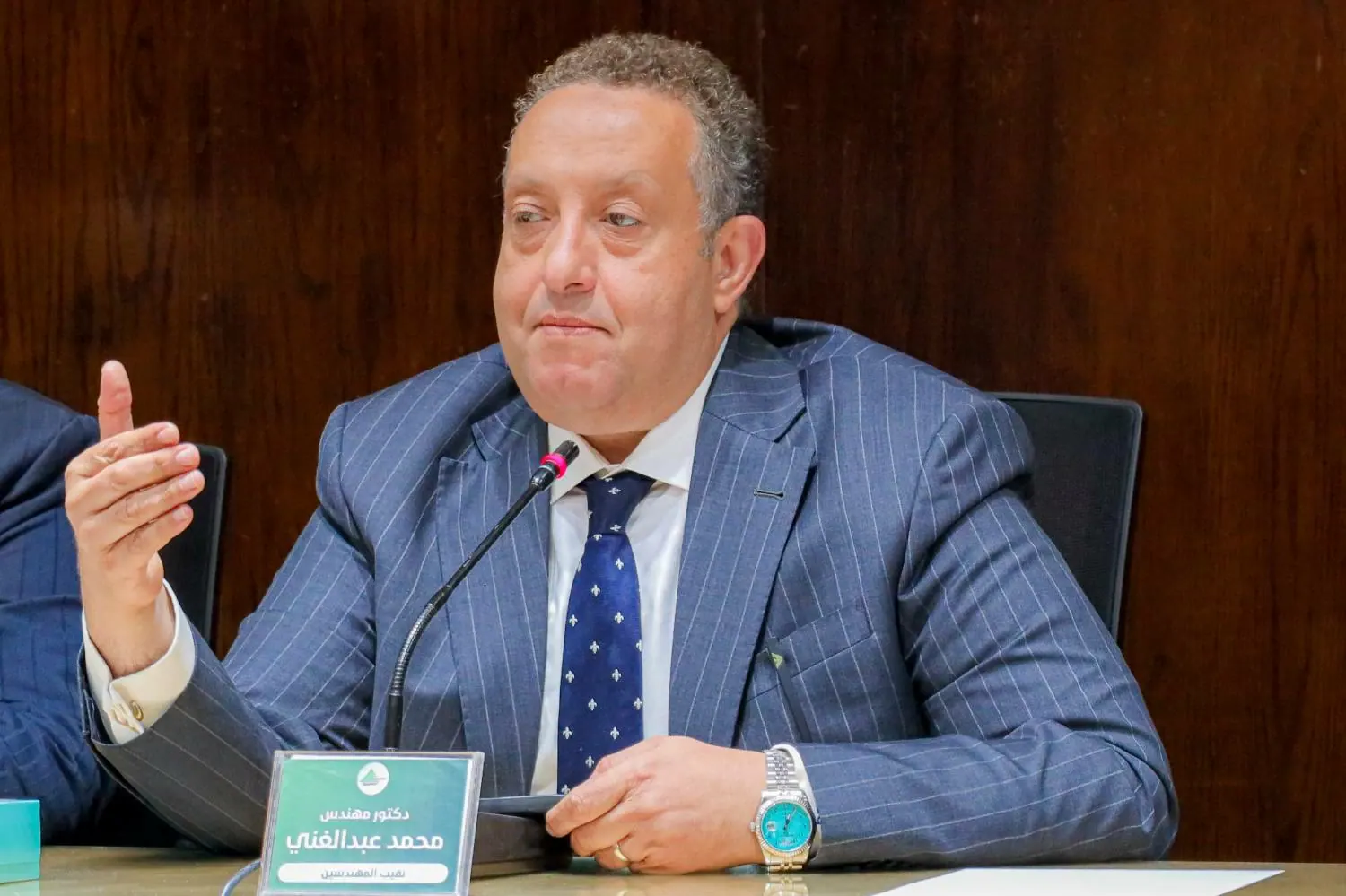
The Egyptian Engineers' Union has expressed its support for the government's stance on the Nile River and the Ethiopian dam, saying it reflects Egypt's commitment to international law and its national security interests. Union head Dr. Mohamed Abdel Ghani praised Water Resources and Irrigation Minister Hani Suwailm's recent statements on the issue, saying they align with Egypt's long-standing position on the matter. Abdel Ghani emphasized that the union views the dam as a multifaceted issue, with engineering, technical, legal, and existential implications.
Abdel Ghani stated that the union cannot accept the dam as a simple power generation or development project, as it affects not only Egypt's water security but also its very existence. He argued that attempts to market the dam as a necessary development project for Ethiopia or to justify it as a response to the country's alleged water needs are unfounded. According to Abdel Ghani, Ethiopia has ample water resources, with significant amounts of wasted water that could be utilized, and its energy needs can be met through various alternative solutions.
The union head pointed out that Egypt has historically supported development projects in Nile Basin countries, citing a recent agreement to finance 36 projects in southern Nile Basin countries. These projects include hydroelectric power, electrical interconnection, and water supply initiatives. Abdel Ghani noted that Egypt's own water situation is precarious, with a significant gap between its available water resources and its needs. The country's per capita share of renewable water resources is approximately 472 cubic meters per year, below the global threshold for water scarcity.
Abdel Ghani emphasized that Egypt's water security is a matter of national existence, given that most of its water resources come from outside its borders, primarily from the Nile River. Any significant changes to the river's flow could have direct implications for Egyptian life, food security, and the economy. Therefore, he stressed that the Egyptian people's right to water and life is not negotiable. The union head also highlighted the importance of a legally binding agreement on the dam's filling and operation.
Abdel Ghani identified the main problem as Ethiopia's construction of the dam without prior agreement, its attempts to pressure Egypt, and its plans for unilateral operation. He insisted that a binding agreement is necessary to establish rules for filling, operation, and data exchange, ensuring the interests of all three countries and preventing harm to downstream countries. The union head expressed support for the Egyptian government's efforts to reach a fair and lawful solution.
The Egyptian Engineers' Union plans to organize several seminars and discussions on the Nile River, international river laws, and ways to enhance African cooperation in the coming period. Abdel Ghani assured that the union stands behind Egypt's stance on defending its water security and will support efforts to reach a lawful solution that preserves Egypt's rights to the Nile River.
The issue remains a pressing concern for Egypt, with the country's water resources under strain. The union's support for the government's stance underscores the significance of the Nile River to Egypt's national security and economy. A lasting solution will require cooperation and agreement among the countries involved.
Key points
- The Egyptian Engineers' Union supports the government's stance on the Nile River and the Ethiopian dam, citing international law and national security concerns.
- Egypt's water security is a matter of national existence, with most of its water resources coming from outside its borders.
- A binding agreement is necessary to establish rules for the dam's filling, operation, and data exchange.