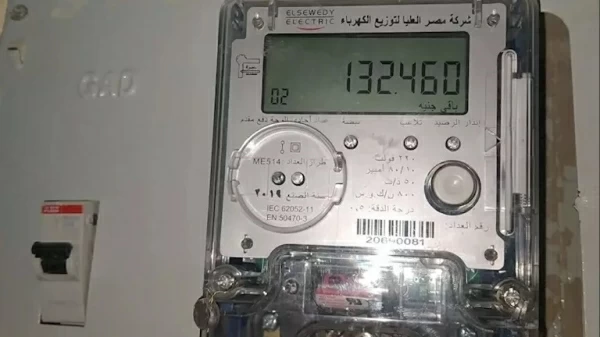
The Egyptian Electricity Authority has issued a warning to users of code meters, also known as prepaid meters, about certain actions that could lead to confiscation of their meters. According to the authority, there are six key offenses that users should avoid. These offenses include tampering with the meter, failing to recharge the meter for an extended period, and operating electrical loads that exceed the meter's capacity.
The first offense is tampering with the meter or removing its seals. Users are advised not to open the meter or make any modifications to its components, as this can lead to a violation of the law. Additionally, users are prohibited from making any changes to the internal connections or creating direct connections that bypass the metering system. Such actions can result in the confiscation of the meter and potential prosecution.
The second offense is failing to recharge the meter for an extended period. If a user does not recharge their meter for more than three months, the authorities may conduct an inspection to verify the status of the premises. This is particularly relevant in cases where there is no indication that the property is closed or that the owner is temporarily absent.
The third offense is operating electrical loads that exceed the meter's capacity. Users are required to adhere to the specified capacity of their meter and avoid operating devices or equipment that require electrical loads exceeding that capacity. If a user needs to increase their electrical load, they must obtain approval from the electricity distribution company and follow the necessary procedures.
The fourth offense is refusing to allow inspection and examination. Users are required to permit authorized personnel or judicial officers to conduct inspections and checks on their meters and connections. Refusing to allow such inspections can lead to actions related to the service and contract.
The fifth offense is relocating the code meter without the company's approval. Users are not allowed to move their code meter from its designated location or transfer it to a different unit without obtaining prior approval from the electricity distribution company. If a user needs to change the meter's location, they must follow the approved procedures and obtain the necessary technical approvals.
The sixth offense is using the code meter as proof of property ownership. Users should be aware that the code meter's primary function is to measure and record electricity consumption, and it does not serve as a document to prove property ownership or legality.
Key points
- Users of code meters must avoid six key offenses to prevent meter confiscation.
- The offenses include tampering with the meter, failing to recharge it, and operating loads that exceed its capacity.
- Users must also allow inspections, not relocate the meter without approval, and not use it as proof of ownership.