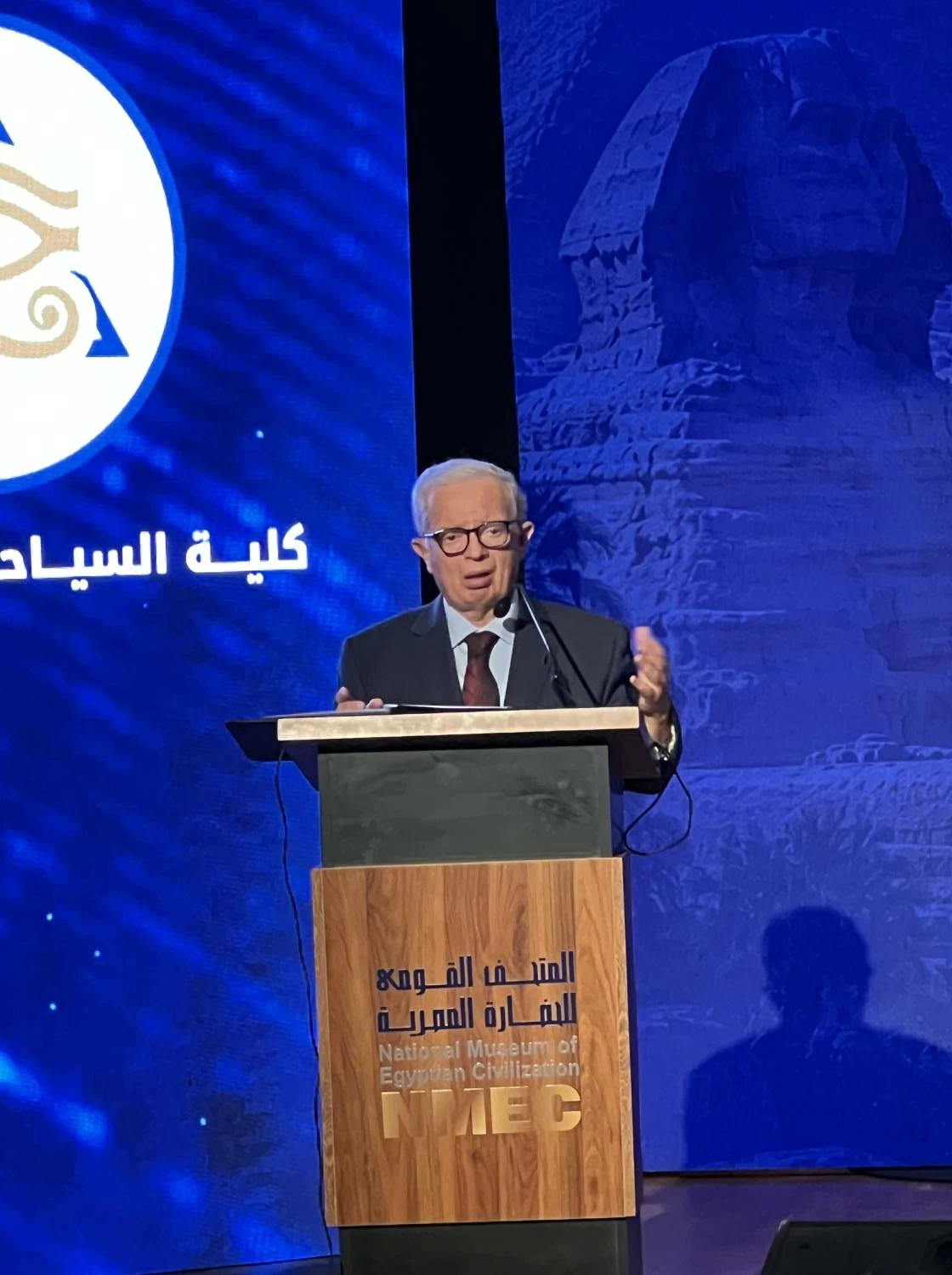
Egyptian Deputy Prime Minister Hussein Issa stated that the tourism sector is a comprehensive industry and one of the main drivers of the national economy. He made these remarks during the opening of the first session of the Al-Ahram Egyptian Tourism Forum, held at the National Museum of Egyptian Civilization. The event was attended by several leaders and experts in the tourism sector, representatives of tourism chambers, and the private sector. Issa emphasized that describing tourism as a "rentier activity" is inaccurate from an economic perspective.
Issa explained that a rentier activity in economics is associated with achieving returns from owning an asset or financial deposit, whereas tourism relies on an industrial and service system. He cited the example of a tourist's needs, including air transportation to reach the tourist destination, accommodation in a hotel, an airport to receive them, and various services and activities related to the sector. According to Issa, tourism is an industry that converts a large quantity of inputs into outputs in the form of services, contributing to providing foreign currency, creating job opportunities, attracting investments, and stimulating many economic sectors linked to it.
The Deputy Prime Minister highlighted that Egypt has not only a tourist product but also exceptional tourism elements and a historical and human story that spans thousands of years. He pointed out that Egypt has a rich history and civilization, the Nile River, two seas, beaches, and natural destinations. Issa also noted the diversity of tourism patterns in Egypt, including cultural, religious, therapeutic, sports, and environmental tourism, in addition to its distinguished geographical location and infrastructure, as well as the "hospitality and good reception of tourists" that the Egyptian people are known for.
Issa identified the real challenge facing Egypt in a highly competitive world as converting the diversity of tourist destinations into competitive capabilities, then transforming this capability into investments, and ultimately achieving economic growth, creating job opportunities, and sustainable development. He emphasized that the forum's title, "Egyptian Tourism: From Diversifying Destinations to Enhancing Global Competitiveness," reflects the importance of moving from merely increasing the number of tourists to maximizing the economic value of Egyptian tourism.
To achieve this, Issa stressed the need to develop the tourism product, improve the quality of services, stimulate investments, enhance air connectivity, benefit from digital transformation, extend the duration of tourists' stay, and increase tourism spending, while preserving the sustainability of destinations and the cultural and natural wealth that Egypt enjoys. He also emphasized that enhancing the competitiveness of Egyptian tourism is a shared responsibility among various parties, including the state, the private sector, experts, and the media.
Issa highlighted the importance of the forum in bringing together these parties to move from diagnosing challenges to formulating solutions, from ideas to initiatives, and from recommendations to implementation. He stated that every new tourism investment means productive energy and job opportunities, every new tourist represents added value to the economy, and every additional day a tourist spends in Egypt means more spending and benefits for the local economy.
The Deputy Prime Minister concluded by affirming the state's commitment to providing a suitable climate for the growth of tourism investments, removing obstacles for its partners in the private sector and investors, and continuing to work on enhancing the competitiveness of Egyptian tourism and solidifying its position on the international tourism map. He expressed his hope that the work of the Al-Ahram Egyptian Tourism Forum would contribute to formulating a practical vision and implementable recommendations.
Key points
- Egyptian Deputy Prime Minister Hussein Issa emphasizes that tourism is a comprehensive industry, not a rentier activity.
- Issa highlights the need to develop the tourism product and improve the quality of services to maximize economic returns.
- The Egyptian government is committed to providing a suitable climate for the growth of tourism investments.