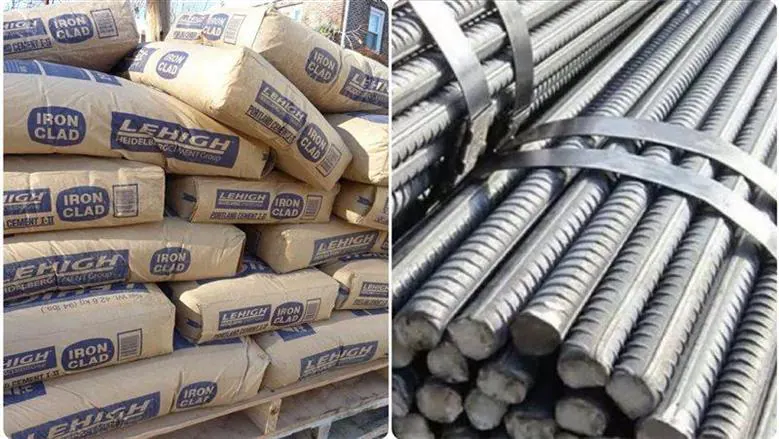
The Egyptian construction market experienced varied price movements on September 26, 2026. The average price of investment steel fell, while some cement types also saw decreases. Conversely, certain steel products witnessed price hikes. These fluctuations are of interest to builders, contractors, and consumers tracking construction material costs. According to the Local Prices Portal under the Egyptian Ministry of Planning, the average investment steel price dropped by EGP 80 to EGP 37,641 per ton.
On September 26, the price of Ez steel, a prominent steel brand, rose by EGP 180 to EGP 39,884 per ton. This contrasts with the investment steel price drop, indicating diverse market trends. Other steel companies, such as Al-Marakebi, priced their steel at EGP 38,500 per ton. Meanwhile, Bashay Steel and Al-Eshtari Steel were quoted at EGP 38,000 and EGP 34,500 per ton, respectively. These price variations reflect differences in product quality, production costs, and market competition.
The Egyptian cement market also saw price adjustments on September 26. The price of gray cement dropped by EGP 103 to EGP 3,952 per ton. Al-Fahd Cement and Al-Suwais Cement were priced at EGP 3,980 and EGP 3,850 per ton, respectively. These price changes may be influenced by production costs, demand, and supply dynamics in the local market. The construction sector closely monitors these prices, as they impact project costs and feasibility.
Market analysts and stakeholders attribute these price fluctuations to various factors, including global market trends, production costs, and local demand. The construction industry, a significant contributor to Egypt's economy, is sensitive to changes in material prices. These price shifts can affect project costs, profit margins, and the overall pace of construction activities. As such, stakeholders closely track price movements to make informed decisions.
The price variations among steel and cement products in Egypt can be attributed to differences in production processes, raw material costs, and market positioning. For instance, Ez steel and investment steel may have distinct production costs, leading to price disparities. Similarly, cement manufacturers may have varying cost structures, influencing their pricing strategies. Understanding these factors helps stakeholders navigate the complex construction material market.
Egypt's construction sector has been experiencing growth, driven by government infrastructure projects and a recovering economy. The sector's performance is closely watched, as it has significant implications for economic development and employment. Construction material prices play a crucial role in determining project viability and costs. As such, stakeholders monitor price trends to adjust their strategies and make informed decisions.
The Egyptian government and relevant authorities closely monitor the construction material market to ensure stability and fair competition. Regulators aim to prevent price manipulation and promote a level playing field for all market participants. By tracking market trends and addressing potential issues, authorities can help maintain a stable and competitive construction material market, supporting the sector's growth and development.
Key points
- The Egyptian construction material market saw price fluctuations on September 26, 2026, with investment steel dropping by EGP 80 and Ez steel rising by EGP 180 per ton.