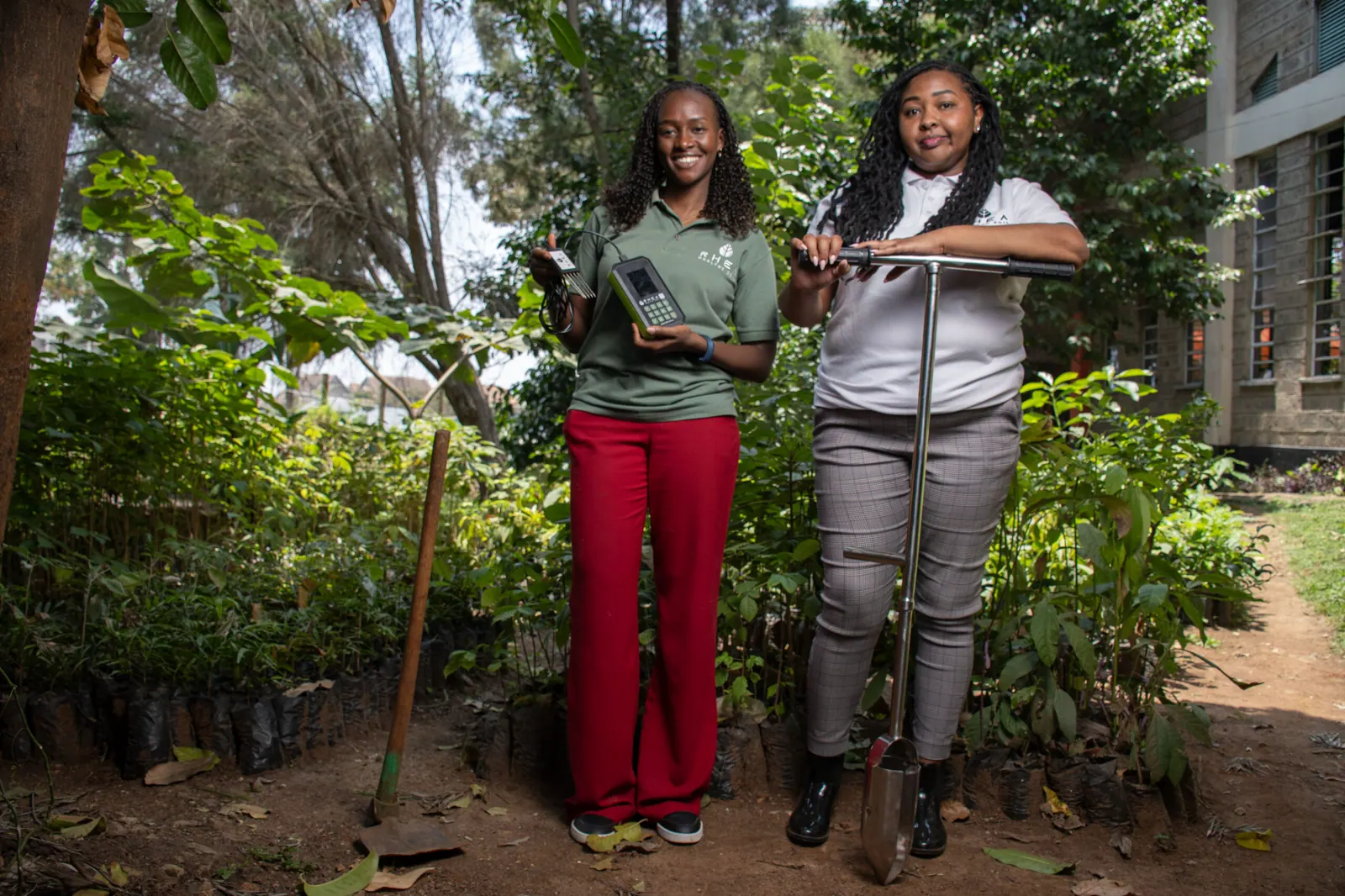
Rhea Soil Health Management, a Kenyan agritech startup founded in 2022 by Priscilla Wakarera and Soinato Leboo, has secured a $100,000 investment to expand its soil-intelligence technology across East Africa. The funding comes from Obudu Capital through a convertible note, tied to milestones including commercializing the AgriPad, deploying 100 devices, reaching 5,000 farmers, and expanding into Tanzania. This investment will support Rhea's goal of providing farmers with better information about their soil to make informed decisions.
The company's flagship product, the RHEA AgriPad, is a portable soil-testing device that collects soil information in the field and combines sensor technology, software, and machine learning to generate information that can support fertilizer and soil-management decisions. This technology aims to address the often-overlooked problem of farmers lacking timely information about their soil conditions, which can lead to inefficient fertilizer application and reduced crop performance.
Rhea's approach involves moving the soil-testing process closer to the farm, using a portable testing system and a digital platform to process soil information and provide recommendations. The company also uses digital channels, including WhatsApp, to deliver information and agronomic advice to farmers. This system is designed to connect measurement with farming decisions, providing more than just a laboratory report.
The development of Rhea's technology has involved learning what farmers will actually use and pay for. The company went through three prototypes over almost two years, working with farmers to understand their needs and affordability constraints. This process is crucial in African agritech, where a technically sophisticated product can struggle if it doesn't fit the economics and working practices of smallholder farmers.
Rhea has built a distribution network around agronomists who can operate closer to farmers. During the first half of 2026, the company recruited and trained 135 agronomist agents across Makueni, Taita Taveta, and Kajiado. It also launched the Rhea Agent App to support field operations and introduced Rhea Optima, a product aimed at medium and large-scale farmers, agronomists, and laboratories.
The data generated by Rhea's system could ultimately become more important to the company's business model than the AgriPad itself. Thousands of soil tests can create a broader picture of soil conditions, nutrient requirements, and agricultural patterns across regions, with potential applications in agricultural finance, insurance, and carbon markets. This data can provide valuable insights for financial institutions, insurers, input companies, and agricultural programs.
The $100,000 investment from Obudu Capital comes with growth expectations, including commercialization of the AgriPad, deployment of 100 devices, and reaching 5,000 farmers. Rhea had previously received $75,000 through Village Capital's program backed by Standard Chartered's Women in Tech initiative. The new capital gives the startup room to expand, but also raises the bar for demonstrating that farmers will use the technology and that the economics work for both Rhea and its customers.
Key points
- Rhea Soil Health Management secures $100,000 investment to expand its soil-intelligence technology across East Africa.
- The company's technology aims to provide farmers with better information about their soil to make informed decisions.
- The investment comes with milestones, including commercializing the AgriPad and reaching 5,000 farmers.