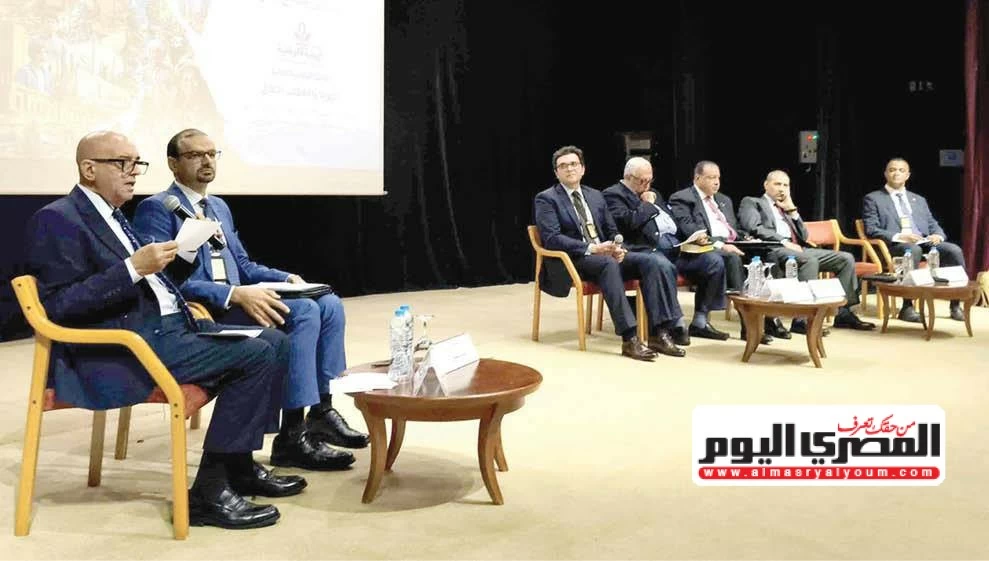
A conference titled "National Identity: Rooted and Renewed" was held at the Bibliotheca Alexandrina, bringing together high-level officials, thinkers, and academics to discuss the challenges facing national identity. The event's second scientific session, titled "Threats to National Identity," was chaired by Dr. Mohamed Kamal, head of the Foreign Affairs Committee in the Senate. Participants included Diaa Rashwan, Minister of State for Information, and Ambassador Mohamed Abu Bakr Saleh, Deputy Foreign Minister.
Diaa Rashwan emphasized that national identity is closely tied to culture and way of life, requiring an understanding of sociology, anthropology, political science, history, and geography. He noted that culture encompasses not just knowledge, but also values, customs, traditions, and social patterns. Rashwan highlighted Egypt as a historical example of a state-nation that has absorbed diverse influences while maintaining its cultural identity. He cited Alexandria as a model of the Egyptian culture's ability to accommodate diversity and multiple influences.
Rashwan warned against the impact of social media on national identity, particularly among young people exposed to virtual worlds and different perspectives on life. However, he cautioned against oversimplifying the relationship between social media and identity change. Instead, he emphasized that the more significant risk lies in the virtual world's impact on one's sense of belonging. Rashwan stressed that a sense of hope is essential in fostering a sense of belonging and that national identity is not necessarily equivalent to religious identity.
Dr. Iman Ragab, head of the Military and Security Research Unit at the Al-Ahram Center for Political and Strategic Studies, identified six external threats to Egypt's national identity. These threats, she noted, target the dimensions of national belonging and patriotism. Ragab highlighted the risks posed by the Muslim Brotherhood and the Afrocentric movement, which seeks to appropriate Egypt's pharaonic heritage.
Ragab presented three executive recommendations, including conducting a national survey to measure the awareness of young people, establishing a national authority to protect identity led by the Bibliotheca Alexandrina, and developing national linguistic models using artificial intelligence. She noted that studies indicate that 98% of information sources for the new generations is now digital, emphasizing the need to address this shift.
Dr. Rim Bسيوني, a novelist and linguistics professor at the American University in Cairo, discussed the linguistic dimensions of national identity. She argued that languages are constantly changing, but may become threatened if stripped of their economic and cultural value. Bسيوني criticized the lack of effective mechanisms for implementing language policy in Egypt, citing the prevalence of English in public signage.
Dr. Walid Rashad, a sociology professor at the National Center for Social and Criminological Research, emphasized that preserving national identity in the digital age requires a focus on individual responsibility. He highlighted the risks of societal polarization, identity renunciation, and the creation of virtual identities through digital technologies. Rashad stressed that national identity is a practical, lived experience rather than a slogan.
Key points
- The conference highlighted the need to address the impact of the virtual world on national identity.
- Experts emphasized the importance of preserving cultural identity and promoting a sense of belonging.
- The event called for effective mechanisms to protect national identity, including education and language policy.