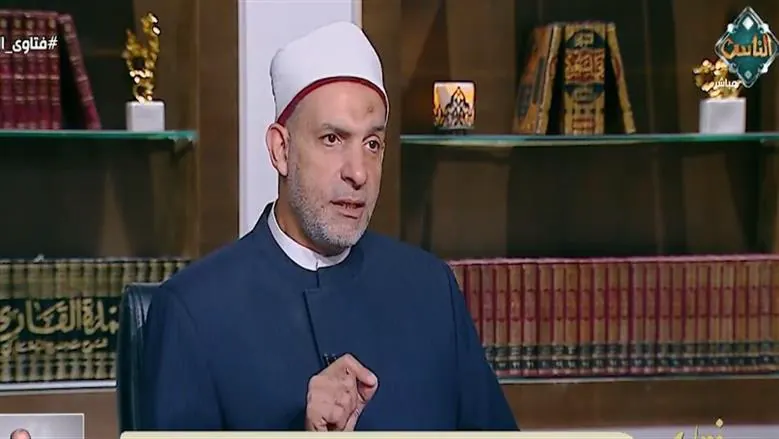
Amin Al-Fatwa, a prominent Egyptian cleric from Dar Al-Ifta, has addressed a pressing marital issue, providing guidance on the Islamic ruling when a wife considers boycotting her husband due to infidelity and failure to provide financial support. This response was given during an interview on a popular television program. The cleric emphasized that such situations involve multiple complex aspects, including a significant sin committed by the husband and his failure to fulfill his financial obligations.
According to Amin Al-Fatwa, the husband's actions constitute a grave sin that requires genuine repentance, not just forgiveness between the couple. The cleric stressed the importance of the husband's accountability and his commitment to change. Furthermore, the husband is obligated by Islamic law to provide for his wife, as she is considered an entrusted responsibility. The wife, on the other hand, is encouraged to seek reconciliation and avoid prolonging the rift in their relationship.
Amin Al-Fatwa highlighted that addressing one issue while neglecting others is not advisable. Both parties must work towards reconciliation, fulfilling their respective duties. He cited an Islamic principle suggesting that the party initiating reconciliation efforts is rewarded. The cleric also suggested that if the husband remains unresponsive and continues to neglect his responsibilities, the wife is not held accountable, especially when financial support is not provided.
The cleric recommended seeking mediation from a wise individual, either from within the family or outside, to help manage the crisis and bring the couple closer to a resolution. Amin Al-Fatwa also noted that if the wife chooses to endure the situation, it is permissible, and she is not to be blamed. However, if she finds it challenging to continue, she may explore available Islamic options that consider her well-being and that of the family's.
Amin Al-Fatwa's guidance underscores the importance of mutual responsibility and communication in resolving marital disputes. He emphasized that reconciliation efforts should be approached with sincerity and a commitment to fulfilling one's duties. The cleric's statements reflect the nuanced perspective that Islamic teachings offer on complex marital issues.
The discussion by Amin Al-Fatwa comes at a time when family dynamics and relationships are subjects of increasing interest and concern. His insights provide valuable guidance for individuals navigating similar challenges, emphasizing the need for a balanced approach that considers the rights and responsibilities of both parties in a marriage.
Ultimately, Amin Al-Fatwa's advice encourages a path of dialogue, understanding, and adherence to Islamic principles in addressing marital conflicts. His statements serve as a reminder of the importance of compassion, responsibility, and the pursuit of reconciliation in maintaining healthy and fulfilling relationships.
Key points
- Amin Al-Fatwa advises that in cases of marital disputes involving infidelity and non-maintenance, both parties should seek reconciliation.
- The husband is obligated by Islamic law to provide for his wife.
- Seeking mediation from a wise individual can help manage marital crises.