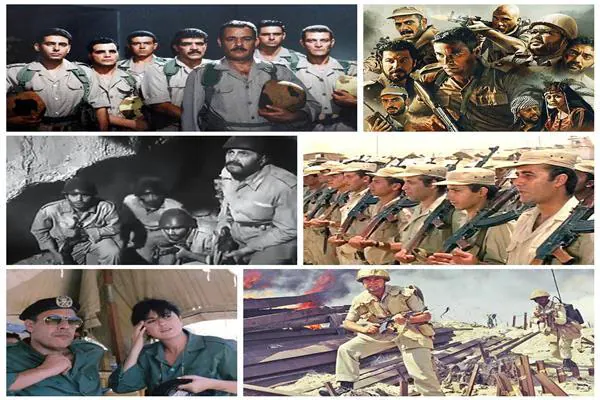
The October War, fought on October 6, 1973, stands as a watershed moment in Egypt's modern history. This conflict not only showcased the bravery and resilience of Egyptian soldiers but also marked a significant turning point in the nation's struggle to reclaim its territory. Fifty-one years have passed since that momentous day, yet the war's impact continues to resonate deeply within Egyptian society. The cinematic industry has played a vital role in documenting and celebrating the war's heroes, producing films that have become ingrained in the nation's collective memory.
One of the earliest films to capture the essence of the October War was "Aghaneya Ala Al-Mamar" (Song on the Corridor), released in 1972. Starring Mahmoud Yasin, Salah Qabil, Salah El-Saadani, and Medhat Kamel, the film tells the story of an Egyptian infantry unit that finds itself besieged during the 1967 war. Despite being vastly outnumbered, the soldiers valiantly defend a strategic passage in the Sinai Peninsula, refusing to surrender. This powerful narrative set the stage for a series of films that would go on to chronicle the nation's struggle for liberation.
The year 1974 proved to be a prolific period for Egyptian cinema, with numerous films addressing the October War. One notable example is "Al-Rasasa La Tazal Fi Jaybi" (The Bullet Is Still in My Pocket), starring Mahmoud Yasin, Hussein Fahmy, Yousry Shaban, and Salah El-Saadani. Directed by Hussam El-Din Mustafa, the film meticulously documents the events of the war, including the iconic crossing of the Suez Canal and the overwhelming sense of triumph that accompanied Egypt's victory.
Another significant film from 1974 is "Abnaa Al-Samt" (Sons of Silence), featuring Ahmed Zaki, Seid Zian, Nour El-Sherif, and Merfat Amin. Directed by Mohamed Razi, the movie explores the period between the 1967 war and the October War, highlighting key events such as the sinking of the Israeli destroyer Eilat and the bombardment of the city of Suez. By examining this pivotal period, the film provides a nuanced understanding of the nation's journey toward liberation.
In addition to these films, "Al-Wafa' Al-Azim" (The Great Loyalty), released in 1974, also deserves recognition. Starring Nabila El-Gamal, Mahmoud Yasin, and Kamal El-Shenawi, the film celebrates the bravery and sacrifices of Egyptian soldiers during the October War. Through its powerful narrative, the movie reinforces the nation's pride in its military and serves as a testament to the enduring spirit of Egypt's armed forces.
Egyptian cinema continued to explore the themes of the October War and the preceding War of Attrition in films released in subsequent years. Notable examples include "Hekayat Gharib" (Stories of a Stranger), produced in 1992, which examines the period between the 1967 and 1973 wars. Other films, such as "Al-Tariq Ila Eilat" (The Road to Eilat), released in 1994, and "Heet El-Batolat" (The Wall of Heroism), which debuted in 1998, further underscore the significance of this chapter in Egyptian history.
More recently, films like "Al-Mamar" (The Corridor), released in 2019, have continued to honor the legacy of Egypt's military during the War of Attrition. Starring Ahmed Ezz, Ahmed Razek, Mahmoud Hafez, and Iyad Nasr, the film sheds light on the crucial role played by Egypt's industrial sector in weakening the enemy through targeted strikes. By revisiting these pivotal moments, Egyptian cinema ensures that the bravery and sacrifices of the nation's heroes are never forgotten.
Key points
- Egyptian films have played a vital role in documenting and celebrating the nation's military victories, particularly the 1973 October War.
- A number of notable films, including "Aghaneya Ala Al-Mamar" and "Al-Rasasa La Tazal Fi Jaybi," have become ingrained in Egyptian popular culture.
- The cinematic industry's enduring tribute to the October War serves as a testament to the nation's pride in its military and its ongoing efforts to honor the legacy of its heroes.