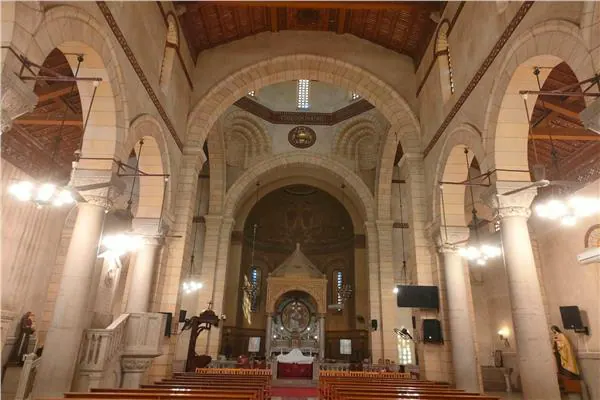
In the heart of Ismailia, Egypt, a French church has stood the test of time, bearing witness to the city's rich history. The church, built in the French style, has been a silent observer to the city's transformation over the years. Its walls have seen the construction of the Suez Canal, one of the most significant engineering projects in history. The church's history dates back to 1864, when it was first built as a small chapel to serve the Catholic community in the area.
The church's significance extends beyond its architectural beauty. It has played host to numerous historical events, including the marriage of Ferdinand de Lesseps, the French engineer responsible for the Suez Canal project, in 1869. De Lesseps married Dutchwoman Ellen Dutar in a grand ceremony that was attended by many prominent figures of the time. This event marked a significant milestone in the church's history, cementing its place in the city's narrative.
The church has undergone several transformations over the years. In 1865, a devastating flood hit Ismailia, causing widespread destruction and loss of life. The church was not spared, and it suffered significant damage. However, it was rebuilt and continued to serve the community. In 1924, the church was rebuilt again, this time in a more grandiose style, with a new building that could accommodate a larger congregation.
The rebuilding of the church was a significant undertaking that took several years to complete. The new building was officially opened in 1929, and it has since become a prominent landmark in the city. The church's architecture is a testament to the city's rich cultural heritage, reflecting the influence of French and Catholic traditions.
The church has also played a significant role in the community, providing a safe haven for those in need. During times of turmoil, the church has opened its doors to those seeking refuge, offering food, shelter, and medical care to those who require it. Its priests have been instrumental in providing support to the community, earning the respect and admiration of the people.
Today, the church remains an important part of Ismailia's history and identity. It continues to serve as a place of worship and a reminder of the city's rich cultural heritage. The church's 160-year history is a testament to its enduring significance, and it remains a source of pride for the community.
The church's story is a fascinating one, full of twists and turns that reflect the city's complex history. From its humble beginnings as a small chapel to its current status as a prominent landmark, the church has played a significant role in shaping the city's narrative. Its legacy continues to inspire and educate, offering a glimpse into the lives of those who have come before us.
Key points
- The French church in Ismailia has witnessed 160 years of history, including the marriage of Ferdinand de Lesseps.
- The church has undergone several transformations over the years, including a major rebuilding project in the 1920s.
- The church has played a significant role in the community, providing a safe haven for those in need and supporting the local population.