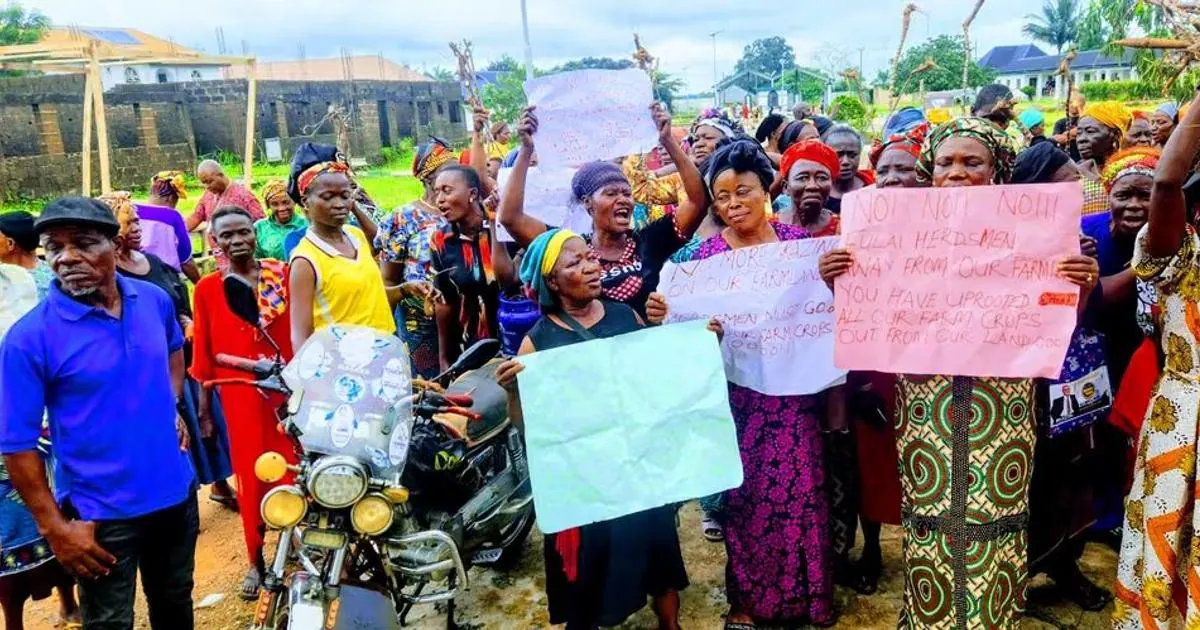
A group of women from Obinolu Ngodo, a community in Umunneochi Local Government Area, Abia State, recently protested at the local council secretariat over alleged destruction of their crops by herdsmen. The women claimed that herders had been uprooting their cassava to feed cattle, while grazing herds trampled through other crops, including beans, maize, and melon. They expressed fear that if the pattern continues, the community could face a hunger crisis, as farming is the primary livelihood for most households.
The women, carrying placards and clumps of uprooted cassava stems, met with Council Chairman Sunny Afurobi, who promised to investigate the allegations. Afurobi stated that he had already received similar complaints from another community nearby and pledged to take action. The council chairman emphasized that Governor Alex Otti is committed to ensuring the security of the people and tackling issues such as kidnapping and crop destruction.
In the aftermath of the protest, Afurobi convened an emergency security meeting with stakeholders, including security chiefs, leaders of the Hausa community, and representatives of the Miyetti Allah Cattle Breeders Association of Nigeria (MACBAN). The meeting aimed to address the allegations of crop damage, harassment, and abduction faced by farmers. Community leaders reiterated that open grazing is banned in Umunneochi and called on the state government to enforce the ban.
The protest was sparked by weeks of alleged crop destruction by herdsmen in Obinolu Ngodo. The women claimed that they no longer feel safe walking onto their farmland, and some reported being afraid to enter their farms. The placards carried by the protesters reflected their anxiety, with messages such as "Our people may die of hunger" and "Government, save us now."
The council chairman's meeting with stakeholders resulted in a commitment to investigate the allegations and address the issues faced by farmers. However, no arrests or formal action had been announced as of the time of reporting. The incident highlights the ongoing tensions between farmers and herdsmen in Nigeria, with many communities facing challenges related to crop destruction and livestock grazing.
The women's protest at the council secretariat was a demonstration of their frustration and desperation. They claimed that farming, which is their primary source of livelihood, has become a source of worry due to the alleged crop destruction by herdsmen. The community is calling for government intervention to address the issue and ensure their safety and security.
The incident has sparked concerns about food security in the community, with many residents relying on farming as their primary source of income. The government has been urged to take action to address the issue and prevent a potential hunger crisis. The situation remains a challenge for the government and stakeholders to find a lasting solution to the conflicts between farmers and herdsmen.
Key points
- Women in Abia State protest alleged crop destruction by herdsmen, demanding government intervention.
- Council Chairman Sunny Afurobi promises to investigate allegations and convenes security meeting.
- Community leaders call for enforcement of ban on open grazing to address ongoing tensions.