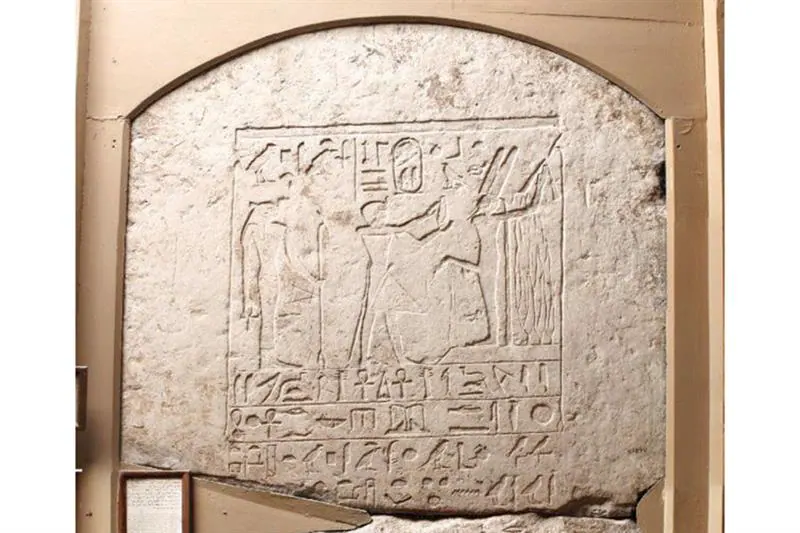
A 2,260-year-old stèle has been unearthed in the Nile Delta, specifically at Tell Pharaon, the ancient site of Imet. The stèle is a newly discovered copy of the Decree of Canopus, a significant ancient Egyptian artifact. The decree was issued by Ptolemy III and his wife Berenice II, providing insight into their reign. The stèle features 30 lines of hieroglyphic text, detailing the couple's accomplishments and policies.
The Decree of Canopus is a crucial document that highlights the political and spiritual achievements of Ptolemy III and Berenice II. The decree discusses offerings made in temples, maintaining internal peace, and tax relief during the Nile's floods. It also introduces a new festival and the deification of their deceased daughter. Notably, the decree announces the introduction of a leap year, a reform that would later be adopted by Rome under Julius Caesar nearly two centuries later.
The discovered stèle measures 1.27 meters in height, 83 cm in width, and 48 cm in thickness. According to Hicham Hussein, president of the Central Administration of Antiquities of Lower Egypt, the discovery is significant as it provides a new, complete version of the Decree of Canopus. This find will contribute substantially to the understanding of royal and religious texts from the Ptolemaic era.
The stèle's hieroglyphic text is remarkable for its well-preserved state, with no noticeable damage. This discovery is particularly important as it offers a unique opportunity for scholars to study the language and history of ancient Egypt. Mahmoud Al-Hosary, a professor of archaeology and ancient Egyptian language, notes that this stèle is the seventh complete exemplar of the Decree of Canopus, written solely in hieroglyphs.
The Decree of Canopus and other royal decrees played a vital role in ancient Egyptian society, serving as instruments of power that regulated relationships between the monarchy, priests, and the people. These decrees addressed various aspects of life, including taxation, economy, rituals, and administrative decisions. Under the Ptolemaic dynasty, these texts combined Egyptian and Greek traditions, reflecting the cultural diversity of the time.
The discovery of the stèle at Tell Pharaon has shed new light on the significance of the Decree of Canopus, which predates the famous Rosetta Stone by 42 years. While the Rosetta Stone is more renowned, the Decree of Canopus is considered richer in content and better preserved. These ancient artifacts continue to provide valuable insights into the history and culture of ancient Egypt.
The study of ancient Egyptian decrees, such as those found at Coptos, has a long history. Archaeologists have been uncovering these artifacts for centuries, gaining a deeper understanding of the complexities of ancient Egyptian society. The discovery of the stèle at Tell Pharaon is a significant addition to this body of knowledge, offering a fascinating glimpse into the lives of the people who lived during the Ptolemaic era.
Key points
- The stèle discovered at Tell Pharaon contains a decree from Ptolemy III and his wife Berenice II, providing insight into their reign and policies.
- The Decree of Canopus is a significant ancient Egyptian artifact that highlights the political and spiritual achievements of Ptolemy III and Berenice II.
- The discovery of the stèle at Tell Pharaon has shed new light on the significance of the Decree of Canopus, which predates the famous Rosetta Stone by 42 years.