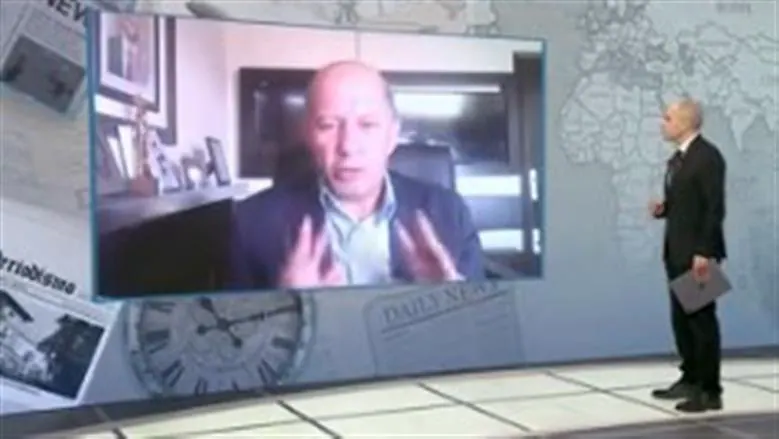
Egyptian journalist and analyst Mamon Masad stated that despite recent statements from US President Donald Trump, the US has not officially adopted a policy to topple the Iranian regime. Masad made these comments during an interview with Cairo News Channel, emphasizing that no strategic US decision has been made to pursue this goal. He noted that Trump's statements at the UN General Assembly, where he mentioned the possibility of destroying Iran, are an indication of the US considering this option but stressed that it is not a concrete policy.
Masad highlighted that Trump's comments at the UN were made in a specific context and should not be taken as a definitive policy direction. He pointed out that US foreign policy is subject to change and that current rhetoric does not necessarily translate into concrete actions. The analyst emphasized that a shift in US policy would be marked by tangible steps such as sanctions, budget allocations, and official visits, none of which have been observed so far.
According to Masad, there has been a noticeable shift in the US approach, moving from a phase of not considering the overthrow of the Iranian regime to openly discussing it as a theoretical option. He noted that this change is reflected in various articles and statements, which gauge the mood of the US elite but do not constitute a clear roadmap for US foreign policy.
Masad stressed that for US policy to change, ideas must move beyond opinion pieces and statements to actual policy implementation. He cited examples such as sanctions, budget allocations for supporting opposition groups, and official visits as indicators of a genuine policy shift. Until then, he argued that current statements remain speculative and do not represent a binding policy.
The analyst also pointed out that the current situation is characterized by strong tensions between the US and Iran. He referenced Trump's statements at the UN, where he mentioned the possibility of ending Iran if it does not comply with certain conditions, particularly regarding its nuclear program and the Strait of Hormuz. Masad noted that these statements are not new but have been part of US rhetoric for years.
Masad's comments come amid heightened tensions between the US and Iran, which have been engaged in a series of confrontations. The situation has been closely watched by international observers, with concerns about the potential for escalation into a broader conflict. Egypt, along with other regional players, has been involved in efforts to de-escalate tensions and promote dialogue.
The Egyptian analyst's insights reflect a nuanced understanding of the complexities of US foreign policy and its implications for the Middle East. His comments underscore the importance of distinguishing between rhetoric and actual policy, particularly in the context of US-Iran relations. As the situation continues to evolve, analysts like Masad provide valuable perspectives on the potential trajectories of this critical geopolitical relationship.
Key points
- The US has not officially adopted a policy to topple the Iranian regime despite increasing rhetoric from President Donald Trump.