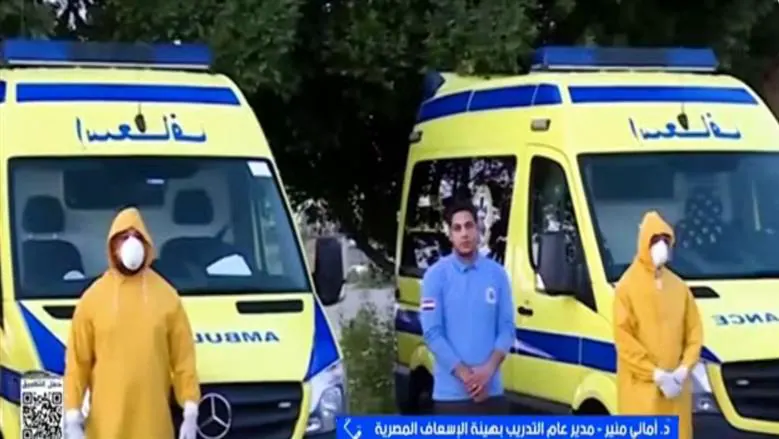
The Egyptian Ambulance Service has highlighted the importance of swift response and training in critical situations, following a recent incident in Imbaba, Giza, where an ambulance crew successfully handled an unexpected birth in a moving vehicle. Dr. Amani Munir, Director General of Training at the Egyptian Ambulance Service, noted that such incidents demonstrate the unpredictable nature of emergency response and the need for crews to be prepared for any situation. She emphasized that the primary goal in such situations is to remain calm and assess the situation quickly.
Dr. Munir explained that ambulance crews often respond to emergency calls with certain expectations, only to find that the situation on the ground is vastly different. In such cases, the training and expertise of the crew are crucial in determining the outcome. She stressed that the Egyptian Ambulance Service's training program is designed to equip crews with the skills and knowledge needed to respond effectively in a wide range of emergency situations, including unexpected births.
The training program for ambulance crews in Egypt includes simulation exercises and hands-on practice with mannequins, allowing crews to rehearse a variety of scenarios, including emergency births. Dr. Munir noted that the program focuses on developing the skills and competencies needed to respond to emergency situations, rather than simply imparting theoretical knowledge. Crews are trained to think on their feet and make quick decisions in high-pressure situations.
In the case of the Imbaba incident, the ambulance crew was responding to a call when they found that the woman they were transporting had gone into labor. Despite the unexpected turn of events, the crew was able to respond quickly and effectively, delivering the baby and then discovering that the woman was carrying twins. The crew continued to provide care until the mother and babies were transported to a hospital for further medical attention.
Dr. Munir emphasized that the Egyptian Ambulance Service's training program is designed to prepare crews for the unexpected, and that the Imbaba incident was a prime example of the importance of such training. She noted that the service's crews are trained to respond to a wide range of emergency situations, including medical emergencies, accidents, and natural disasters.
The incident in Imbaba has highlighted the critical role that ambulance crews play in emergency response, and the importance of providing them with the training and resources needed to respond effectively in high-pressure situations. Dr. Munir noted that the Egyptian Ambulance Service is committed to providing its crews with the best possible training and equipment, in order to ensure that they are able to provide the highest level of care to patients in emergency situations.
The Egyptian Ambulance Service's training program has been recognized for its excellence, and has been adopted by other countries in the region. Dr. Munir noted that the service is committed to sharing its expertise and experience with other countries, in order to improve emergency response capabilities and save lives.
Key points
- The Egyptian Ambulance Service's training program focuses on simulation exercises and hands-on practice to equip crews with the skills and knowledge needed to respond effectively in emergency situations.