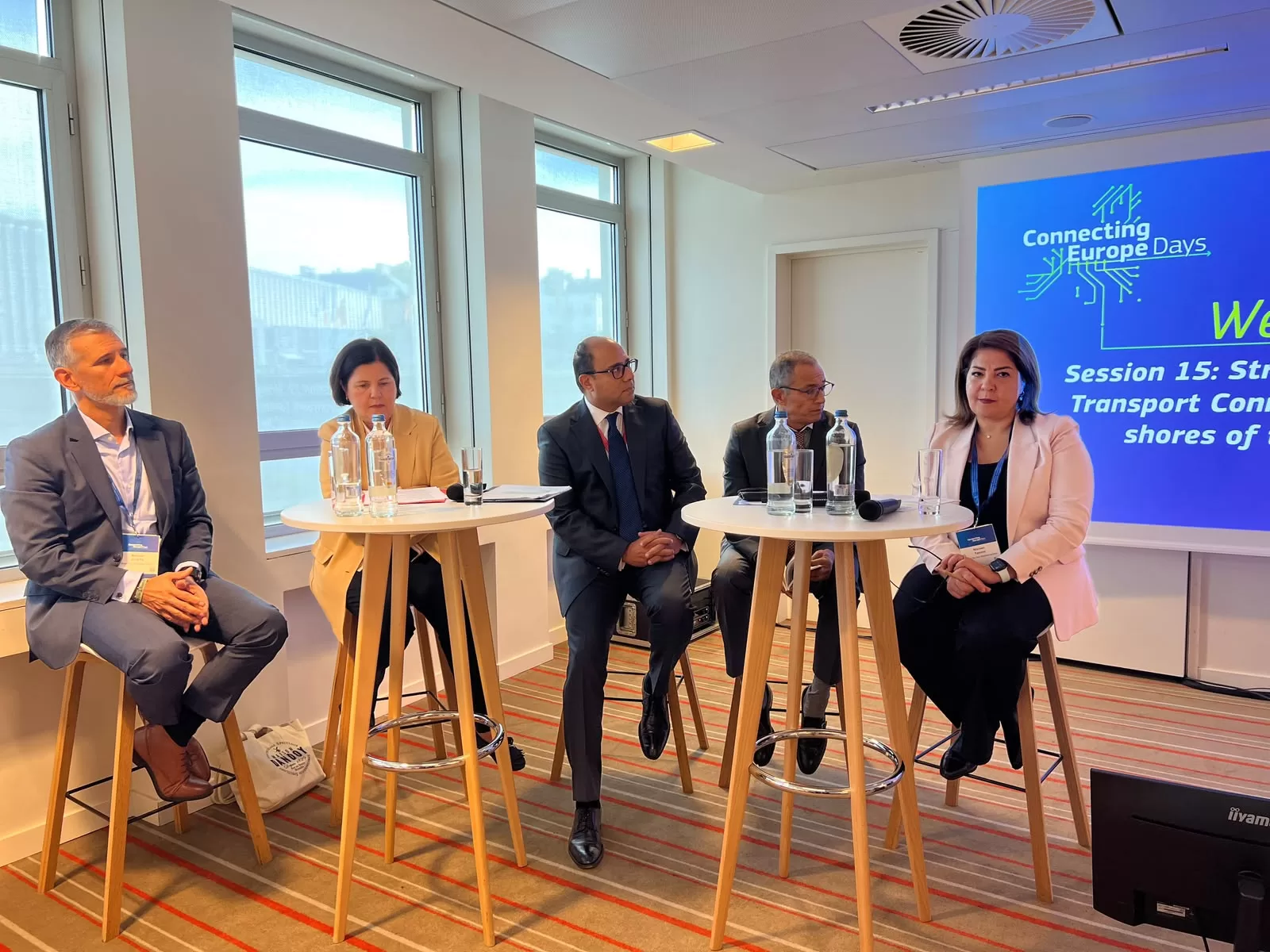
Egyptian Ambassador to the European Union and Belgium, Ahmed Aboul Gheit, recently participated in the European Transport and Mobility Conference. The conference featured a session titled "Enhancing Multimodal Transport Links Between the Mediterranean's Two Shores." The session brought together numerous officials, representatives from European institutions, and experts from southern Mediterranean countries, as well as the transportation and logistics sector.
During the session, Ambassador Aboul Gheit presented Egypt's vision for enhancing transport links and integration between the Mediterranean's two shores. He stated that the region is gradually shifting towards an integrated transport system. This system includes ports, sea routes, railways, pipelines, electricity grids, and digital cables. Egypt's unique geographical location should not be viewed as a standalone advantage but rather as an asset to be leveraged through a comprehensive strategy.
The strategy, based on "flexible diversification," involves varying trade and energy routes. It aims to provide reliable alternatives that ensure the continuity of flows during crises. Key elements of Egypt's vision include the Suez Canal and seven integrated logistics corridors. Additionally, there are projects to develop around 10,000 kilometers of railway lines and construct approximately 2,000 kilometers of high-speed electric train networks.
Ambassador Aboul Gheit also highlighted other significant projects, such as the SUMED pipeline, two liquefied natural gas terminals in Idku and Damietta, and green hydrogen projects in partnership with European companies. Furthermore, he mentioned Egypt's electricity interconnection projects with Europe, including the Greece-Egypt interconnection project (GREGY) and the Medusa submarine cable project.
The ambassador emphasized the importance of Egyptian corridors that connect the Mediterranean to the African continent. These corridors offer opportunities to enhance integration between trade, transport, and energy networks. They also link with international economic initiatives and corridors. The true value of any transport system becomes apparent during crises, Aboul Gheit noted.
In this context, Ambassador Aboul Gheit stressed the need for consistency between European policies and prior consultation with southern Mediterranean countries. This is particularly important regarding regulatory measures that may impact their infrastructure and competitiveness. He cited the European Union's Emissions Trading System and proposals to expand its scope.
Ambassador Aboul Gheit concluded his speech by emphasizing that the partnership between the northern and southern Mediterranean shores should aim to build a single, integrated system. This system should be based on genuine consultation, joint investment, and enhanced regional capacity to face crises while ensuring the continuity of trade, energy, and communication flows.
Key points
- Egypt's unique geographical location can be a significant asset in enhancing transport links between the Mediterranean's two shores.
- The Egyptian vision for transport links is based on "flexible diversification" and involves varying trade and energy routes.
- Egypt's transport system includes several major projects, such as the Suez Canal, SUMED pipeline, and green hydrogen initiatives.