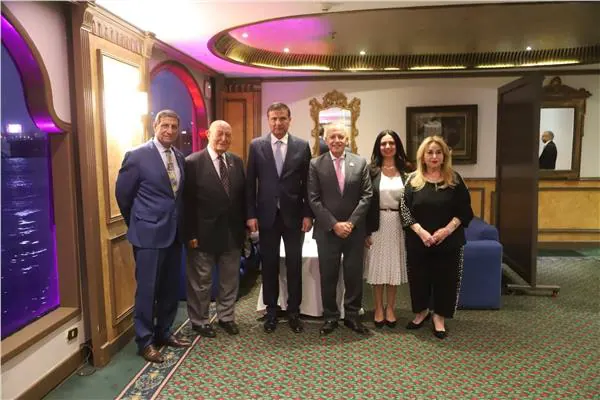
Egyptian Agriculture Minister Alaa Farouk recently presented the country's food security strategy to the Cairo Rotary Club, highlighting the government's efforts to ensure a stable food supply. The strategy focuses on several key areas, including horizontal and vertical expansion, development of livestock and poultry, increasing export competitiveness, and modernizing agricultural extension services. Farouk emphasized that the current cultivated area in Egypt stands at approximately 10.5 million feddans, comprising 6.1 million feddans of old land and 4.4 million feddans of new land.
The minister discussed the importance of vertical expansion and modern irrigation practices, citing the adoption of water-conserving techniques to boost productivity. He also mentioned the ongoing development of irrigation systems in coordination with the Ministry of Water Resources and Irrigation. Furthermore, Farouk highlighted the development of new, climate-resilient crop varieties and partnerships with the private sector to produce vegetable and potato seeds, reducing reliance on imports.
Farouk also touched on the government's efforts to regulate the fertilizer and pesticide markets, linking subsidies to the "Falah" card, and introducing a national land registry to prevent land encroachment. Additionally, he discussed the expansion of contract farming to include several strategic crops, providing a stable income for farmers. The minister emphasized the importance of improving livestock and poultry production, including the development of new breeds and artificial insemination techniques.
According to Farouk, Egypt's agricultural exports have achieved a significant milestone, exceeding 9.5 million tons of fresh produce in 2025, valued at approximately $11.5 billion. He attributed this success to the government's efforts to enhance agricultural productivity, improve quality, and increase competitiveness in global markets. The minister also highlighted the importance of digital transformation and modernizing agricultural extension services to better serve farmers.
The minister discussed the role of the presidential initiative "Hayat Karima" (Decent Life) in promoting rural development and improving living standards for farmers. He emphasized the government's commitment to implementing this initiative, which aims to achieve sustainable development and social justice in rural areas. Farouk also mentioned the "100 Million Trees" initiative, a seven-year project launched in 2022 to combat climate change and reduce carbon emissions.
The "100 Million Trees" initiative, implemented in collaboration with the Ministries of Local Development and Environment, aims to increase green spaces, improve air quality, and promote sustainable economic growth. Farouk highlighted the project's potential to create jobs, reduce carbon emissions, and enhance the country's environmental sustainability. He also discussed the forestation project, which has expanded to cover 23 forests in 12 governorates since 2014.
The Cairo Rotary Club session included discussions and interventions from club members and attendees, focusing on challenges facing the agricultural sector and potential solutions. Farouk engaged with the audience, addressing questions and concerns, and outlining the government's plans to address these challenges and promote partnerships with civil society and the private sector. The minister expressed his appreciation for the Rotary Club's efforts in supporting national initiatives and promoting community development.
Key points
- The Egyptian government has set a goal to increase the cultivated area to 10.5 million feddans, with a focus on sustainable agricultural practices and climate-resilient crop varieties.
- The "100 Million Trees" initiative aims to reduce carbon emissions, improve air quality, and promote sustainable economic growth in Egypt.
- Egypt's agricultural exports have exceeded 9.5 million tons of fresh produce in 2025, valued at approximately $11.5 billion.