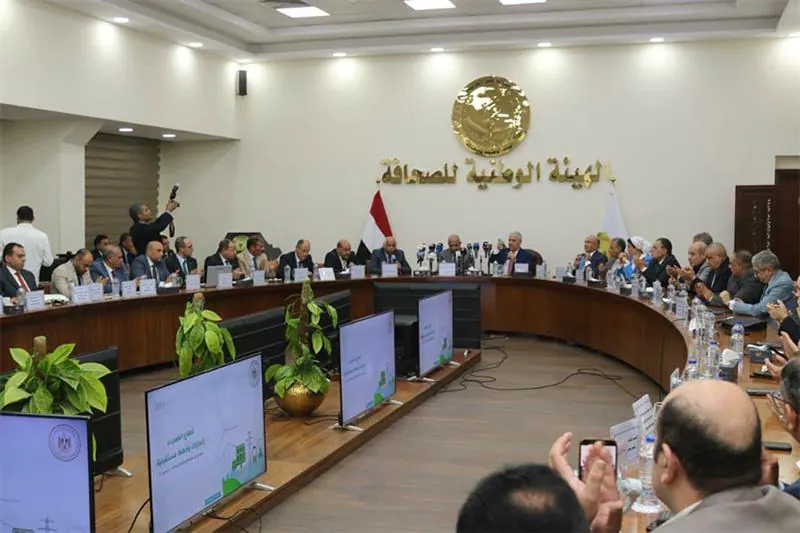
Egypt has set an ambitious goal to increase the share of renewable energy in its electricity mix to 61.2% by 2040. This plan, announced by Electricity and Renewable Energy Minister Mahmoud Esmat, involves a significant investment of five trillion pounds to expand generation capacity and modernize the national grid. The target is part of a broader strategy to enhance the country's energy infrastructure and reduce its reliance on traditional energy sources.
The plan outlines a substantial increase in Egypt's total installed electricity capacity to 126.8 gigawatts (GW) by 2040. This will include 40.5 GW from wind power, 24.7 GW from solar power, and 4.8 GW from nuclear power. Additionally, hydropower will contribute 2.9 GW, while thermal power plants will account for 49 GW. Over the past decade, Egypt has added more than 35 GW of electricity-generation capacity using a mix of thermal and renewable sources.
Significant progress has been made in recent years, with the commissioning of three Siemens-built power plants in Beni Suef, Burullus, and the New Administrative Capital, with a combined capacity of 14.4 GW in 2018. The private sector has also played a crucial role, with over 3 GW of operational wind power and around 4 GW of solar capacity developed. Plans are underway to add another 12 GW of wind capacity and 8.72 GW of solar capacity.
To manage fluctuations in renewable generation, the ministry is adding large-scale battery storage to the national grid. In 2025-2026, 1.1 gigawatt-hours of storage capacity were added, with total capacity expected to reach 14.32 GWh over the next three years. This will help stabilize the grid and ensure a reliable supply of electricity.
Egypt is also advancing work on the Dabaa Nuclear Power Plant, which will have four third-generation-plus reactors with a combined capacity of 4.8 GW. The plant is expected to provide stable, low-carbon electricity around the clock and save nearly 8 billion cubic meters of natural gas annually once all four reactors are operational. Nuclear fuel is expected to arrive in Egypt next year, with commercial operation targeted for 2030.
The Egyptian government has made significant investments in expanding the country's electricity transmission network over the past decade. The length of transmission lines has increased from 44,200 kilometers to 62,500 km, and transformer substation capacity has risen from 99,600 to 240,000 megavolt-amperes. The number of substations has also increased from 626 to 826. Furthermore, Egypt is completing final studies for electricity interconnection projects with Greece and Italy, while work continues on the Egyptian-Saudi electricity link.
The Egyptian government has also taken steps to reduce electricity subsidies and combat electricity theft. Priority is given to basic consumption brackets, and the ministry has stepped up efforts to cut distribution losses. Over the past decade, the state has recovered around 5.5 billion kilowatt-hours of electricity worth about EGP29 billion. Distribution-grid losses fell by 1.17 percentage points to 17.6 percent, saving around 2.2 billion kWh worth EGP3.9 billion.
Key points
- Egypt aims to increase the share of renewable energy in its electricity mix to 61.2% by 2040.
- The plan involves significant investments in wind, solar, and nuclear power, with a target of 126.8 GW of installed electricity capacity by 2040.
- Egypt has made significant progress in expanding its electricity transmission network and reducing distribution losses.