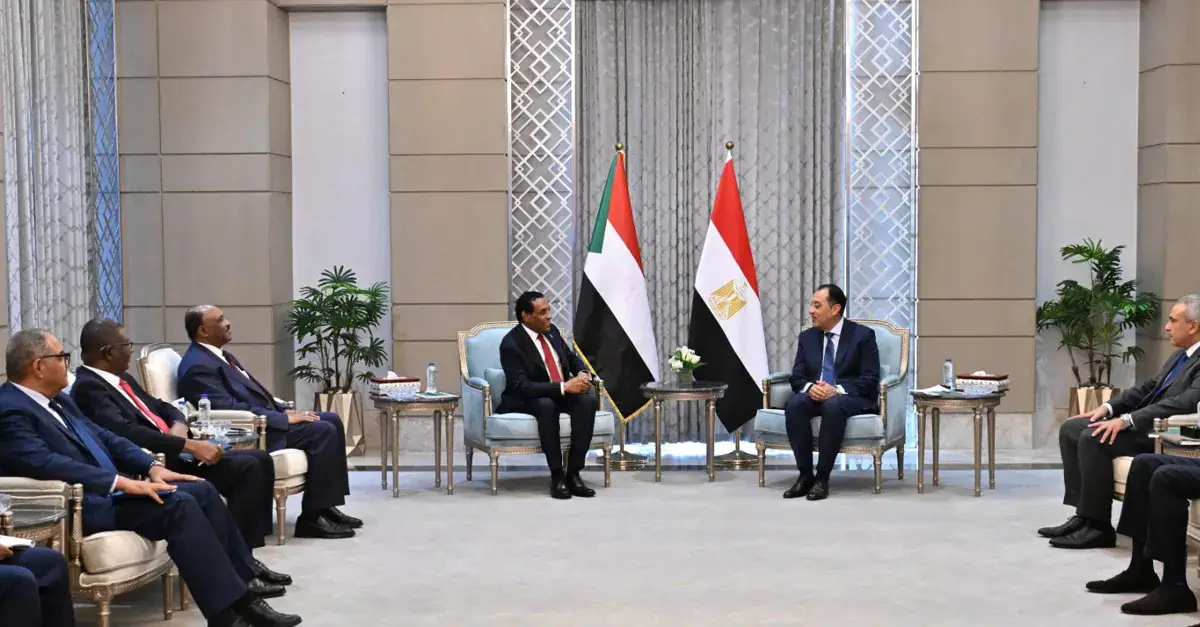
Egypt and Sudan have expressed their firm rejection of any unilateral actions in the Eastern Nile basin. This stance was reiterated during a recent visit by Sudan's Transitional Prime Minister, Kaml Eltayeb Idris, to Egypt. The two countries emphasized that Ethiopia's unilateral construction of the Grand Renaissance Dam poses significant threats to the water security of downstream countries, namely Egypt and Sudan.
The Egyptian and Sudanese leaders underscored the need for Ethiopia to change its unilateral approach and return to cooperation based on international law, particularly the principles of not causing harm, prior notification, consultation, and consensus. This was stated in a joint statement issued at the end of Idris' visit to Egypt. The two countries also agreed to enhance their coordination to restore stability in Sudan, maintain its sovereignty, and preserve its national institutions.
Egypt and Sudan have also condemned the targeting of civilians and infrastructure in Sudan by rebel militias. They emphasized the importance of respecting Sudan's sovereignty and territorial integrity, and supporting its national institutions, particularly the Sudanese Armed Forces. The two countries reiterated their commitment to defending Sudan's water rights and preventing any attempts to undermine its security.
The two countries have agreed to continue working on developing their economic, trade, and developmental cooperation. They also discussed ways to enhance their collaboration in various sectors, including healthcare and the pharmaceutical industry. Egypt and Sudan have also agreed to expedite the resolution of issues related to detainees on both sides.
Egypt and Sudan have emphasized the interconnectedness of their water security, and agreed to defend their full water rights in accordance with the 1959 agreement. They also agreed to continue implementing the outcomes of their coordination meetings within the framework of the Permanent Technical Committee for the Nile River. The two countries have also stressed the importance of the Nile Basin Initiative and the need to complete the consultative process to establish a comprehensive commission representing all Nile Basin countries.
Regarding the Red Sea, Egypt and Sudan have emphasized the need to respect the principle of freedom of navigation, and that its governance is the exclusive responsibility of coastal states in accordance with international law. They rejected any attempts by non-coastal states to access the Red Sea at the expense of the sovereignty and territorial integrity of coastal states.
The visit by Sudan's Transitional Prime Minister to Egypt has resulted in an agreement to enhance cooperation between the two countries in various fields. The two countries have also agreed to elevate their cooperation to the level of comprehensive integration, which would meet the aspirations of both nations in terms of prosperity and development.
Key points
- Egypt and Sudan reject unilateral actions in the Eastern Nile basin
- The two countries emphasize the need for Ethiopia to change its approach and return to cooperation based on international law
- Egypt and Sudan agree to enhance their coordination to restore stability in Sudan and maintain its sovereignty
Reporting sources
- مصر والسودان يؤكدان رفضهما لأي إجراءات أحادية في حوض النيل الشرقي · Al-Qahera News