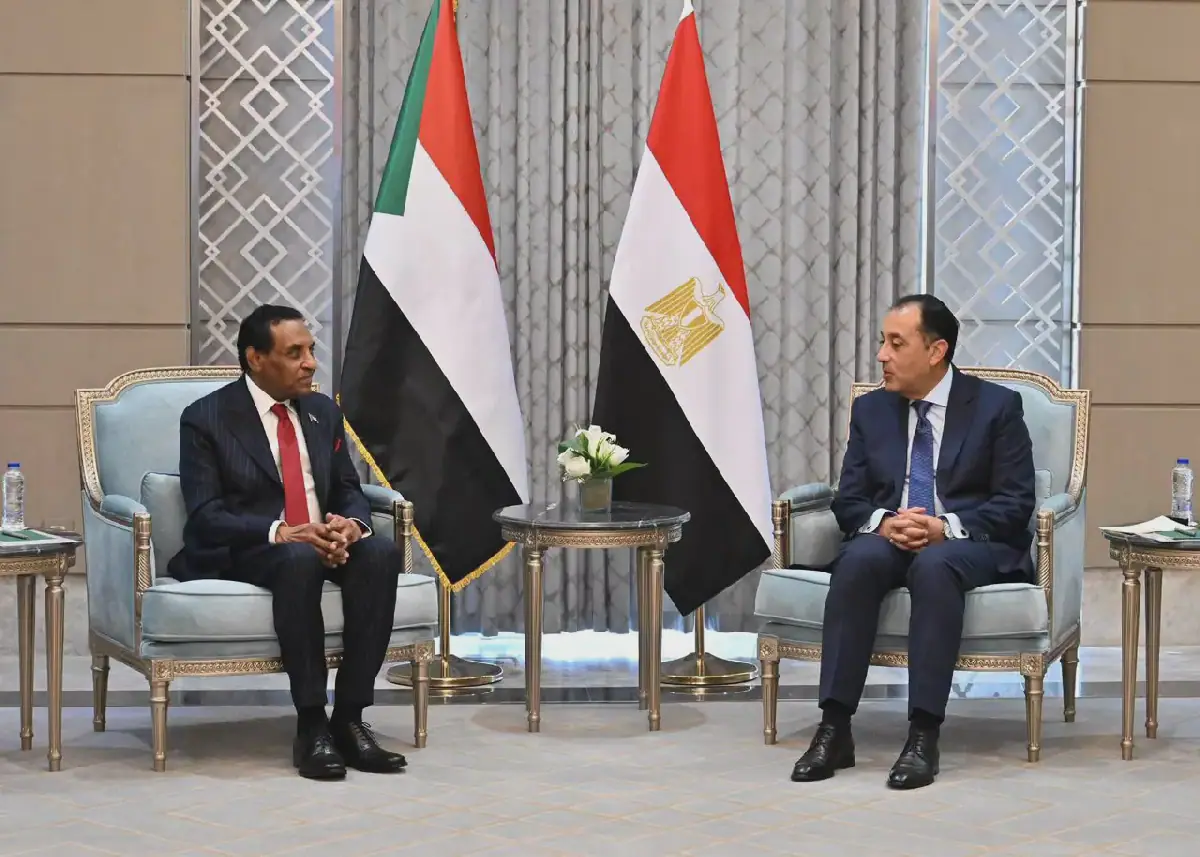
Egypt and Sudan have reaffirmed their rejection of any maritime access by non-coastal states in the Red Sea, emphasizing that it would compromise the sovereignty of coastal states and their territorial integrity. This stance was reiterated in a joint statement following a visit by Sudanese Prime Minister Kaml Edris to Cairo. The two nations also expressed their opposition to any attempts to militarize the Red Sea or impose unilateral measures that would undermine the sovereignty of regional states.
The joint statement emphasized the importance of respecting the principle of freedom of navigation in the Red Sea, while also stressing that the governance of the Red Sea is the exclusive responsibility of coastal states in accordance with international law. Egypt and Sudan rejected any attempts to exploit regional situations to militarize the Red Sea or impose unilateral measures. This stance comes amid rising discussions on access to the Red Sea, particularly Ethiopia's demands for a maritime outlet, which has raised concerns among coastal states.
Egypt has reaffirmed its support for Sudan, emphasizing that its national security is directly linked to Sudan's stability. The Egyptian government has stated its readiness to take all necessary measures to support Sudan and ensure that its sovereignty and territorial integrity are not compromised. This includes adherence to international law and the agreement on collective defense between the two countries. Egypt also condemned attacks on civilians and Sudanese infrastructure, particularly power plants and water facilities.
The two nations also discussed the issue of the Renaissance Dam, which they described as a unilateral project that contravenes international law. They warned that the continuation of the current situation poses significant risks and threatens the two downstream countries. Egypt and Sudan called on Ethiopia to change its policy and return to cooperation in accordance with international law, including prior notification, consultation, and consensus.
On the issue of the Nile River, Egypt and Sudan emphasized the interdependence of their water security and agreed to defend their rights and uses of the river in accordance with the 1959 agreement. They rejected any unilateral measures in the Eastern Nile basin and agreed to continue coordination through the Joint Permanent Technical Committee for the Nile River and the 2+2 mechanism.
The two nations also agreed to expedite the resolution of issues related to detainees in both countries and facilitate the voluntary return of Sudanese nationals to their country. Egypt expressed its appreciation for Sudan's efforts in hosting Sudanese nationals during the past period. Furthermore, Egypt pledged to support Sudan's national efforts in reconstruction, particularly in rebuilding industrial and agricultural sectors and rehabilitating infrastructure.
The visit concluded with an invitation from Sudanese Prime Minister Kaml Edris to his Egyptian counterpart, Mostafa Madbouli, to visit Sudan. Both nations expressed their desire to elevate their bilateral relations to a level of comprehensive integration that serves the interests of both nations. The two countries also agreed to enhance cooperation in trade, investment, health, education, and culture.
Key points
- Egypt and Sudan reject non-coastal states' maritime access in Red Sea
- Egypt supports Sudan's stability and territorial integrity
- Both nations emphasize interdependence of their water security