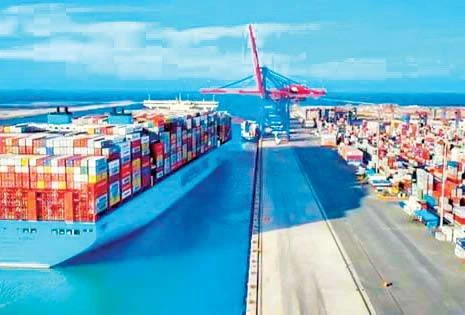
The Egyptian Ministry of Transportation, in collaboration with the Ministry of Finance, is examining a project aimed at reducing congestion at seaport berths caused by containers and goods. The goal is to connect these to dry ports and logistics zones, maximizing Egypt's strategic location in global trade. This involves organizing direct transit, where containers arrive at Egyptian ports and then move to other regional and international destinations via the Red Sea and Mediterranean ports.
According to the Maritime Transport Sector's statistics, a total of 11.1 million containers were handled at Egyptian ports in 2025, with 6.7 million being transit containers. This represents a 36% growth in transit trade, which is expected to increase by 40% due to the crisis in the Strait of Hormuz. The current system causes delays, as transit containers often remain at port berths for over a month, leading to congestion and reduced berth availability for incoming ships.
The proposed adjustments aim to address these challenges by allowing for the transfer of containers and goods to dry ports, where they can be reloaded and exported, creating new job opportunities. This project seeks to boost trade between Egypt and the world, leveraging Egypt's position as a gateway to Africa and the region. By streamlining transit procedures, the government hopes to increase revenue and enhance the ranking of Egyptian ports globally.
The study highlights that the current transit system leads to congestion, reducing the efficiency of port operations and causing delays for ships. By moving containers to dry ports, the government aims to optimize port capacity, reduce congestion, and improve operational efficiency. The plan also involves utilizing environmentally friendly transportation methods, such as rail, to connect seaports to dry ports.
The proposed changes to the customs law will enable dry port operators to set prices for containers by adding the cost of direct services to the ocean freight. This will also allow for value-added services and re-export operations, providing opportunities for dry ports to add value to imported goods before re-exporting them. This, in turn, is expected to have a positive impact on the operation of dry ports, which are considered priority national projects.
The study emphasizes that adapting to geopolitical changes requires a rapid response from the logistics system to address disruptions in the Red Sea and Suez Canal region. By providing alternative, integrated logistics pathways through dry ports, Egypt can mitigate the impact of these challenges. The direct transit project aims to capitalize on large national projects, such as seaports, modern road networks, and high-speed trains, to increase transportation via rail and utilize dry ports.
The Ministry of Transportation has already initiated several dry port projects, with seven ports currently in development, including the October Dry Port, which has made significant strides in reducing congestion at seaports. By investing in these projects, the government aims to increase the value added to the economy, create new job opportunities, and enhance Egypt's position in global trade.
Key points
- The Egyptian Ministry of Transportation is studying adjustments to direct transit regulations for containers to reduce congestion at seaports and increase trade.
- The proposed changes aim to connect seaports to dry ports and logistics zones, maximizing Egypt's strategic location in global trade.
- The project is expected to increase revenue, enhance port efficiency, and create new job opportunities.