Egyptian Foreign Minister Badr Abdelatty participated in the Aswan Forum for Sustainable Peace and Development, where he held trilateral talks with Sudanese Foreign Minister Mohieddin Salem and Eritrean Foreign Minister Osman Saleh on Red Sea security. The ministers emphasized the importance of freedom of navigation and safety of international shipping routes, stressing that responsibility for the governance and security of the Red Sea should rest with its littoral states. They also reviewed previous discussions from an October consultative summit in Alamein involving Egypt, Sudan, Eritrea, and Somalia.
The Aswan Forum saw Egypt sign cooperation agreements with Sudan and the Democratic Republic of the Congo (DR Congo). Abdelatty and his Sudanese counterpart signed a memorandum of understanding covering training, capacity building, and human resource development through the Egyptian Agency of Partnership for Development. This agreement aims to support the training of Sudanese personnel and the transfer of Egyptian expertise in technical cooperation and institutional capacity building.
Abdelatty also witnessed the signing of a memorandum of understanding between the Cairo International Center for Conflict Resolution, Peacekeeping and Peacebuilding and the DR Congo’s disarmament, demobilisation, community recovery and stabilisation programme. The agreement covers cooperation and the exchange of expertise in disarmament, demobilisation, and the recovery of communities affected by conflict. These agreements reflect Egypt's commitment to fostering partnerships with African nations.
During a panel discussion titled “Redefining the Global Commons: Africa’s Active Role in an Era of Disruption,” Abdelatty highlighted the challenges posed by economic interdependence being used as an instrument of geopolitical pressure. He emphasized the need for a balance between countries' strategic autonomy and their active participation in the global economy. Abdelatty outlined Egypt's efforts to strengthen its productive capacity, diversify its economic partnerships, and bolster food and energy security.
Abdelatty also cited the economic impact of attacks on Red Sea shipping on international trade and Suez Canal revenues. He noted that major shipping companies had begun returning container vessels to the canal. Egypt's foreign policy is based on "strategic balance," maintaining constructive relations with different international powers without aligning with competing blocs. This approach allows Egypt to engage with various global partners.
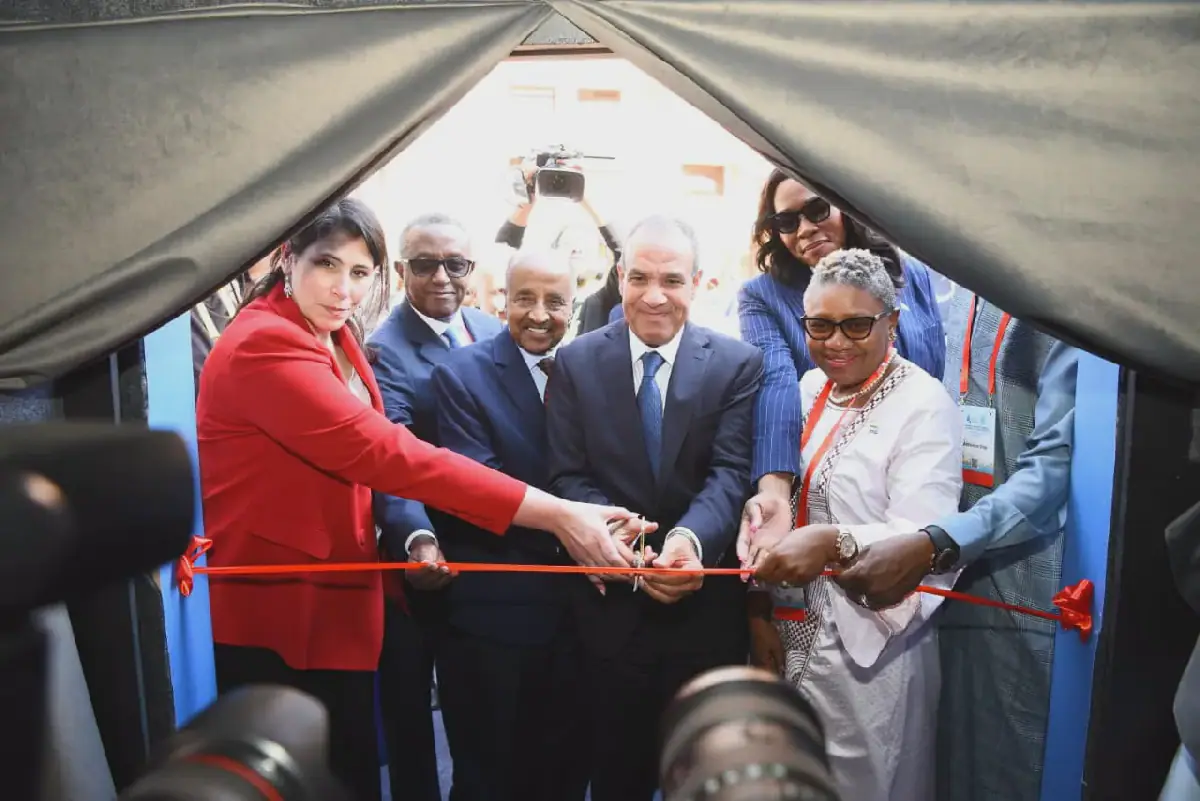
On the sidelines of the forum, Abdelatty opened a pavilion for the Egyptian Agency of Partnership for Development, showcasing Egypt’s capacity-building, technical assistance, and development cooperation programmes in Africa. He stressed the importance of greater cooperation with African countries based on the principle of African ownership. The agency plays a crucial role in Egypt's development diplomacy efforts.
The sixth Aswan Forum for Sustainable Peace and Development focused on Africa’s role in responding to global disruption and challenges related to peace, security, and development. Abdelatty highlighted Egypt’s engagement in various international organizations, including the African Union, Arab League, Non-Aligned Movement, Group of 77, and BRICS. Egypt continues to advocate for stronger representation of Africa and the Global South in international decision-making institutions.
Key points
- Egypt signs cooperation agreements with Sudan and DR Congo on security and development.
- Abdelatty emphasizes the need for a balance between strategic autonomy and global economic participation.
- Egypt advocates for stronger African representation in international decision-making institutions.
Reporting sources
- Egypt signs cooperation pacts with Sudan, DR Congo at Aswan Forum · Daily News Egypt