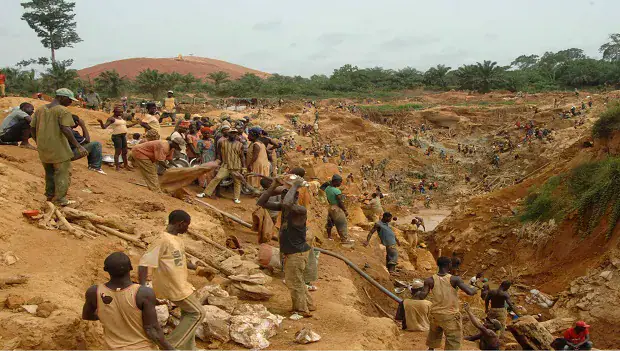
A security expert, Mutaru Mumuni Muqthar, has expressed concerns that illegal mining, commonly known as galamsey, could lead to violent extremism in Ghana if not addressed. He notes that areas with illegal mining activities are increasingly vulnerable to violence due to the proliferation of firearms, disputes over mining concessions, and political interests. This situation is a major security concern that requires urgent attention.
Mr. Muqthar, Executive Director of the West Africa Centre for Counter-Extremism, made these remarks during an interview with GBCNEWS at a regional consultation in Goaso in the Ahafo Region. The consultation, organised by the National Security Council Secretariat, aimed to review Ghana's National Framework for Preventing and Countering Violent Extremism and Terrorism. The event brought together various stakeholders, including civil society organisations, security agencies, and local government institutions.
The security expert highlighted that Ghana has not experienced a terrorist attack on its territory, but the country is not immune to the threat, especially with extremist activities spreading across neighbouring countries. He identified youth unemployment, unresolved conflicts, poverty, inequality, and marginalisation as conditions that could make vulnerable people susceptible to extremist recruitment. Addressing conflicts in mining communities, chieftaincy, and land disputes is crucial to preventing violent extremism.
Mr. Muqthar stressed that terrorism often develops from a combination of social, economic, and governance challenges. He expressed concern about the increasing availability of firearms and violent confrontations in some illegal mining communities. The situation requires stronger government intervention, improved local governance, and sustained efforts to resolve disputes before they escalate.
To prevent violent extremism, Mr. Muqthar called for greater investment in youth employment and the provision of essential social amenities, including roads, schools, healthcare, and potable water, especially in underserved communities. He also encouraged citizens to remain alert, pay attention to unusual activities in their communities, and report credible concerns to the appropriate security agencies.
Mr. Muqthar emphasised that Ghana's history of relative peace and stability remains an important strength in preventing violent extremism. However, he urged citizens not to take the country's security for granted. He warned against individuals who use promises of quick wealth and attractive opportunities to lure vulnerable individuals into extremist activities.
The regional consultation is part of efforts to gather views from communities on security concerns and identify practical measures to strengthen Ghana's preparedness against violent extremism and terrorism. The engagement aims to enhance collaboration between various stakeholders in addressing the root causes of violent extremism and promoting sustainable peace and stability in the country.
Key points
- Galamsey activities are increasingly vulnerable to violence due to proliferation of firearms, disputes over mining concessions, and political interests.
- Addressing youth unemployment, unresolved conflicts, poverty, inequality, and marginalisation is crucial to preventing violent extremism.
- Ghana's history of relative peace and stability remains an important strength in preventing violent extremism.
Reporting sources
- Galamsey could fuel violent extremism in Ghana – Security expert warns · Ghana Broadcasting Corporation