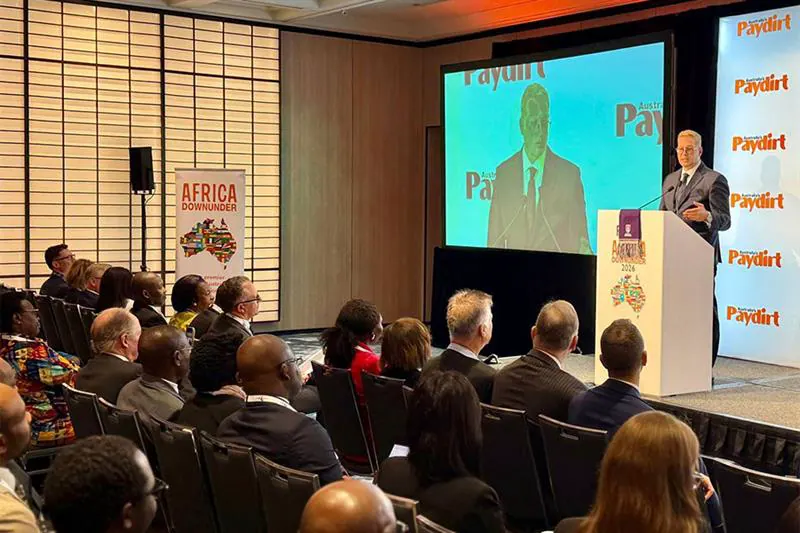
Egypt has implemented significant mining reforms over the past two years to attract global investors and unlock the potential of its mining sector. Minister of Petroleum and Mineral Resources Karim Badawi highlighted these efforts at the Africa Down Under (ADU) conference in Perth, Australia, which took place from 2 to 4 September. The conference brings together African and Australian governments, mining companies, investors, and service providers to explore investment and cooperation opportunities.
The Egyptian government has introduced a package of incentives to facilitate access to licensed exploration areas, allow exploration for multiple mineral deposits within the same concession, reduce exploration-area rental fees, and provide access to larger areas with favorable geological conditions. These measures aim to encourage junior and mid-tier exploration companies, which play a crucial role in discovering gold and other mineral deposits. Egypt's goal is to increase the mining sector's contribution to GDP from around one percent to five-six percent in the coming years.
Egypt is seeking broader cooperation with Australia in the mining sector, extending beyond investment to technology transfer, mining services, financing, exploration, mine development, and training. In return, Egypt offers Australian companies significant geological potential, a strategic location, developed infrastructure, energy resources, and a skilled workforce. The country possesses around 100,000 square kilometers of exposed Precambrian basement rocks in the Eastern Desert and southern Sinai, part of the mineral-rich Arabian-Nubian Shield.
The Arabian-Nubian Shield offers prospects for various minerals, including gold, copper, base metals, nickel, cobalt, platinum-group metals, rare metals, and rare earth elements. The Sukari Gold Mine is cited as evidence of the sector's potential, having produced around half a million ounces of gold in 2025. Egyptian personnel constitute the majority of the mine's workforce and leadership, demonstrating the country's capabilities in the sector.
Egypt is strengthening its human resources in the mining sector by establishing the country's first applied technology school specializing in mining and phosphate ores in Kharga for the 2026/2027 academic year. The school aims to train 100 technicians annually. Additionally, Egypt is seeking to maximize the economic value of its phosphate resources as part of its strategy to expand mineral processing and move beyond exporting raw materials.
The government has introduced an exploitation model based on royalties and taxes, in line with international practices, and transformed the former Egyptian Mineral Resources Authority (EMRA) into the Mineral Resources and Mining Industries Authority (MRMIA). The MRMIA is expected to play a broader role in developing the sector and facilitating investment. An integrated digital mining platform is also being developed to improve access to geological information, increase exploration efficiency, and reduce costs and risks.
Minister Badawi invited international mining and exploration companies, financial institutions, technology providers, and service companies to visit Egypt and explore investment opportunities in the sector. He also invited them to participate in the Egypt Mining Forum, scheduled to begin on 28 September. The government aims to raise mining exports significantly over the coming years, with around three billion tons of geological phosphate resources available.
Key points
- Egypt aims to increase the mining sector's contribution to GDP from around one percent to five-six percent in the coming years.
- The government has introduced a package of incentives to facilitate access to licensed exploration areas and encourage junior and mid-tier exploration companies.
- Egypt offers Australian companies significant geological potential, a strategic location, developed infrastructure, energy resources, and a skilled workforce.