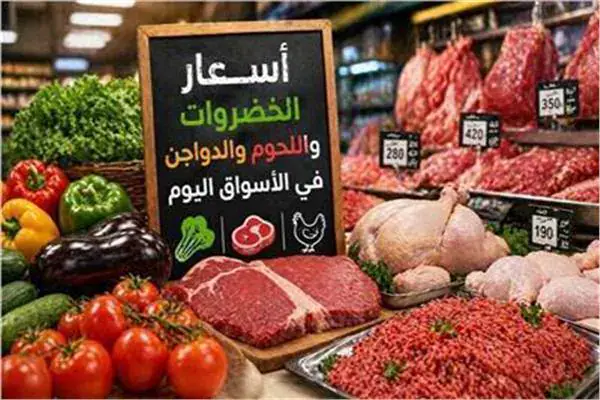
Egypt's markets witnessed a relative stability in prices of vegetables, fruits, fish, poultry, and meat on Thursday, November 5, 2026. This stability is supported by the availability of supplies and regular trading activity, according to the latest updates from the Obour Market and the Poultry Exchange. A field survey revealed slight variations between wholesale and retail prices due to transportation costs and profit margins, with no significant price jumps.
The prices of vegetables showed relative stability, with slight increases ranging from 3 to 7 pounds per kilogram in retail markets compared to wholesale prices. For example, tomatoes ranged from 10 to 20 pounds per kilogram, potatoes from 15 to 21 pounds, and white onions from 18 to 22 pounds. Other vegetables, such as zucchini, carrots, eggplants, and peppers, also showed stable prices.
The prices of fruits also remained stable with minor variations in retail prices. Orange prices ranged from 11 to 15 pounds per kilogram for local oranges, and from 9 to 14 pounds for sugar oranges. Other fruits, such as apples, bananas, and grapes, showed similar stability. The prices of some fruits, like mangoes and watermelons, varied depending on quality and origin.
The prices of fish remained stable, particularly for tilapia, which is in high demand. The prices of tilapia ranged from 73 to 77 pounds per kilogram for the first grade, and from 68 to 72 pounds for the second grade. Other fish, such as fillet, cod, and shrimp, also showed stable prices. The prices of some seafood, like calamari and crab, varied depending on quality and origin.
The prices of poultry also remained stable, with white chicken prices ranging from 70 to 75 pounds per kilogram in the farms, and from 80 to 90 pounds in retail markets. The prices of other types of chicken, such as broiler and local chicken, also showed stability. The prices of eggs also remained stable, with red eggs priced at 125 pounds per carton, and white eggs at 120 pounds.
The prices of meat also showed stability, with the prices of local meat ranging from 400 to 450 pounds per kilogram. The prices of other types of meat, such as lamb and camel meat, also remained stable. The government-run outlets and initiatives, such as "Hayat Karima," continued to offer meat at discounted prices, which helped to increase the supply and achieve relative balance in the markets.
The stability of prices in Egypt's markets reflects the balance between supply and demand, supported by the availability of basic goods and increased supply through government outlets. This stability is expected to continue in the coming period, with the government's efforts to control prices and ensure the availability of goods.
Key points
- The Egyptian government continues to monitor and control prices to ensure stability in the markets.
- The prices of vegetables, fruits, fish, and poultry in Egypt remain stable on Thursday, November 5, 2026.
- The government-run outlets and initiatives offer meat at discounted prices to increase the supply and achieve relative balance in the markets.