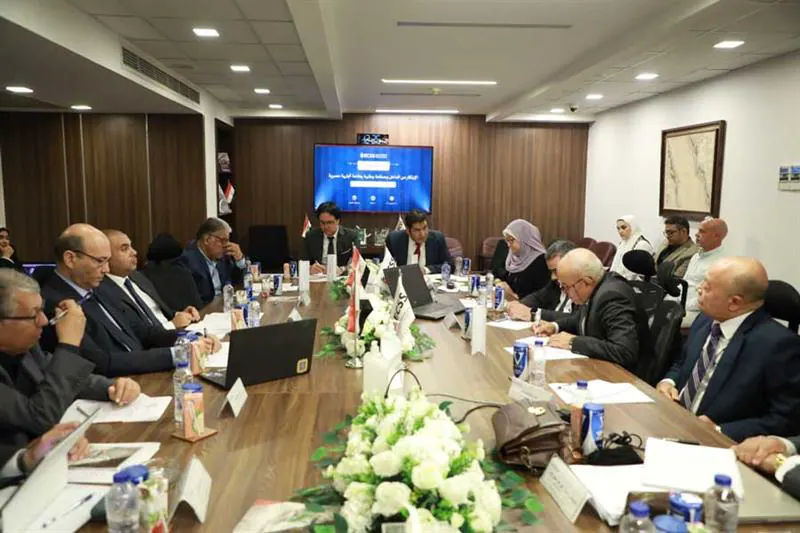
Egypt recently hosted a two-day workshop in Cairo, bringing together public officials, researchers, and industrialists to discuss ways to enhance innovation, research, and development in the industrial sector. The event, organized by the Egyptian Center for Strategic Studies and Research, aimed to explore means to increase local value-added and promote the emergence of national brands capable of competing in international markets. The workshop, titled "Internal Innovation and National Industry under an Egyptian Brand: Towards a More Competitive Economy in International Markets," focused on the entire chain from scientific research and technological training to industry, investment, and product development.
The workshop gathered several high-profile attendees, including Fahd Abdel-Azim Amara, president of the Cairo Court of Appeals, and Hatem El-Nawawy, president of the Export Development Authority. Other notable participants included Tarek Farouk Maarek, deputy executive director of the Industrial Modernization Center, and Ahmed Abdel-Wahab, president of the Scientific and Technological Excellence Center of the Ministry of Military Production. The event also brought together representatives from various companies and export councils, such as Mohamed Magdy El-Araby, CEO of PhotonX, and Ayman Abu Zahra, founder and CEO of Sopharma Pharmaceuticals.
The first day of the workshop focused on the national innovation system and the economy's capacity to shift towards a knowledge-based model. Participants emphasized the need to create a more favorable legislative and institutional environment for innovation and product development. They discussed modernizing the patent registration system through digitalization, introducing accelerated procedures, and setting precise deadlines to better protect innovators' rights. The role of the Industrial Modernization Center was also examined, with a focus on supporting young companies, facilitating their access to financing, and bridging the gap between research and industry.
The second day of the workshop centered on supporting innovation and entrepreneurship in industry. A case study was presented on a product developed through research, highlighting the challenges faced during its commercialization. The experience of an Egyptian company in the home appliances sector was also shared, demonstrating the development of a national brand in international markets. According to data presented, the company now exports its products to 92 countries. Participants also discussed using international markets and experiences to guide the development of innovative products.
The workshop aimed to identify the legislative, institutional, technological, and financial obstacles hindering the transition from research and innovation to industrial application and commercial exploitation. Participants called for increased investment in research and development, particularly through incentives that direct funding towards projects with economic and industrial potential. They also emphasized the need to adapt training to meet the needs of companies, citing the role of technological universities and sectoral skills councils.
The event proposed several solutions, including the creation of platforms that bring together innovators, companies, universities, research centers, and export councils. A model for a private research center dedicated to technological development was also presented. The goal is to reduce the gap between laboratories and production lines, transforming more research into commercializable products.
The Egyptian government is seeking to transform the country's economy from one heavily reliant on imports and assembly to one driven by innovation and knowledge production. The workshop's outcomes are expected to contribute to the development of a more competitive economy, with a focus on enhancing national brands and increasing exports. Key stakeholders will likely follow up on the discussions and implement measures to support innovation and entrepreneurship in the industrial sector.
Key points
- Egypt aims to enhance innovation and research in the industrial sector to increase local value-added and promote national brands.
- The workshop brought together public officials, researchers, and industrialists to discuss ways to overcome obstacles hindering the transition from research to industrial application.
- Participants emphasized the need for a more favorable legislative and institutional environment to support innovation and entrepreneurship.