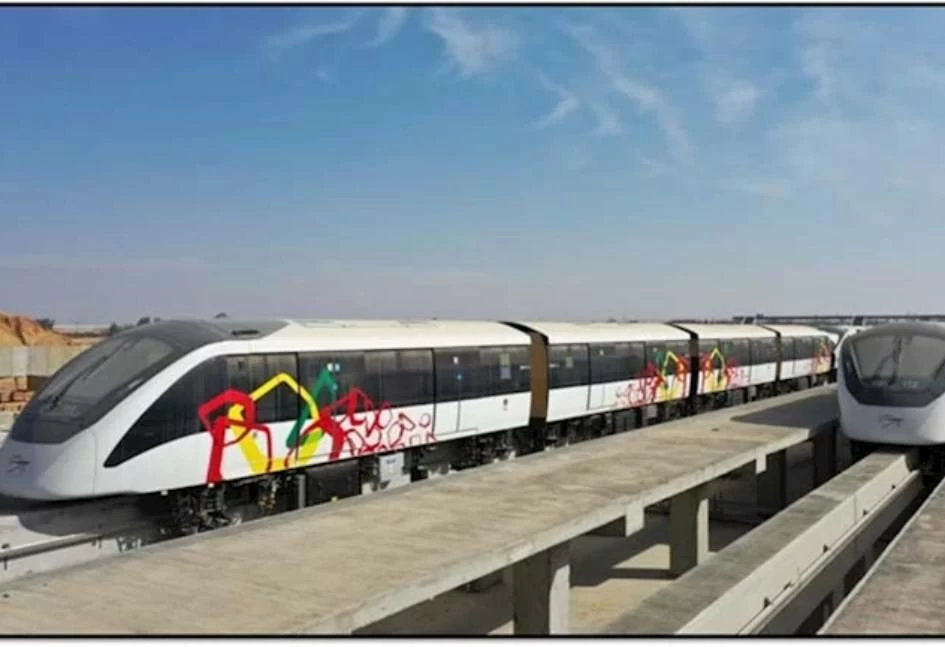
The Egyptian Ministry of Transport is preparing to launch trial operations for the first phase of the West Nile Monorail project within days, coinciding with October celebrations. This project aims to provide a mass transportation system linking new urban areas in 6th of October City and Sheikh Zayed to main axes and public transport networks in Greater Cairo. The first phase includes 8 stations out of a total of 13.
The 8 stations in the first phase are: New October City, Canadian International College, Sadat, 6th of October University, Engineers' Club, Mall of Egypt, Sheikh Zayed, and Alexandria Desert Road. The project, spanning 43.8 kilometers, will have a total of 13 stations when completed. The monorail's operational speed will reach 80 kilometers per hour, targeting a daily capacity of 500,000 passengers.
The West Nile Monorail project is being implemented by a consortium of Alstom, Orascom, and Arab Contractors. It aims to provide an alternative to private car users on the axes it passes through, especially with the urban expansion in new areas like New October City and South October. The project also plans to connect with other transportation means, including the third line of the Cairo Metro.
The monorail will connect with the third line of the Cairo Metro at Wadi Nile station and with the Saeed Egypt trains at Bishtil station. Future plans include linking the project with the electric train network via the Engineers' Club station and with the fourth line of the Cairo Metro at 6th of October University station.
The project's second phase will extend the monorail line to Wadi Nile station in Engineers' district, expected to be completed in the first quarter of 2027. This extension will further enhance the public transport network in Greater Cairo, providing more options for residents and commuters.
The West Nile Monorail project is part of Egypt's plan to expand electric transportation and connect new cities to Cairo's public transport network. Once completed, the project is expected to significantly reduce reliance on private cars and improve traffic flow in the city.
The project's progress aligns with the Egyptian government's efforts to develop infrastructure and enhance public services. With its expected completion, the West Nile Monorail will play a crucial role in shaping the future of transportation in Greater Cairo.
Key points
- The West Nile Monorail project will start trial operations with 8 stations, connecting new urban areas to Cairo's public transport network.
- The project aims to provide a daily capacity of 500,000 passengers and reduce reliance on private cars.
- The monorail will connect with other transportation means, including the Cairo Metro and electric trains.