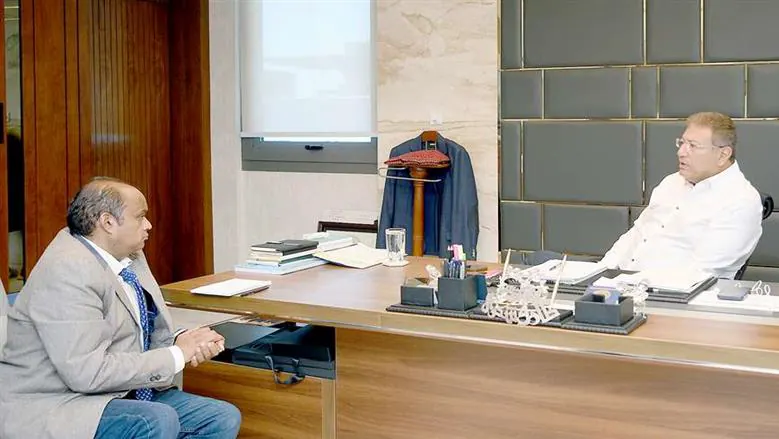
Egypt's real estate sector is one of the most vital and impactful sectors in the country's economy, contributing significantly to the nation's GDP and driving numerous industries and activities. Despite global and local economic challenges, the sector continues to play a crucial role in addressing social and investment security for millions of citizens. With large-scale urban transformations and substantial investments in infrastructure, transportation networks, and the development of fourth-generation cities, several key questions have emerged regarding the sector's ability to navigate current economic conditions.
Tarek Shukri emphasized that addressing the issue of delayed unit deliveries, a pressing concern for Egyptian citizens and investors, requires a comprehensive and analytical approach based on data and field studies. This involves identifying the geographical distribution of delays, the number of companies and projects affected, and the number of delayed units. By analyzing these factors, stakeholders can develop a clear understanding of the situation and work towards finding solutions that do not harm any party involved in the real estate process.
According to Shukri, the primary reasons for real estate developers' setbacks can be attributed to three main factors: lack of administrative and technical expertise, errors in sales strategy and unrealistic pricing, and direct economic conditions beyond the control of any company. He stressed that some companies have entered the real estate market without prior experience in feasibility studies, crisis management, or cash flow management, leading to project delays and cancellations.
Shukri advised real estate developers to adopt a strategy of not selling all land at once, but rather to divide projects into phases and link sales to project implementation. This approach helps mitigate risks and ensures that developers can complete projects without facing significant financial challenges. By adopting this strategy, developers can avoid potential pitfalls and ensure the successful completion of their projects.
The issue of delayed unit deliveries is complex and requires a thorough analysis of the market, including the number of companies and projects affected, as well as the number of delayed units. Shukri emphasized that a report based on this analysis will provide a realistic understanding of the situation, enabling stakeholders to develop effective solutions. He also noted that delayed deliveries do not necessarily indicate a widespread market problem, but rather isolated cases or issues specific to certain companies.
Shukri highlighted the importance of distinguishing between the initial delivery date and the final legal deadline for project completion. He explained that contracts typically include a target date and a contractual grace period, which can be extended in cases of unforeseen circumstances or changes in economic conditions. Therefore, it is essential to consider these factors when evaluating project timelines and assessing penalties for delayed deliveries.
The solution to addressing stalled projects, according to Shukri, involves forming a joint committee comprising representatives from the Ministry of Housing, local authorities, and real estate developers. This committee will work to find tailored solutions for each stalled project, which may include partnerships with other developers, re structuring assets, or utilizing commercial or administrative components to finance residential projects.
Key points
- Egypt's urban development map has expanded from 7% to 14% due to significant investments in infrastructure projects.
- The real estate sector is one of the most vital and impactful sectors in Egypt's economy.
- Delayed unit deliveries are a pressing concern for Egyptian citizens and investors, requiring a comprehensive and analytical approach to resolve.