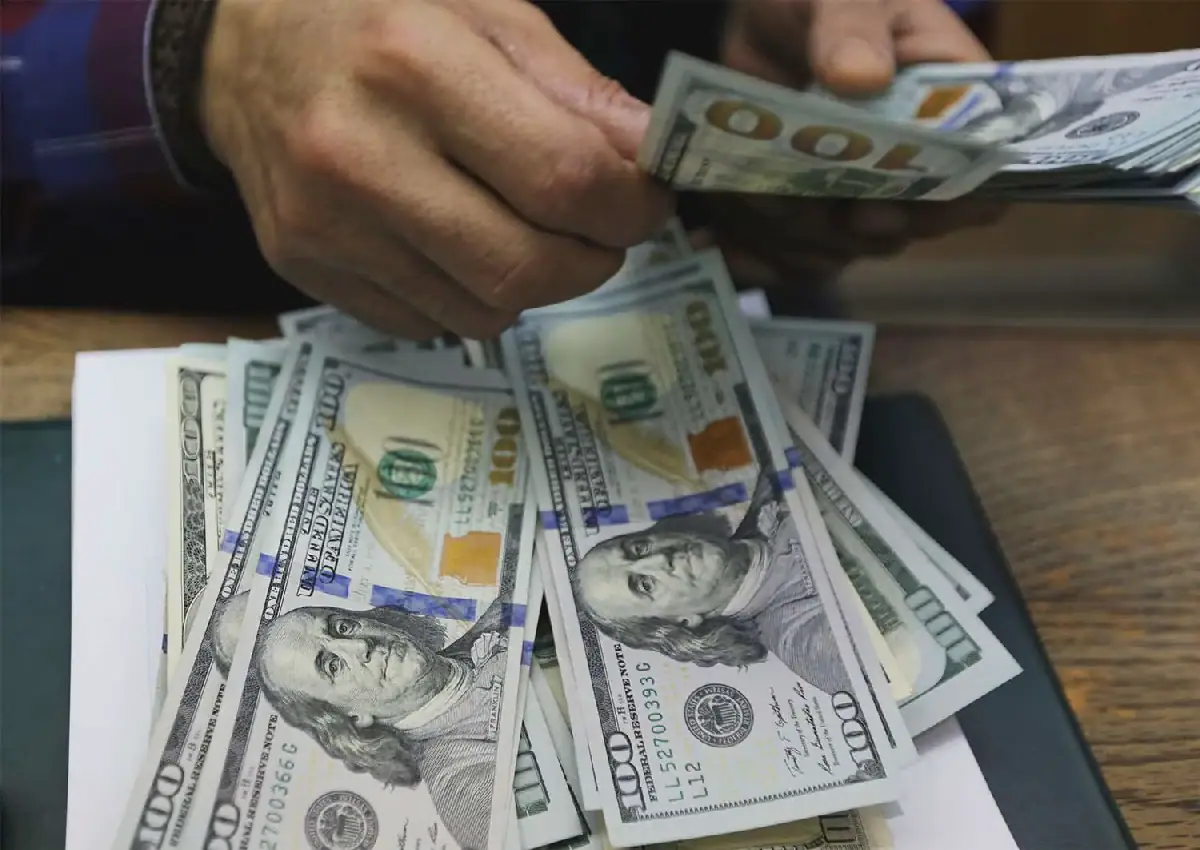
Egyptians working abroad sent home $47.3bn in fiscal year (FY) 2025/26, according to preliminary balance-of-payments figures from the Central Bank of Egypt (CBE). This represents a 29.6% increase from $36.5bn in the previous year. The significant rebound in remittance inflows is a positive indicator for Egypt's economy. Remittances have long been a crucial source of foreign currency for the country.
In addition to remittances, other sources of foreign currency, such as tourism and Suez Canal transit receipts, also contributed to Egypt's economy in FY 2025/26. Tourism brought in $18.4bn, while Suez Canal transit receipts totaled $4.4bn. Remittances were worth roughly twice those two sources combined, highlighting their importance to the country's foreign exchange earnings.
The CBE also reported that remittance inflows showed growth in calendar-year terms. Between January and August 2026, remittances reached $33.9bn, an increase of 27.2% from $26.6bn in the same period of 2025. August alone brought in $4.2bn, indicating a steady stream of remittances into the country.
However, recorded remittance inflows had been declining sharply in previous years. According to World Bank data, recorded remittances to Egypt were $31.5bn in 2021, $28.3bn in 2022, and $19.5bn in 2023. The World Bank attributed the decline to the gap between the official exchange rate and the parallel market, which likely led to some remittances being channeled through unofficial channels.
The situation changed after the March 2024 reforms, when the CBE raised its policy rate by 600 basis points and unified the official and parallel exchange rates. This move, welcomed by the International Monetary Fund, marked a shift towards a flexible exchange-rate regime. By June 2024, the World Bank reported that official remittance flows to Egypt had rebounded.
The World Bank's annual series subsequently recorded $29.6bn in remittances for 2024 and $41.5bn in 2025. The latter figure represents the highest calendar-year total in the World Bank's series, which begins in 1977. Remittances accounted for 11.4% of Egypt's gross domestic product in 2025, up from 4.9% in 2023.
The cost of sending remittances to Egypt also varies depending on the sender's location. According to the World Bank's Remittance Prices Worldwide survey, the average total cost of sending about $200 to Egypt was 3.33% from Kuwait, 3.70% from the United Arab Emirates, 5.15% from Saudi Arabia, and 5.36% from the United States. These costs are compared to the global average of 6.36% in the same round.
Key points
- Remittance inflows to Egypt surged to $47.3bn in FY 2025/26.
- The March 2024 reforms contributed to the rebound in remittance inflows.
- Remittances accounted for 11.4% of Egypt's GDP in 2025.