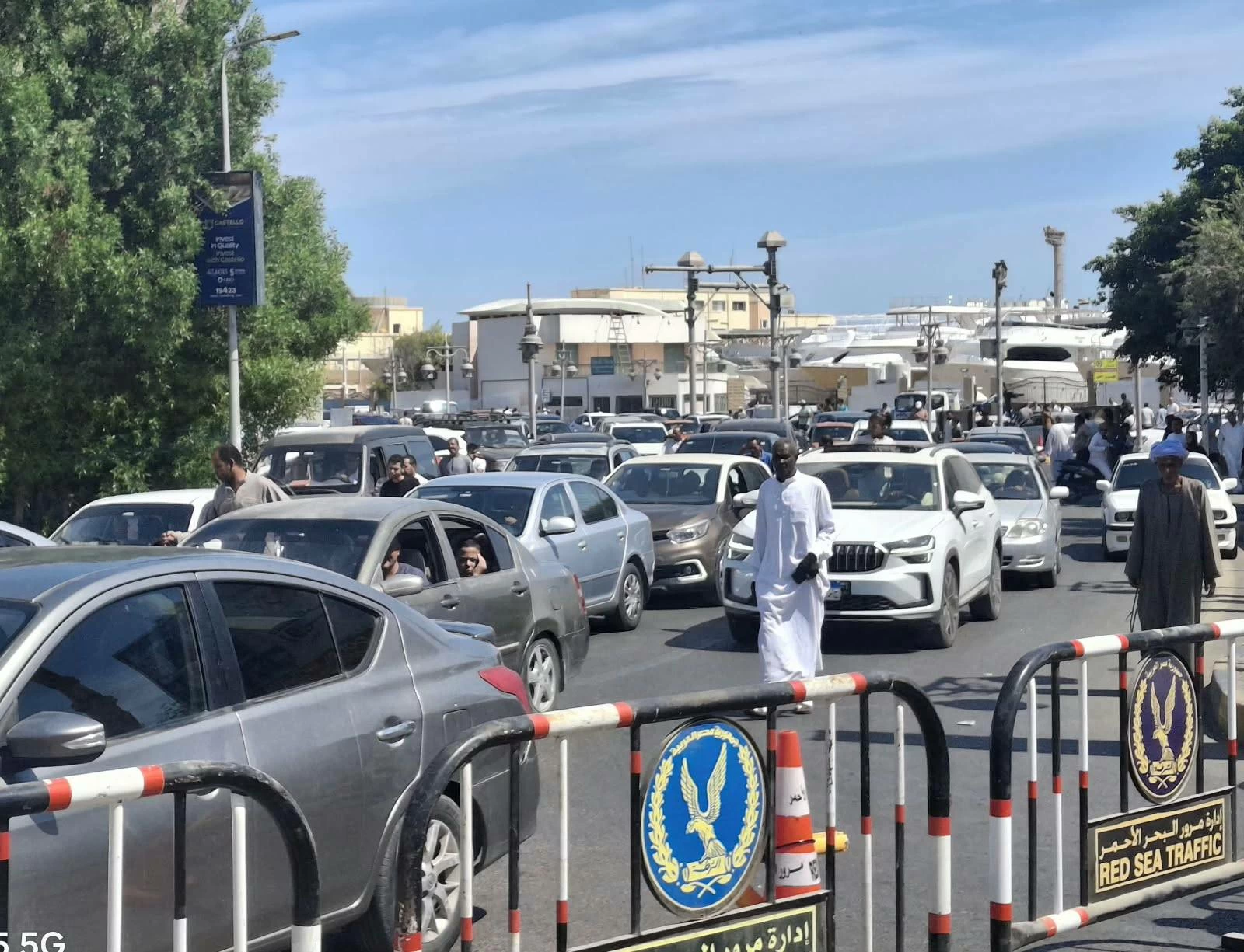
The Red Sea Governorate, led by Dr. Walid El-Barki, has postponed traffic adjustments in Hurghada, Egypt, just hours after they were implemented. The trial changes, which were introduced in several key areas, including the Qatari Mosque, Aka, Squala, and Port Mosque, aimed to test new traffic routes and assess their impact on vehicle movement and traffic flow.
The trial was intended to measure the effectiveness of the proposed routes and identify potential issues before making any final decisions. However, due to observed congestion, crowding, and public complaints, the governorate decided to revert to the previous traffic flow and postpone further changes. This decision allows for a re-evaluation of the proposed adjustments and consideration of alternative solutions.
The governorate emphasized that the implemented changes were not a final decision, but rather a temporary experiment to test the proposed routes. The changes were intended to improve traffic flow and reduce congestion in Hurghada, a city that has experienced significant growth in population and tourism. The postponement provides an opportunity for further study and evaluation of the proposed traffic adjustments.
The study will focus on utilizing actual traffic data to determine the most effective traffic routes and patterns. This approach will help identify solutions that go beyond simply changing street directions and instead focus on redistributing traffic flow and creating alternative routes. The goal is to develop a comprehensive traffic plan that addresses the city's growth and expansion.
The postponement of the traffic adjustments has opened the door for a more comprehensive review of Hurghada's traffic system. This includes examining the possibility of creating new roads, repurposing existing routes, and distributing traffic flow across multiple routes. The aim is to develop a traffic plan that is efficient, safe, and responsive to the needs of residents and tourists.
Dr. El-Barki emphasized that the comfort and safety of citizens are top priorities when evaluating and implementing new traffic arrangements. The governorate will rely on field observations and analysis of traffic patterns to develop practical solutions that can be effectively implemented. This approach will help ensure that any changes made to the traffic system are well-considered and effective.
The Red Sea Governorate will continue to study and evaluate traffic patterns in Hurghada, taking into account the city's urban expansion, growing population, and increasing tourism. The goal is to develop a traffic system that is efficient, safe, and responsive to the needs of all users.
Key points
- The Red Sea Governorate postponed traffic adjustments in Hurghada due to public complaints and observed congestion.
- The governorate will rely on field observations and analysis of traffic patterns to develop practical solutions.
- A comprehensive review of Hurghada's traffic system is underway, including the possibility of creating new roads and repurposing existing routes.